The strike is student-led; the struggle is popular
This past week, thousands of students in Quebec went on strike to protest austerity measures at post-secondary institutions, demand reforms to the province’s Student Financial Assistance program and call for increased funding for these institutions.
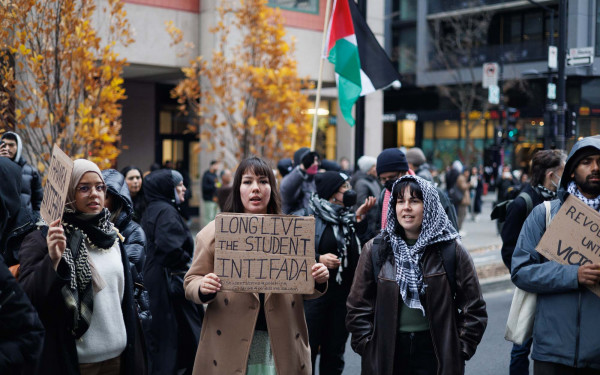
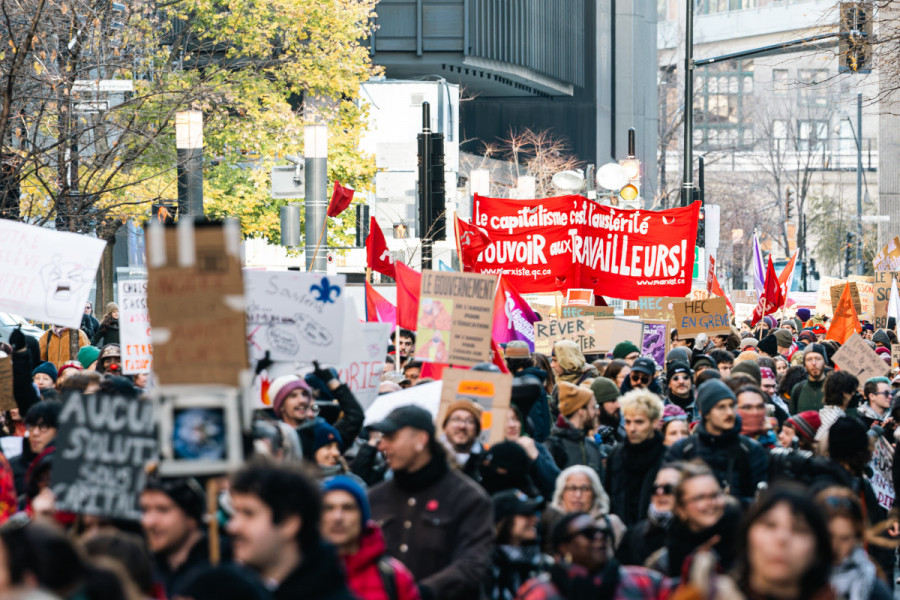
The province-wide strikes were organized by the Coalition de résistance pour l’unité étudiante syndicale (CRUES) and lasted from Nov. 9 to Nov. 13. On Nov. 10, students held a sit-in at Concordia University’s Henry F. Hall Building, and on Nov. 13, thousands of students took to the streets of Montreal.
These events did not come out of the blue. They were born out of years of provincial neglect and deliberate policy choices targeting post-secondary schools. Last year, Quebec’s network of 48 CEGEPs reported that they were facing a combined $150 million shortfall. This report came after the Quebec government announced it would reduce its financing for the 2025-2026 school year.
English universities have also been targeted by these measures. In 2023, the Quebec government announced that it would increase tuition rates for new out-of-province non-francophone Canadian students studying in English. The students saw their minimum tuition fees rise from $9,000 to $12,000 at the start of the fall 2024 semester.
This tuition hike came alongside rapidly worsening services and facilities at universities and CEGEPS across the province, with students getting less from their educational institutions while being charged more.
Additionally, classes are getting cancelled, and the ones that remain are seeing increased class sizes. The quality of education in Quebec is on the decline—with no end in sight—and President Graham Carr’s salary won’t stop growing. Despite being a former history major, it seems that Carr is all too content to stand on the wrong side this time.
Students are more than fed up, and so is The Link. Students are right in demanding accountability from their government and their post-secondary institutions. Students deserve better than crumbling buildings and decisions not to renew limited-term appointment contracts.
These issues are long-standing, and historically Quebec students have shown up in massive numbers in favour of having their demands heard. The 2012 “Maple Spring” strikes were the longest recorded student protests in Canadian history.
On March 18, 2011, the Quebec government led by Jean Charest of the Quebec Liberal Party tabled a budget that included raising university tuition fees by $325 every year between 2012 and 2017. This would have culminated in a 75 per cent increase. By February 2012, the majority of student associations went on strike, and Concordia joined by marching throughout the city and taking various forms of action.
The Charest government passed Bill 78, which sparked controversy surrounding these protests. The bill included various measures to push students to go back to class and give up the fight. The measures included handing out fines to individuals and student associations who blocked access to classes and requiring demonstrators to inform the police of their itinerary eight hours in advance.
Charest eventually called a general election and lost, allowing the Parti Québécois (PQ) to repeal the bill and cancel the tuition increases. It was the presence of over 300,000 students mobilizing and coordinating strikes that pressured the government into listening to the students.
Throughout the strikes, The Link was on the ground covering how Concordia students and the wider Montreal community organized against these measures. This volume intends to carry the legacy of the previous masthead of covering issues that students care about and the ways they choose to express themselves when confronting politicians.
On Nov. 13, students once again took to the streets to demonstrate their frustrations about austerity in education and demand paid internships. The Link covered the event and the response to the police methods used during the protest.
The Link firmly believes that the Montreal police response on Nov. 13, 2026, was far too strong, as its officers injured dozens of students while acting in a predatory fashion. Police officers went so far as to search for protesters in a downtown Christmas market. Visitors to the market appeared bothered to see them there, looking for protesters as if they were prey.
Montreal Mayor Soraya Martinez Ferrada and SPVM Chief Fady Dagher must look into ways to reform police response to protests. They could stand to take a few notes from New York City Mayor Zohran Mamdani and his recent reforms on protests and the police.
On Nov. 23, CRUES announced that it was calling a general unlimited strike at the beginning of the winter 2027 semester. They said that if the current PQ government does not issue a comprehensive response to their demands, the strike will be triggered on Feb. 15. For the strike to go ahead, 20,000 students on three different campuses need to obtain a general strike mandate.
If students proceed to strike, then The Link will be there to cover their efforts, offer them a platform and amplify their voices—as always.
This article originally appeared in Volume 47, Issue 6, published November 24, 2026.