The many controversies of the 2026 WNBA season
How transphobes and racists found a new talking point in the WNBA
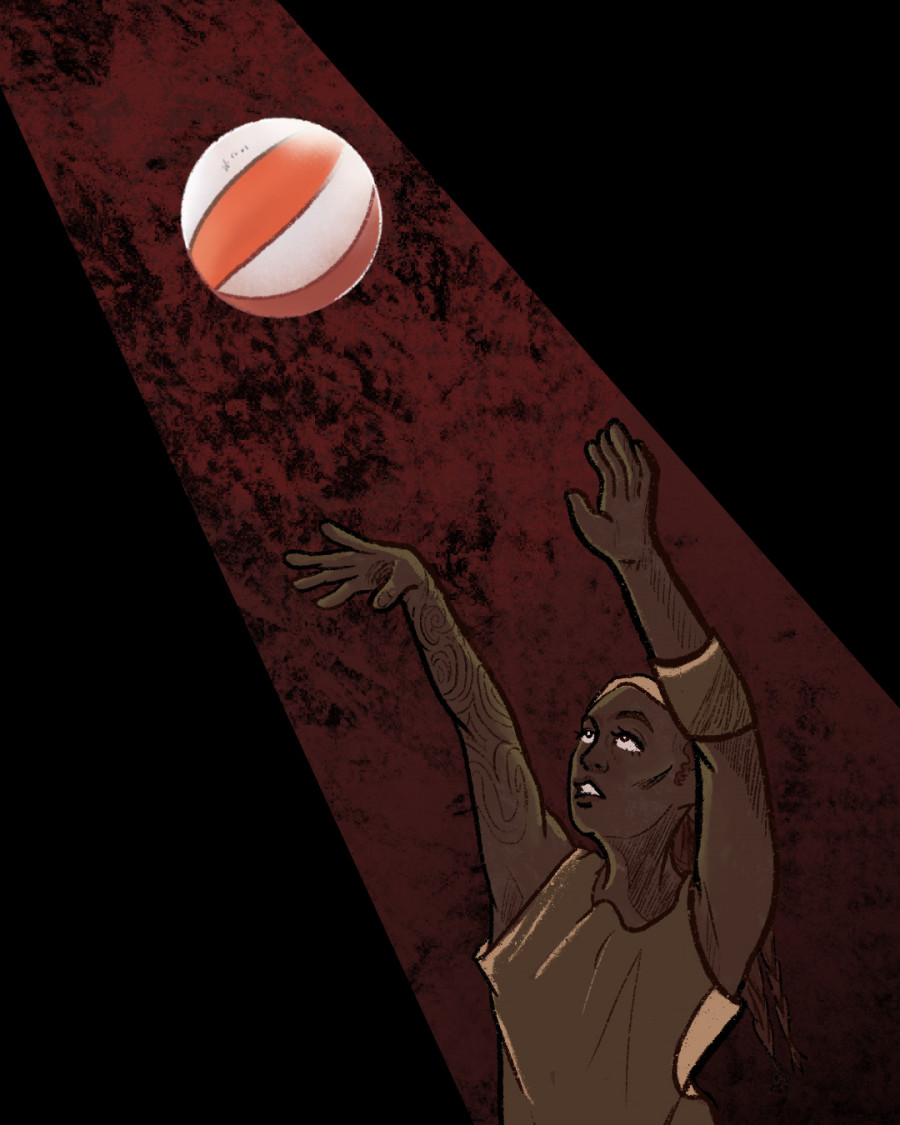
The 2026 Women’s National Basketball Association (WNBA) season was another reminder that sports and politics are impossible to separate. Fans only enjoyed a couple of months of pure hoops during the 2026 season before the league became a centre of culture-war discussion points and right-wing political grifting.
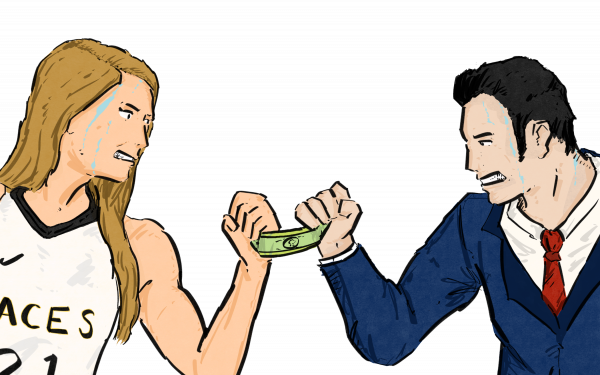
The season took place on the heels of a long negotiation surrounding the collective bargaining agreement between the WNBA Players’ Union and the league. There was a real possibility that the players would have gone on strike, potentially disrupting the season. However, last March, WNBA players unanimously voted to accept a new seven-year collective bargaining agreement, and the WNBA season proceeded as scheduled, tipping off May 8, 2026.
In July, Indiana Fever guard Sophie Cunningham lit the first fuse. An ESPN profile quoted her saying, “I want to protect young girls in a locker room, or young girls in sport who shouldn't have to go against biological men.”
It is worth noting that Cunningham’s comments came in the context of a United States presidential administration that has signed multiple executive orders attacking transgender Americans and trans women in sports specifically. Similar restrictions have also emerged in state legislation and the policies of sports organizations, including those governing hockey.
Cunningham’s comments within this climate caused a simultaneous uproar of support and outrage. During a game between the Fever and the Seattle Storm, Cunningham supporters demonstrated outside in support of a Washington State proposal that sought to prevent “transgender students from competing in girls' athletics at school,” according to CBC. Similar laws have also been passed and upheld by the Supreme Court in Idaho and West Virginia.
Seattle Storm centre Stefanie Dolson responded by wearing a shirt saying “trans rights are human rights.” Storm co-owner Celeste Keaton Storm was suspended from several home games after allegedly admonishing two fans wearing “XY and XX chromosome” shirts.
Others weighed in against Cunningham, with Minnesota Lynx head coach Cheryl Reeve wearing a “Trans kids belong” shirt. Eventual championship-winning Golden State Valkyries coach Natalie Nakase said, “Sports is about belonging. It's about inclusivity. It's about allowing everyone to be their authentic self… that includes trans women.”
Right-wing political commentators on X made a concerted effort to paint these comments as outlandish to drum up hatred for the WNBA. This, of course, excluded Cunningham and the Fever, who were made out to be the ones holding the banner of ‘common sense’ in a sea of ‘gender ideology.’
It is worth noting, however, that Cunningham herself made these remarks, while the team generally stayed silent when asked about her comments or the politics they represented. It is easy to hypothesize that this silence was likely pushed by Fever management and public relations to avoid the total collapse of the team’s image and on-court chemistry.
To be clear, I am not condoning the team's silence on this. Topics like this should be seen as more important than on-court success. However, it is worth noting that the people enforcing silence are the ones signing the team’s paycheques, holding the power to significantly alter their careers via suspensions or trading.
This transphobic storm came to a head with the comments of two former National Basketball Association (NBA) players, Enes Kanter Freedom and Royce White. In perhaps the most stereotypical man move of all time, two lacklustre former players decided to become the centre of women’s basketball for several weeks.
It all started on Aug. 7, when former NBA center Enes Kanter Freedom declared for the WNBA draft. The stunt was an obvious attempt to cash in on the WNBA hate train, mocking the inclusivity the WNBA promotes by suggesting the WNBA rules would allow for a former men’s professional player to compete.
While Freedom never claimed to be a woman in any capacity, White took it a step further. The three-game NBA veteran stated, “I'm transgender. I'm a woman. I identify as sometimes identifying as a woman for the purpose of basketball, professional basketball, so I'll be declaring for the WNBA Draft in 2027 as well.”
The Women's National Basketball Players Association (WNBPA) quickly responded, calling out the hatred and abuse. Later, Freedom was kicked out of a game between the Chicago Sky and Indiana Fever after an on-court confrontation with Sky guard Natasha Cloud.
After these events, the drama died down. More than anything, the stunt made it increasingly evident that nobody who actually watches the WNBA cared about what White and Freedom had to say about the place of trans women in the WNBA.
In September, WNBA commissioner Cathy Engelbert announced she would retire at the end of 2026, concluding a seven-year tenure. While she undoubtedly oversaw the most unprecedented growth the WNBA had ever seen, she had also been commissioner during several controversies, including the collective bargaining agreement debacle
Englelbert implied that her resignation was a long-overdue decision and that she only meant to be the commissioner for three years. Online consensus was that the above controversies, in addition to Republican lawmakers petitioning her to stop the “racially motivated” fouling of Fever superstar Caitlin Clark, had become too attached to her as the commissioner.
Clark has also been the centre of right-wing grifting, as her on-court battles with Atlanta Dream centre Angel Reese extend back to the pair’s time in college. Reese, who made the 2026 Finals with the Dream, has often been targeted as the villain in Clark’s story, though most true fans know that she and Reese are good friends off the court.
As Howard Bryant of The Guardian so brilliantly put it, “Clark is being used” by racists, misogynists, those who see her as a heterosexual gentrifier of the league's “queer culture,” and “by the most unapologetic, outwardly racist, sexist, and homophobic government this country has seen in a century.”
Clark, for her part, has largely remained silent on these issues. I believe she should do more to distance herself from these ‘fans’ if she wishes to remain in the good graces of the majority of WNBA fans any longer.
Once the playoffs began, the Fever would unfortunately produce more drama, with Cunningham at the forefront once again. After Cunningham fouled Las Vegas Aces superstar A’ja Wilson during Game 2 of the teams’ first-round playoff series, a fan was seen mocking Wilson from the sideline. In response, Wilson defended herself and was assessed a technical foul.
Wilson defended her actions postgame with the support of Aces head coach Becky Hammon, who noted that the arena was infamous for racial taunts. Cunningham, alongside many fans and analysts, mocked her, but regardless of motivation, Wilson’s actions were completely reasonable considering the racism she and her family have faced.
It was torturous to me, and no doubt plenty of other Fever fans to deal with these narratives every time we wanted to watch basketball. It can still be seen as an extremely unfortunate symptom of the league’s tremendous growth in popularity over the past few years. Hopefully, the league learns from this year and takes harder stances of opposition towards right-wing commentators who attempt to sway the conversation from basketball to alt-right talking points.
The people demanding that politics stay out of sports have spent an entire season making women's basketball a political battleground. For better or worse, sport is always political, and the WNBA should strive to continue being a force for positive collective politics and continue to prove that all women belong in sports.