It’s time to put zines and journalism on the same page
Concordia is missing a chance to foster journalistic innovation
Last year I moved in with a Concordia University MFA student who was specializing in print media.
Through this friend, I was first introduced to the wonderful world of zines: self-published, DIY booklets about anything from recipes for the clinically depressed to deep-dives on the women of Gilmore Girls. Thanks to my roommate, one part of my bookcase is now dedicated to zines of all colours and sizes amongst magazines and student papers I’ve accumulated.
Initially, it might seem strange to put journalistic work and zines side-by-side. But my studies in journalism, and my roommate’s in fine arts, have taught us that zines have long been a legitimate form of citizen journalism.
Ordinary people are playing an increasingly prominent role in gathering, reporting and disseminating the news with social media. Similarly, zine-making relies on ordinary people and DIY practices to produce the news. Like digital citizen journalists who share stories on social media, zine-makers share their work by assembling and circulating sometimes hundreds of self-published booklets.
The independence that citizen journalism affords reporters creates opportunities to cover news that mainstream outlets might otherwise overlook. Zines have a rich history in doing just this.
The roots of the medium are found in the Harlem Renaissance, when Black artists and writers published “little magazines” platforming countercultural creative work and political critique. In the 1980s, queer punk zine movements drew attention to issues such as homophobia, the AIDS crisis and police violence. These zines were both political and practical, seeking to pass along resources and platform their stories. In this way, they echo many of the roles of journalism: informing audiences on important topics, storytelling and holding institutions accountable.
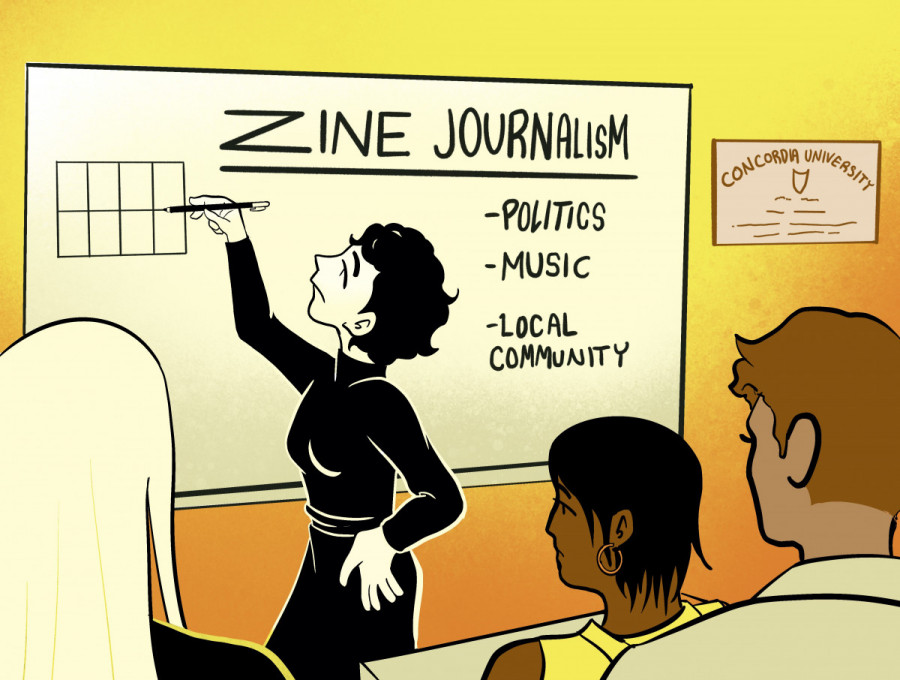
Recognition of this overlap is strangely absent at Concordia, a school with both reputable journalism and fine arts programs. The university has hosted workshops and events centred on zines, but they are scarce within the journalism department. Siloing these disciplines means missing opportunities for journalists to gain multimedia skills and adapt to journalistic conventions outside the confines of traditional outlets.
Beyond the pedagogical benefits of incorporating zines into journalism studies, Concordia is missing a chance to engage more Canadians with the news.
Canada is having a zine resurgence, especially among Gen Z. Some attribute this renewed interest in print to disenchantment with social media, with almost 60 per cent of Canadians feeling highly concerned about algorithmically platformed misinformation online.
Canadians are also reporting AI-generated content as a serious concern when seeking news online. Given their print format, zines are a way to circumvent these issues and potentially boost news engagement.
This is not to say that zines will replace traditional media outlets and that everyone will get their news by passing around pocket-sized pamphlets at the local corner store. But it’s worth noting that independent media is already playing a role in supplementing traditional outlets. The Canadian Journalism Foundation found that 31 per cent of Canadians get news from independent creators, such as videos, blogs and podcasts.
Encouraging journalism students to bring their work to zines doesn’t have to be an onerous task. Concordia’s department of journalism could host department-wide workshops on zine-making with local creators, facilitate partnerships between journalism and fine arts students to get work printed or introduce classes on zines to multimedia coursework. These classes would not only give students the practical skills to make zines, but also the chance to rethink traditional journalism formats and adapt to changing times.
By treating zines and journalism as separate, Concordia is neglecting this chance to foster innovation amongst the next generation of news-makers. It’s time that the university brings print media and journalism together, side-by-side, where they belong.
This article originally appeared in Volume 47, Issue 6, published November 24, 2026.