Concordia University under the Parti Québécois
What policies does Paul St-Pierre Plamondon have in place for students?

Concordia University students are raising concerns about the future of tuition fees and international enrolment following the Parti Québécois (PQ)'s victory in the Oct. 5 provincial election.
Premier Paul St-Pierre Plamondon's government has proposed reducing the number of international students in Quebec and changing the way universities are funded.
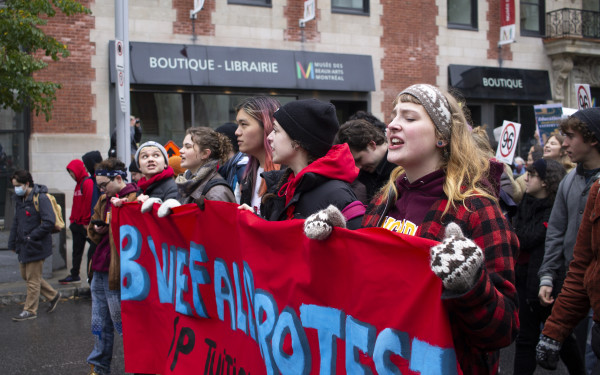
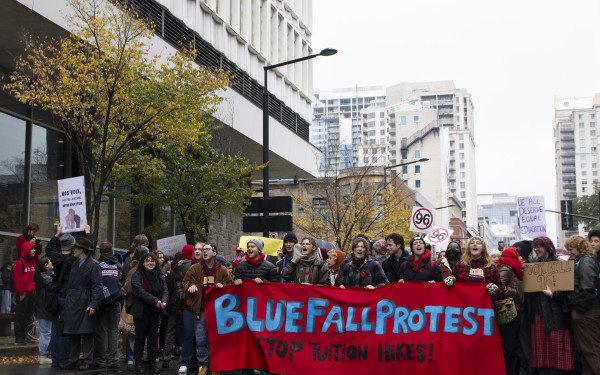
These proposals come after years of uncertainty for Quebec’s anglophone universities. In 2024, the Coalition Avenir Québec (CAQ) government increased tuition for newly enrolled Canadian students from outside Quebec, raising annual fees from approximately $9,000 to $12,000.
While the Quebec Superior Court ruled against the increase in April 2025, the CAQ maintained the higher fees, and the PQ has not committed to reversing them.
Instead, St-Pierre Plamondon has stated that within the education system, he wants to prioritize French-speaking students. The premier is planning on cutting the number of anglophone international students in Quebec universities by half.
For many Concordia students, the rise in tuition fees and the prioritization of French-speaking students limit the possibilities for international students to participate in Quebec’s culture and economy.
Alberto Gomez, a political science international student from Venezuela at Concordia, expressed his discontent with the government’s proposed policies.
‘‘I do understand the prioritization of French students, but as an international student who arrived here without speaking French, I do feel targeted. I try to adapt myself, and I tried to learn French, and it's just hard to see how limited it's been since I arrived,” Gomez said.
The Parti Québécois’ immigration plan would heavily reduce temporary immigration and cap the number of international students at around 50,000, though it claims it would also acknowledge their contributions. Only two groups would be given priority to gain residence in Quebec: foreign francophone students who have been working in Quebec for two years and workers hired by companies in fields with labour shortages.
Marie-Laurence Roy-Miquelon, a political science student at Concordia, expressed that, as a francophone herself, the values of the Parti Québécois do not align with the needs of students in Quebec.
“I don't think it will do anything beneficial to only prioritize French-speaking students, since the majority of the people who want to come here want to learn Quebec’s culture, be a part of it and appreciate it,” Roy-Miquelon said. “In reality, it is just hurting the universities and the people who want to come here and participate in the culture.”
Loic Frazier-Spooner, a studio arts student from Ontario, is noticing the disparity between his education and his tuition fees.
“I'm angry. I have to pay more in tuition, and I'm not happy about that. The studio arts program is in an awful building, and there’s no space in the classrooms for all the students in visual arts,” Frazier-Spooner said. “[...] So I am paying extra in these tuition fees, but where does that money go? Not to Concordia’s programs or building repairs, clearly.”
International students who are trying to integrate with Quebec’s culture and the French language are still finding it hard to adapt within the system.
“I have made a lot of effort to stay here, but sadly I am not even certain of where I am going to be next year because of this. My fear is being able to speak French and not being able to get my residence just because of my origin,” Gomez said.
The Link reached out to the PQ and its communications office for comment, but did not receive a response in time for publication.
This article originally appeared in Volume 47, Issue 6, published November 24, 2026.