Albertan students reflect on referendum
Concordia students from Alberta shared their experiences with the potential Alberta referendum
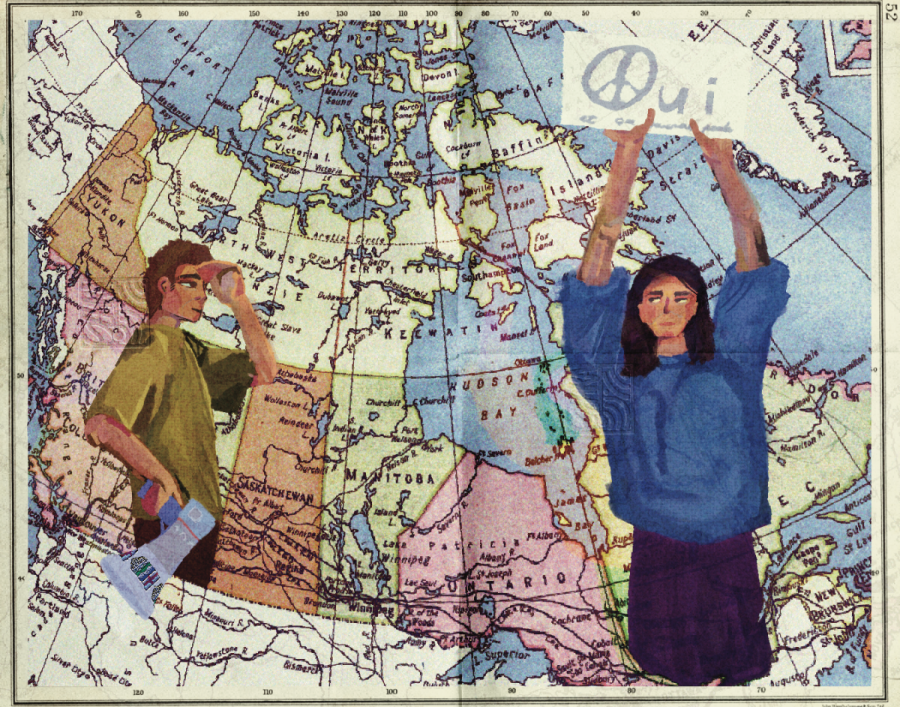
Alberta hosted a vote on the possibility of a referendum on Oct. 19, with the results dictating that the province will remain in Canada and an official referendum on sovereignty will not take place.
Quebec has held two referendums on sovereignty, first in 1980 and then again in 1995, when the population voted to remain in Canada by one per cent. The Parti Québécois (PQ) won the provincial election in October, with one of its campaign objectives being to host another referendum in the coming years.
Leah Salim-Ullyot, a first-year student at Concordia University originally from Calgary, said that she felt remaining in Canada is essential for Alberta.
“The only thing that Alberta really came together for was staying in Canada,” Leah said.
Leah’s family was largely on the same page about remaining in Canada, but other segments of her community were somewhat supportive of the referendum’s ideals. She also said that Alberta separating from Canada would violate important treaties with First Nations.
“I think that even going forward with a ballot to potentially separate is this new age of colonization, almost,” Leah said.
While Leah was uneasy about the possibility of another referendum, she felt it made more sense in the context of Quebec’s past relationship with Canada and in the current political climate. She did not see the same historical motivations present in Alberta’s referendum movement.
Sabine Salim-Ullyot, a fourth-year student at Concordia and Leah’s sister, moved to Montreal from Calgary three years before her sister in a vastly different political context. She expressed her own concern about the referendum.
“I was scared that it was gonna affect my citizenship. I didn't know what that would look like,” Sabine said. “I was nervous about insurance. I have a lot of problems with insurance as it is.”
Sabine did not notice any pro-separatist rhetoric from her community in Alberta, although she acknowledged that living in Montreal buffered her from Alberta politics. She said the separatist rhetoric in Alberta was definitively right-wing, while Quebec separatists fall on both ends of the political spectrum.
“I think that there's a higher likelihood of a referendum being passed in Quebec […] But they're both indicative of general social unrest, I think,” Sabine said.
She also noticed a stark difference in the political climate when she arrived in Montreal in 2023 compared to when her sister came three years later.
“When [Leah] moved here, it was immediately pre-PQ winning, and it was a huge conversation. When I first moved here, it wasn't something that I really considered or thought about,” Sabine said.
Elliott Platt, who moved to Montreal from Calgary last year to study at Concordia, called the first nine questions in the Alberta referendum vote “ridiculous.”
“[They are] blatantly anti-immigrant, phrased [as if to] confuse [people]. I felt like I was being tricked. I can read at a university level, and even I was kind of like, ‘What the hell are they trying to say here?’” Platt said.
He mentioned that Calgary can be an apathetic place politically, but that there was a high turnout on the question of a potential referendum, in part because of the threat of Americanization.
“I think this really got people a little bit shaken and afraid,” Platt said. “I was actually genuinely scared, living away from Alberta [that] my vote potentially wouldn't get in on time,” Platt said.
Sophia Zenatis, who also arrived in Montreal from Calgary, said she was worried about the impact of a potential referendum in her home province.
“My family still lives in Calgary and the possibility of the province being potentially separated from the rest of the country had me a little shaken, just thinking about the future and what it would mean for me and the people I care about back home,” Zenatis said.
She said that while the political context in Quebec has become “more alarming,” she still sees Quebec as part of Canada.
“I’ve always viewed Quebec as innately Canadian and vice versa,” Zenatis said.
This article originally appeared in Volume 47, Issue 6, published November 24, 2026.