Quebec’s video game industry wants to reclaim its space in cultural circles
With international recognition secured, the industry is now looking to achieve it at home
Quebec’s video game industry generates $1.4 billion in annual revenues, according to La Guilde du jeu vidéo du Québec. Yet local talent feels left out of cultural conversations.
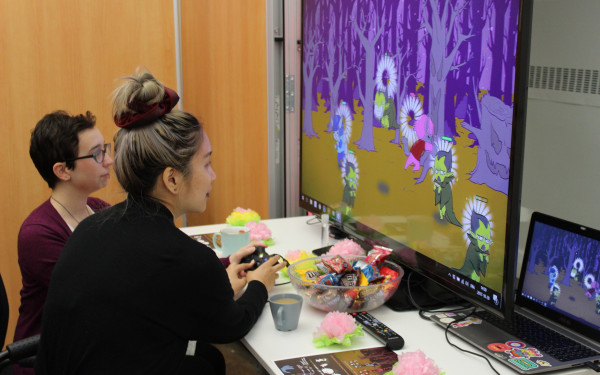
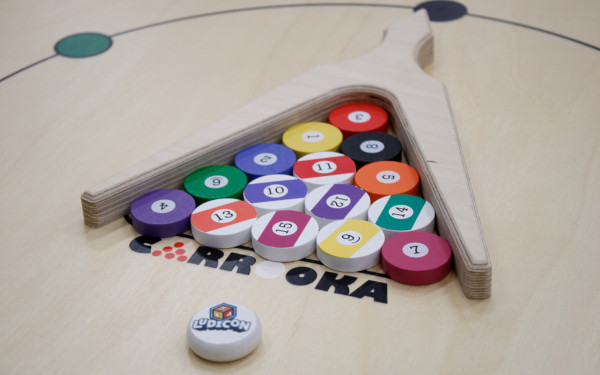
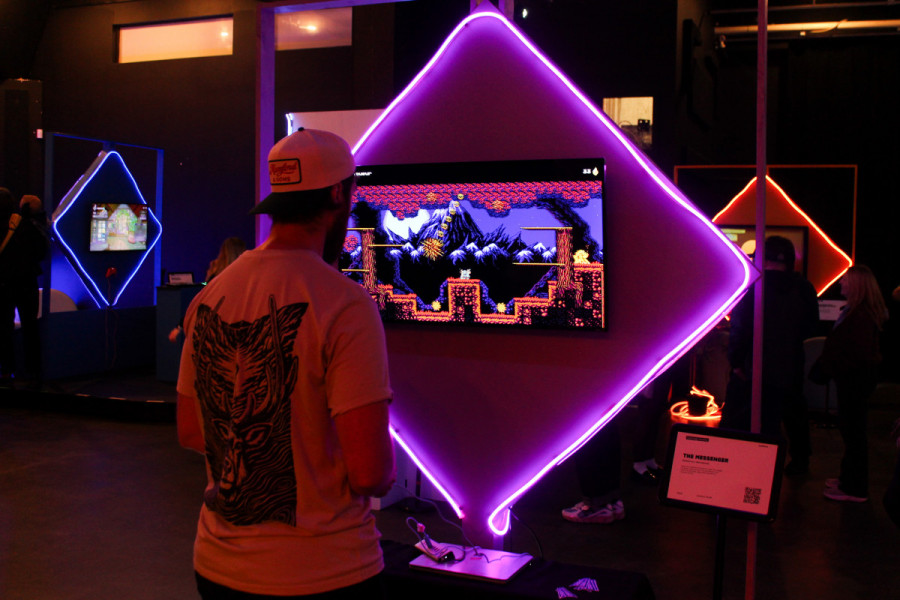
To bring more attention to locally developed games, industry members gathered at Ausgang Plaza on St-Hubert St. on Nov. 14 for the inaugural Buy a Quebec Video Game Day, held as part of Festival Gros Joueurs.
Gamers in the city have likely already bought local games, but they might not know it. Making sure they have that knowledge is the mission of gamesfromquebec.com, a website showcasing local expertise launched by La Guilde.
According to Émilien Roscanu, the communications and operations director at La Guilde, the decentralized distribution of video games makes it impossible to quantify how many Quebec-made games are sold. The organization wants to measure the initiative’s success by the strength of the industry.
We’re very profitable, we’re very known internationally, but when it comes to the local provincial ecosystem, people don’t necessarily give the same value to game creation as they do to other industries. — Chloé Lussier, co-founder, Lowbirth Games
“The fact that an indie video game is successful globally permits the studio to make the next game. This is a success in its own,” Roscanu said.
His organization represents more than 400 members, ranging from independent developers to major studios and universities.
Chloé Lussier co-founded Lowbirth Games, an independent studio that develops narrative games. She believes Quebec's video game industry deserves greater recognition at home.
“We’re very profitable, we’re very known internationally, but when it comes to the local provincial ecosystem, people don’t necessarily give the same value to game creation as they do to other industries,” Lussier said.
For Lussier, Quebec’s cultural diversity is a strength that shines in the multitude of video games created in the province. She sees game creation as a cultural export that sits alongside music and films.
“We think we should all help each other because we need music in our games, we need voices, even sometimes circus artists because you need to have motion capture,” Lussier said. “It's a very, very interdisciplinary craft, and I think there's so much opportunity.”
Jules Gosselin Beaudet, the founder of the Festival Gros Joueurs, said his festival was born from the realization that there is space for and a need to establish video games as an art form and a cultural object in their own right, putting it on equal footing with cinema, theatre and music.
The festival puts that vision into practice by bringing game developers together with artists from other creative disciplines.
For Roscanu, that collaboration is what makes Quebec’s gaming industry special.
“We're a big family. We don't enter a lot in competition between ourselves; we see the world as our competition. So, there's a lot of chemistry of people helping each other,” he said.
Despite that sense of community, Quebec's video game industry faces growing economic uncertainty.
Mariève Beauchemin, the founder of the seven-person Montreal studio Fool Moon Games, said her experience in team management helped her enter the industry despite not having a background in game development. It was her love of the people in Quebec’s video game industry that attracted her to it. She believes keeping her team small helps limit the risks of operating in an unstable industry.
Layoffs have also affected major studios. On Nov. 19, Ubisoft announced cuts affecting 166 jobs in Montreal and Quebec City.
The rise of artificial intelligence has raised further questions about the industry's future, although its impact remains difficult to measure. When asked about AI in a follow-up email, Roscanu said there was not yet enough data to draw conclusions. He instead highlighted the growing competition facing developers.
“The number of games coming out every day is increasing, which creates more competition and makes it a challenge [for studios] to position themselves in a saturated market,” he wrote.
Alanah Villanueva, a gaming enthusiast who previously worked at a studio that closed this year, said the industry has become increasingly unstable amid ongoing layoffs.
Despite those challenges, Villanueva takes pride in discovering that games she enjoys were developed in Quebec. She welcomed the initiative to promote locally made games.
Ethan Frappier, an employee at Chez Rhox, a gaming and anime shop on Saint-Hubert Street, said customers rarely ask about Quebec-made games. Though with holiday shopping coming, he thinks it’s the right time of the year “to just start thinking about video games at large and from Quebec because that’s a pretty big debate right now.”
Assassin's Creed was the only major locally developed franchise he could identify.
For an industry with an established international reputation, that gap in local awareness is precisely what events like Buy a Quebec Video Game Day hopes to address.
This article originally appeared in Volume 47, Issue 6, published November 24, 2026.