Montreal’s new metro safety measures raise concerns over increased policing
Experts warn of increased surveillance across the metro network
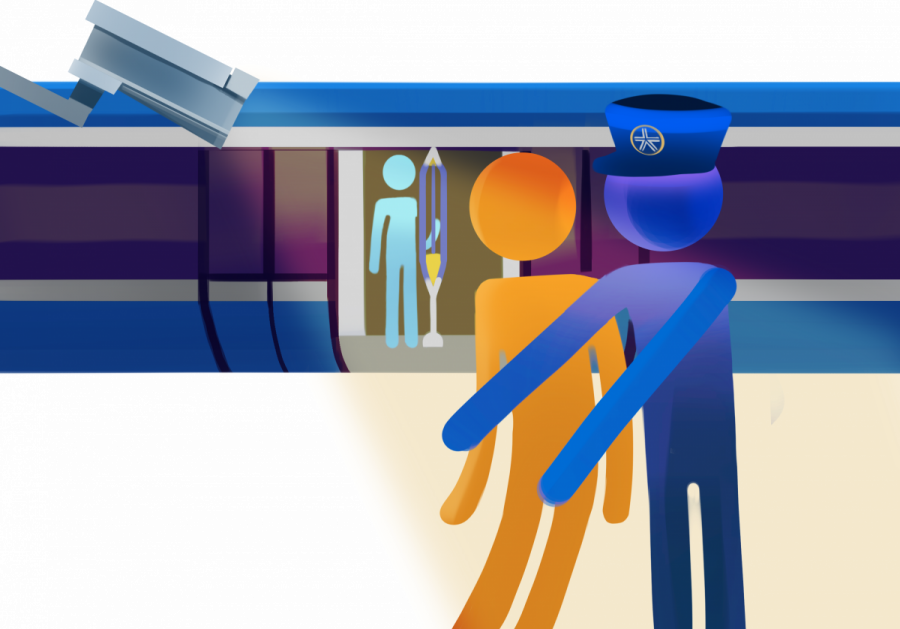
Montreal Mayor Soraya Martinez Ferrada and the Société de transport de Montréal (STM) announced six new measures on Oct. 13 to address passengers’ safety concerns, including more police officers, increased surveillance and expanded social services.
As part of its plan, the administration will invest $6.4 million annually to hire 52 special constables by the end of 2027, bringing the total to 230. The city will also deploy another 12 Montreal police officers throughout the network this fall.
“Montrealers must feel safe in the metro at all times,” Martinez Ferrada said.
According to figures reported by Le Journal de Montréal, 44 per cent of passengers surveyed in 2026 rated their feeling of safety eight or higher out of 10, down from 64 per cent in 2022.
Meredith Alousi-Jones, a graduate research assistant with Transportation Research at McGill, said that the city’s approach to improving safety was encouraging, but also noted that the increased police presence could affect passengers differently.
“Some people might feel more secure if they see more police officers or security personnel. Some people may feel less,” Alousi-Jones said.
Anna Kramer, an assistant professor at McGill University’s School of Urban Planning, questioned whether increased policing would improve commuter safety.
“I don’t think that there’s a clear link between that and the safety of the rides at all,” Kramer said. “In fact, it’s going to make it less safe for many people who are vulnerable.”
Kramer said that more at-risk populations, lower-income residents, women and racialized communities, who may depend on public transportation, could face greater scrutiny from the police.
She was especially concerned about how increased policing could affect the unhoused, particularly during the winter months when metro stations provide a place to stay warm.
“I think we have to be very careful to differentiate between things that make us uncomfortable and things that are actually a threat.” — Anna Kramer, McGill University Urban Planning Professor
The Montreal police (SPVM) has recently faced criticism over police conduct. On Nov. 2, the department fired seven officers, following an internal investigation. Two of those former police officers were also arrested on Nov. 21 on charges of assault, harassment and breach of trust. The arrests were based on allegations of discriminatory and racist acts.
Along with adding more officers, the STM plans to spend $3 million to improve the real-time camera monitoring system and increase the number of joint intervention STM and SPVM teams from two to six.
Cédric Couture, the deputy director and head of the SPVM’s Community Services Division, supports expanding security resources across the metro network.
“Strengthening our collaboration with the STM and increasing the resources deployed in the network will allow us to respond more effectively, while providing tailored support to those who need it,” Couture said.
Kramer questioned whether expanding police presence and surveillance would give officers too much control within the metro system.
“That puts a lot of power and discretion in the hands of the police,” Kramer said.
The mayor said that the measures will increase security while supplying additional support for vulnerable individuals, including access to warming stations.
The city also announced a partnership with St. John Ambulance, a national charity organization that provides community health services, to offer more social workers to help vulnerable people, including two intervention teams throughout this winter.
Kramer questioned whether these measures would address the problems that lead people experiencing homelessness to seek shelter in the metro stations in the first place.
“I think we have to be very careful to differentiate between things that make us uncomfortable and things that are actually a threat,” Kramer said.
Other measures announced include a five per cent increase in evening metro service starting in the fall of next year and the appointment of Martin Prud’homme to lead the newly created Safety and Organizational Resilience Division.
While Kramer was in favour of more frequent metro service, she questioned why the administration was investing in policing rather than tackling other issues affecting public transportation.
“They’re meeting the housing crisis with policing,” Kramer said.
This article originally appeared in Volume 47, Issue 6, published November 24, 2026.