
Find your voice at the NDG Art Hive
No matter who you are, there is a seat for you at the table at these Montreal centres
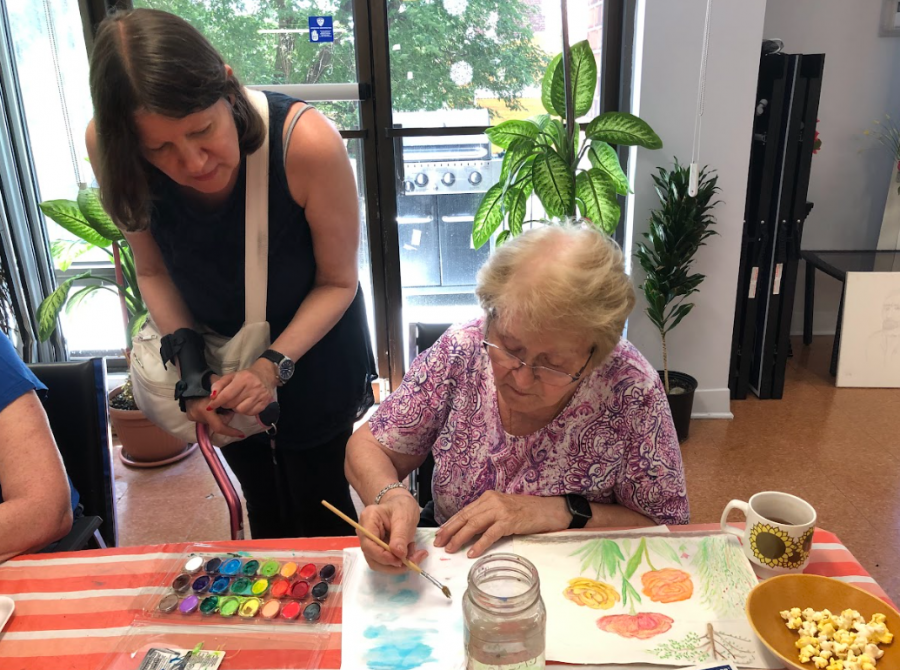
For over 20 years, Art Hives have been serving the Montreal community. In Notre-Dame-de-Grâce, a group of Hives has long been working to connect people in the neighbourhood and support those most in need of a place to belong.
While founded in Montreal, the Art Hives' map shows the network is expanding globally. They are most densely located in North America, but locations have begun to pop up in Europe, Africa and South America.
With various ateliers around the neighbourhood, the NDG Art Hive always has something going on. But what purpose does it serve? According to the Art Hive’s website, their mission is to be an atelier where anyone can be an artist, regardless of skill, age, background or any other factor.
Marlo Turner Ritchie, one of the co-founders of the NDG Hives, said the network aims to create a low-barrier, accessible space for art-making.
“We’re free, and we’re accessible, so we’re low barrier. So many art spaces are paywalled, and so many people can’t afford them,” Ritchie said. “Art Hives are a place you can come to make art regardless of what position you’re in.”
Art Hive’s spaces are government-funded and aim to be radically inclusive, working to create a sense of home and safety for all. This includes accessibility for the elderly and disabled, sensitivity and de-escalation training for staff.
The Hives are often located in low-income social housing buildings or pre-existing community centres in an effort to serve those who need it most. Several of their locations are in Société d'habitation et de développement de Montréal’s elder-only buildings.
"It’s really important for [the elderly], because they don’t have as many opportunities to socialize," Ritchie said. "It gets them talking and doing something fun."
Jonah Doniewski, an art education student at Concordia University and a facilitator at an NDG Hive, noted that facilitators prioritize building relationships, not just teaching art.
“I come in, I introduce myself to everyone, offer them coffee, tea, and ask about themselves,” Doniewski said. “It’s really important that we’re not just art teachers, but members of their community.”
Art Hives, at their core, are a form of community centre: a place for people to meet and form bonds they might never have expected to form. Unlike other art studios, there is no expectation of skill, or even of a final product. If they are open, anyone can walk in and just make art, whatever that means for them.
Doniewski emphasized the impact that a group like this has on locals, sharing stories of unlikely friendships and the other ways that community blossoms.
“And what’s more, people learn to get along. People who have adversity with each other, who have arguments,” they said. “And I think that’s really important, for people who don’t get along to be able to be in the same space. It’s beautiful.”
Giovanna Araujo Marimon is also a facilitator at the Hive, working primarily in the summer on their weekly park pop-ups. She highlighted how, especially in an open space like a park, intergenerational connections form.
"We get families, elderly people, new immigrants, people who just so happened to be there. They talk, they learn from each other,” Marimon said. “It’s one of my favourite parts, the intergenerational exchange.”
People may not realize that Art Hives began at Concordia University in the late 2010s. The network was founded by Janis Timm-Bottos, an associate art therapy professor.
The Hives were started as a way to help connect youth, especially new migrants who often don’t have friends or family when arriving on campus, and may struggle to form connections.
Analté Rodriguez-Diaz, an artistic wellness educator and head facilitator at one of the NDG Art Hives’ locations, wished more teens and young adults would get involved.
"We get a lot of kids and adults, but not many high-schoolers or university students,” Rodriguez-Diaz said, “and those are some of the people who need it the most.”
Marimon, who moved to Montreal from Brazil when she started at Concordia, reflected on the impact of these spaces.
“I wish I’d had something like this back home,” Marimon said, “and I hope someday there will be just as many Art Hives there as there are here.”
Ritchie shared a similar sentiment, saying they hope people know that the model is accessible to anyone interested in starting their own space.
“Anyone can start a Hive, and they should," Ritchie said. "I hope in the future we will see more places like this, across all continents, and that more people will know we exist and come visit us.”
This article originally appeared in Volume 46, Issue 12, published March 31, 2026.



_600_375_90_s_c1.JPG)