Liberal convention returns to Montreal after 10 years
Youth involvement in politics and the place of AI in Canada dominated discussion
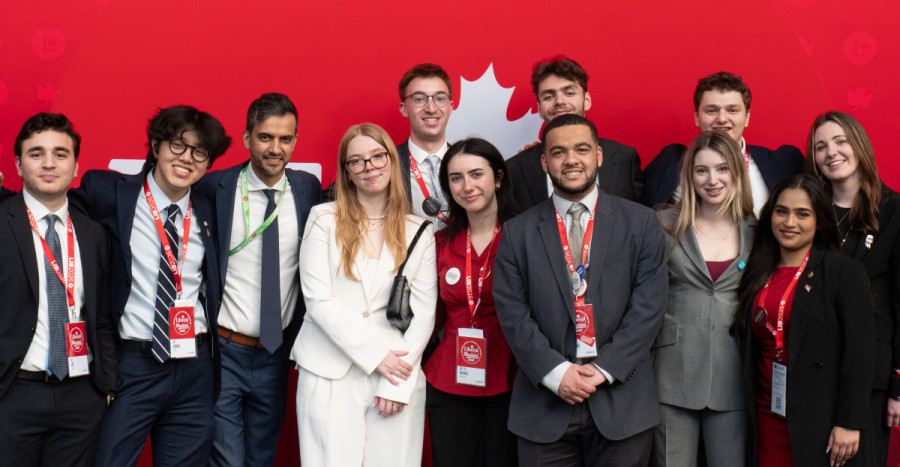
The 2026 Liberal National Convention took place from April 9 to 11 in Montreal and brought together party members from across Canada.
The opening ceremony began with a message from Ka'nahsohon Kevin Deer, a faithkeeper and knowledge holder from Kahnawà:ke Mohawk Territory.
“The only reason why we are here, each and every one of us, is to have an attitude of gratitude every day,” Deer said. “We all share a responsibility to care for what has been given to us.”
Following Deer’s speech, attendees heard from Montreal Mayor Soraya Martinez Ferrada, who made a point to highlight the importance of city centres.
“Montreal is essential to Canada's success. Urban challenges are also the country’s challenges,” Martinez Ferrada said. “The federal government must be a direct partner of major cities.”
Youth and commissions
The first day saw the regroupment of a number of commissions, namely the Indigenous Peoples' Commission, the National Women’s Liberal Commission, the Senior Liberals' Commission and the Young Liberals of Canada (YLC) commission.
With the convention bringing together young members from across the country, youth engagement emerged as a central talking point.
Two slates ran to lead the YLC: Team Renaissance, promoting accessibility outreach and grassroots renewal and Team New Generation, emphasizing structure, experience and national coordination.
Both slates raised concerns about declining youth engagement in politics and the need to reconnect with younger voters.
Nate Manis, a candidate with Team Renaissance, said the YLC needs to better connect with young people, especially through social media and online platforms.
“There’s not that many of us, and we need to grow and reach more people,” said Manis.
On the other side, Nicolas Gosselin, who led Team New Generation, said the YLC is already strong but needs better coordination across the country.
Gosselin also highlighted the importance of diversity, saying his team represents different regions and communities across Canada.
“We are the only people slate with candidates from Alberta, from Saskatchewan, from Nova Scotia, and we’re extremely proud of that,” Gosselin said.
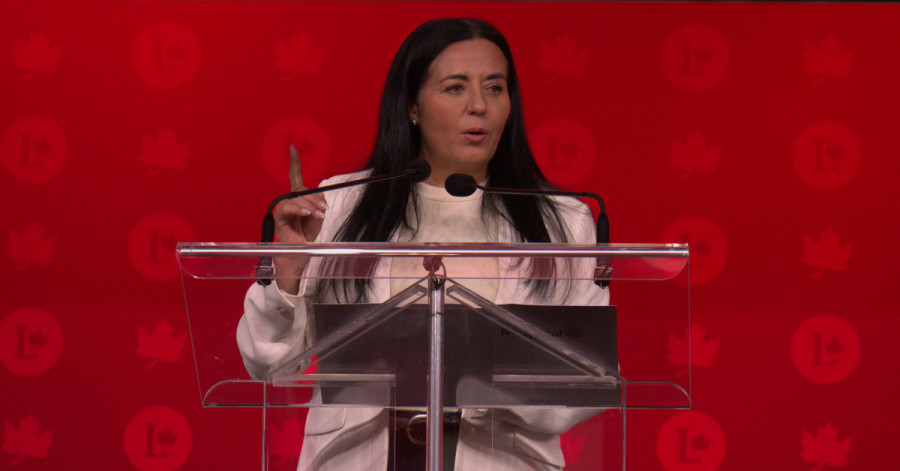
MPs highlight local and national priorities
Several members of Parliament used the convention to present their approaches to both local and national challenges.
Abdelhaq Sari, MP for Bourassa, pointed to Montreal’s role as a major student and economic hub. He emphasized the need to better connect education, immigration and city life.
“We have to talk about these topics here, because Montreal is a student city, university city,” Sari said. “The youngest people should be a stakeholder in this discussion.”
Sari also highlighted the role of international students—as a previous international student himself—and the need to support them more effectively.
Sari also pointed to the need for more housing and shared spaces, as well as investing in youth and infrastructure to create stronger communities.
Sameer Zuberi, MP for Pierrefonds–Dollard, echoed the importance of youth participation in public life. Speaking about his own path, Zuberi connected his political involvement to his time at Concordia University.
“My start as a parliamentarian [began] when I was a mathematics student at Concordia University,” Zuberi said. “I learned so much there about social movements, about activism and social change.”
Policy debates on technology and youth
On the final day of the convention, delegates voted on 24 policy resolutions. Of these policies, two were focused specifically on the intersection of youth and technology.
The first policy, “Protecting Canadian youth from social harm forward,” seeks to restrict youth’s access to social media platforms.
The policy listed a number of risks associated with social media, including increased anxiety, cyberbullying and access to harmful content. It suggested implementing stronger rules for platforms, including setting a minimum age requirement, improving privacy protections and reducing harmful design elements.
Another policy, brought forward by the Quebec delegation of the Liberal Party of Canada, proposed limiting access to AI chatbots for people under 16 due to concerns the technology can worsen mental health and increase loneliness.
Both policies were adopted.
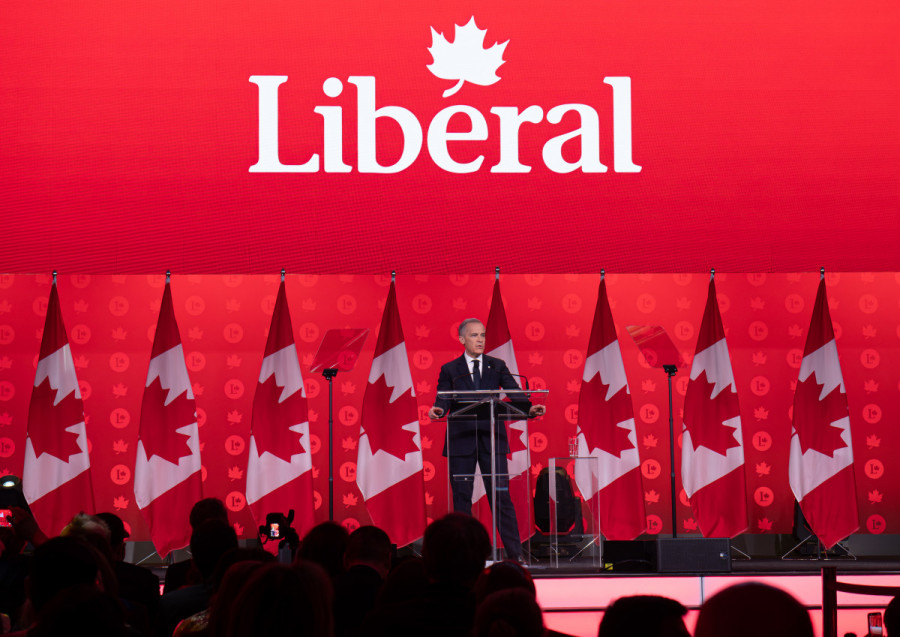
In his final address, Prime Minister Mark Carney said that Canada is at a turning point, placing an emphasis on collective action.
“United, we will build Canada strong, a Canada strong for all, Canada strong that no one can ever take away,” said Carney.
Carney spoke of the rise of artificial intelligence, calling it “inevitable,” and outlining the importance of AI being governed by what he called “Canadian values.”
“Technological change is accelerating,” Carney said. “We can either shape our future with AI or let it control our destiny.”
Team Renaissance takes the win
Following Carney‘s closing speech, the results of the YLC election were announced, with Team Renaissance emerging as the winners.
“I’m really proud of our team and the race that we ran. It’s been almost a year of working towards this, to really grow and connect the youth wing across Canada, ” Team Renaissance member Nicholas Aboagye said.
Abdenour Douraid, a law student and Liberal activist attending the convention, shared his opinion on Team Renaissance’s win. He said that although he supported Team New Generation, he believes the results came down to a greater mobilization effort from Team Renaissance.
“The team that brings more people to vote has a better chance to win,” Douraid said.