
Everlastingly pacific
Canada has an impartiality problem
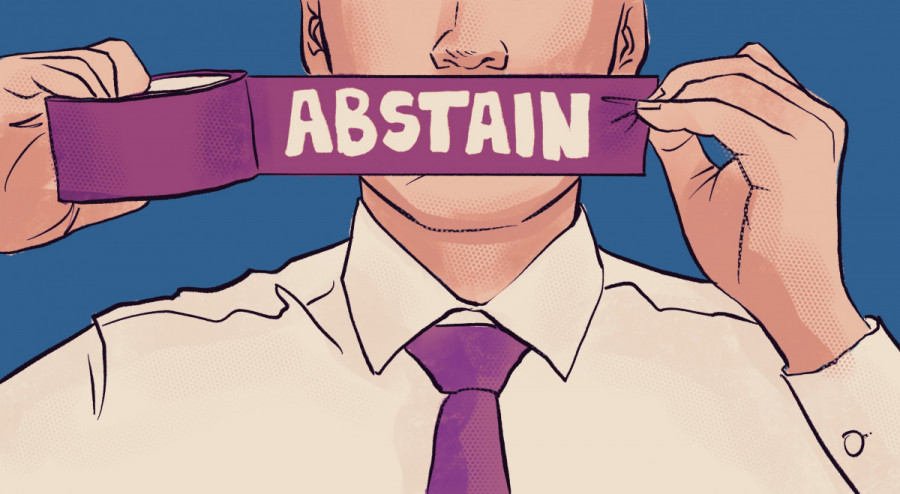
Canada is among the 52 countries that chose to abstain from a United Nations vote declaring the transatlantic slave trade the worst crime against humanity.
Despite consistently positioning itself as a global leader in human rights, this moment exposes Canada’s pattern of cautious neutrality on controversial issues. And this also isn’t new. It is evident in the country’s prolonged failure to acknowledge the violence and systemic harm inflicted on Indigenous Peoples.
Canada works hard to maintain its “peaceful,” diplomatic reputation. On the surface, this identity is admirable. However, diplomacy can sometimes blur into avoidance.
When faced with difficult historical and political realities, this commitment to neutrality often results in silence. Canada’s abstention from the vote on the transatlantic slave trade is not just a political decision but reflects a broader national habit of sidestepping uncomfortable truths. Part of this discomfort lies in Canada’s own overlooked history with slavery.
Public discourse frequently minimizes or omits the fact that slavery existed on Canadian soil. The dominant narrative tends to focus on Canada as a refuge through the Underground Railroad, positioning the country as a haven for enslaved people fleeing the United States.
While that history is real and important, it is incomplete. Before Canada could be a place of escape, it was also a place of enslavement.
Many Canadians are unaware of this. When the topic is brought up, the response is often defensive: “But it wasn’t as bad as in the U.S.” This comparison does not excuse the history. Does the scale of cruelty determine whether something is worth condemning? Does “less severe” make it acceptable? This defensiveness shows how deeply ingrained the need to protect Canada’s moral image is, even at the expense of truth.
That impulse shapes how the country understands itself. Canada prides itself on multiculturalism, diversity and inclusion, values that are widely celebrated and, in many ways, valid. But they are often presented without fully acknowledging the histories that complicate them. A nation cannot genuinely celebrate diversity without also confronting the ways it has contributed to inequality.
This selective memory is actively sustained through education.
Canada’s history with slavery is not widely taught in schools, leaving generations without a full understanding of the country’s past. This absence creates a gap in collective knowledge, making it easier to maintain the illusion that Canada has always been on the “right side” of history. Without awareness, there is little pressure for accountability.
So, when Canada abstains from a vote like this, should we really be surprised? A country that struggles to fully acknowledge its own involvement in systems of oppression may find it easier to remain neutral on the global stage. Taking a firm stance would require not only condemning the past but also recognizing its ongoing consequences.
Because the legacy of slavery is not confined to history, it continues to shape present-day inequalities.
Black communities in Canada still face systemic barriers in areas such as employment, education and criminal justice. To abstain from a vote that explicitly names the transatlantic slave trade as one of the greatest crimes against humanity risks minimizing the very foundation of these disparities.
Canada’s reluctance to take a definitive stance may also be tied to its desire to appeal to a wide range of audiences, both domestically and internationally. Neutrality can be politically convenient. It avoids conflict, maintains relationships and preserves a carefully curated global image.
But at what cost? When neutrality becomes a default response, it signals a lack of moral courage.
This posture reads less like diplomacy and more like avoidance. A country that prides itself on progressiveness should be willing to confront difficult truths, even when they challenge its self-image. Acknowledging participation in historical injustices is not a weakness; it is a necessary step toward genuine accountability.
When it comes to issues as significant as the transatlantic slave trade, choosing not to take a stance is itself a stance.
If Canada truly wants to be a leader in human rights, it must move beyond symbolic gestures and comfortable narratives. It must be willing to confront its past honestly, acknowledge its role in systems of harm and take clear positions on issues that demand moral accountability.