
The Jeffrey Epstein meme phenomenon
Our increasing desensitization to real-world tragedies
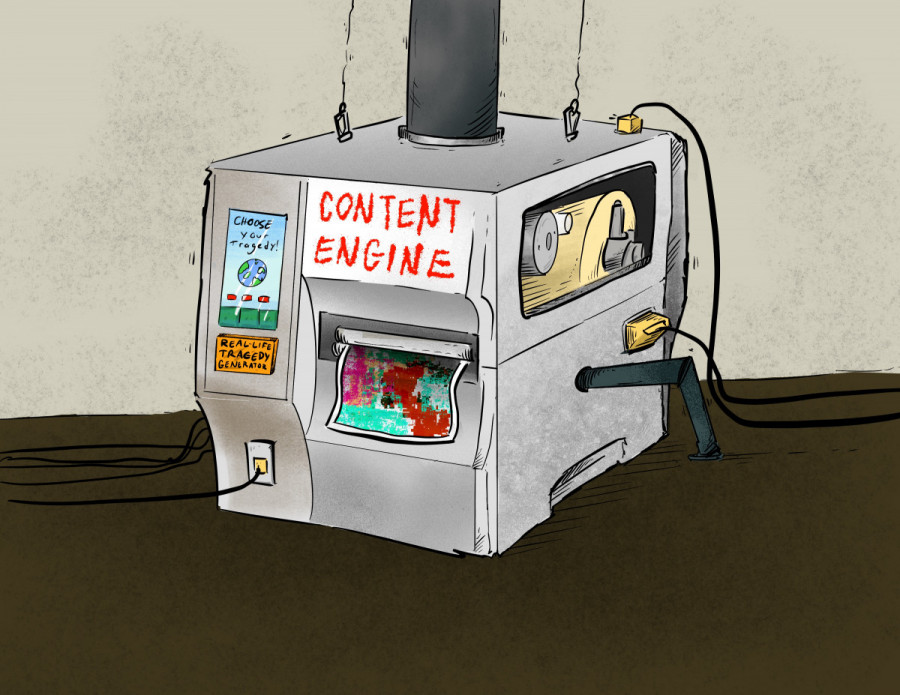
Everyone with an online presence has seen it.
The release of the Epstein files has renewed public attention on the centre of its main perpetrator, the late disgraced financier and sex trafficker Jeffrey Epstein. Despite the severity of the situation, the internet’s response has been to assess this terrifying situation through memes. Mostly AI-generated, these jokes reflect a broader reality regarding humour on the internet: edge gives you clicks, shock value brings attention and engagement, which can, in turn, result in monetary compensation.
Through these memes, in which Epstein’s name is the punchline for their “brain rot” humour, many have lost sight of the real victims whose lives were affected by his sexual abuse and trafficking network.
Epstein has been reduced to just another piece of “brainrot” culture, alongside figures like Sean (Diddy) Combs, turned into characters that can be reshaped into whatever generative AI spits out. In the process, the sheer horror of their crimes and the fact that young, vulnerable girls were the primary victims gets lost.
Comedy has always had a purpose. At its best, it challenges norms and forces people to look at uncomfortable truths. In A Comedian and an Activist Walk into a Bar, co-author and Rutgers University professor Lauren Feldman discusses how humour can disarm audiences and push real conversations about political issues. By transcending what is considered “permissible” in regular society, comedy allows for wider discussions to be made about heavy topics, even those such as sexual trauma or abuse.
Indeed, simply being “funny” is rarely the end goal with comedy. It is an art form that is carefully crafted, with the intention of saying something. Even if it’s reviled or controversial, comedy serves a purpose in our society. It gives space for uncomfortable conversations to be had, with meaningful critique.
In contrast, the Epstein AI memes flooding social media timelines do not serve any such purpose.
The content, which can be made with little to no human input at lightning speed, is not meant to comment on the severity of the situation or push for change and accountability. Instead, it detaches from reality, further desensitizing audiences to the violence behind it.
The internet makes it easy to stay anonymous, which in turn makes it easy to avoid accountability for what gets posted. And when real-world tragedies are filtered through screens and layers of irony, it becomes easier to lose sight of just how horrific Epstein’s actions were.
Dark humour has always existed, and it can serve a purpose. For many, dark humour is a way to cope with tragedy, a way of making sense of difficult events.
Epstein memes are often brushed off as “dark humour,” a way to cope with the reality of an elite pedophile network. But it’s hard to argue that the people making these jokes are the ones coping. Most were never directly affected by his crimes. Instead, the victims are almost entirely absent from the conversation, pushed aside in a culture that prioritizes detachment over empathy.
These memes are irrelevant to any real-world news or commentary. Rather, they insert Epstein in nonsensical, incomprehensible settings, divorcing him from reality and, in turn, from his horrific crimes. What’s framed as coping starts to look more like performance, another way to be edgy in an internet that has already seen everything.
Meanwhile, his victims are still here. Their stories are ongoing, and many of the people involved have yet to face real consequences. That reality stands in contrast to the way their trauma is flattened into a punchline.
AI creates an environment where nothing feels truly real, grounded or important. In a world where low-effort and uninspired content thrives, we lose touch with what truly matters. This cultural shift distracts its participants from reality, further perpetuating ignorance and carelessness about the perverse actions of those at the top.






_600_375_90_s_c1.jpg)