The World Cup is a disaster waiting to happen
FIFA has the authority to relocate or cancel its Guadalajara games, but it is choosing not to
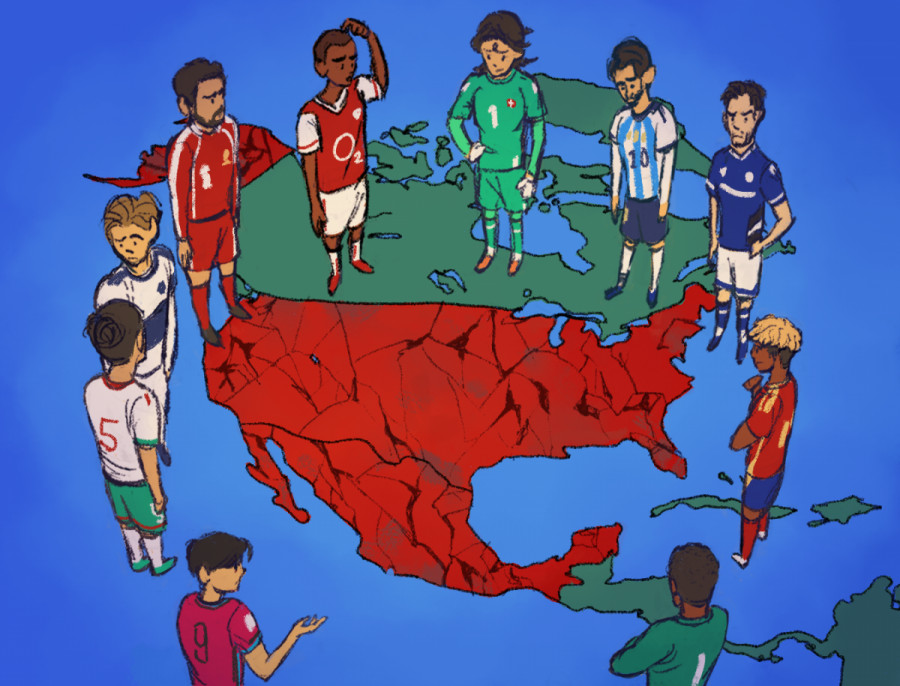
In late February, violence tore through several Mexican cities following the capture and death of Nemesio Oseguera Cervantes (El Mencho), leader of the Jalisco New Generation Cartel. Seventy people died. The violence stranded over 300 people at the airport and trapped another thousand overnight at Guadalajara's zoo.
Among the cities hit was Guadalajara, the capital of Jalisco, which is set to host four games at the 2026 World Cup. The tournament kicks off in early June.
A couple of days after the rise of violence, FIFA president Gianni Infantino responded by declaring, "We have complete confidence in Mexico, in its president, Claudia Sheinbaum. We are convinced that everything will go as smoothly as possible."
Sheinbaum, on that same day, assured the public there was "no security risk" whatsoever.
By late March, Mexico unveiled a security plan to deploy 100,000 military and police personnel. The move felt like excessive mobilization for a country that had just declared itself risk-free.
FIFA's approach to security demonstrates a pattern of deferring responsibility to the host nation, which bears the costs and risks, while FIFA profits. This structure allows FIFA to deny accountability if problems arise, reinforcing skepticism about their priorities and practices.
At the 2022 Qatar World Cup, FIFA banked a record-breaking US$7.5 billion in revenue. During that same period, a The Guardian investigation revealed that at least 6,500 migrant workers had died during the construction of stadiums and related infrastructure.
A Qatari government official disputed the figure, claiming only three work-related deaths had occurred, a claim that strains credibility given 30,000 men worked on stadiums alone, in extreme heat and poor conditions.
FIFA's response to this human rights controversy was silence. Infantino encouraged all 32 competing nations to "focus on the football" and not let the sport "be dragged into every ideological or political battle."
This declaration was not because he cared about the integrity of the game, but because he feared the growing controversy that threatened FIFA's image and, more importantly, its bottom line.
Infantino's call to separate sports from politics is laughable, given that he presented Donald Trump with the inaugural FIFA Peace Prize in 2025. Infantino gave the award, "in recognition of [Trump's] exceptional and extraordinary actions to promote peace and unity around the world."
The very person who told athletes to stay out of politics performed this deeply political act. FIFA does not stay out of politics; it simply decides which politics are worth platforming and which voices to silence.
The obvious question is, why not move the Guadalajara games to the United States or Canada?
The U.S. is no refuge. The Trump administration banned fans from Haiti and Iran and placed restrictions on travellers from the Ivory Coast and Senegal. Dozens of countries have issued travel advisories warning their citizens about conditions in the U.S.
Then there is the U.S. Immigration and Customs Enforcement (ICE). Todd Lyons, the agency's director, said ICE is a "key part" of World Cup security. For undocumented fans and visa holders, attending a game could risk their status, safety or even life.
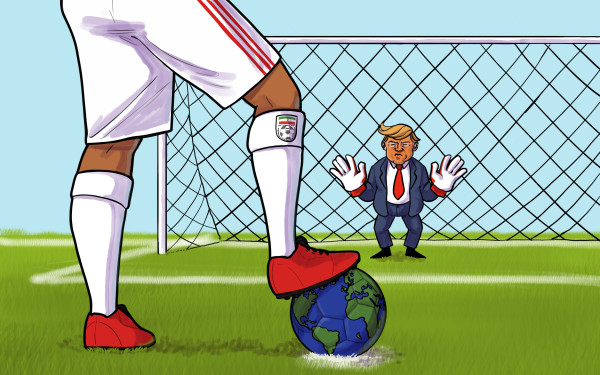
Furthermore, after U.S. and Israeli strikes that killed Supreme Leader Ayatollah Ali Khamenei on Feb. 28, Iran has refused to play on American soil, instead asking for a relocation, with no response yet from FIFA.
President Trump himself advised the Iranian team not to attend, stating he believes "it is [not] appropriate that they be there, for their own life and safety." What message is sent when the country hosting 75 per cent of the World Cup games cannot guarantee the safety of players and staff?
Fan bans, ICE threats, travel advisories and bombings. What was meant as a celebration of unity is increasingly becoming dangerous and potentially disastrous.
And yet, FIFA is doing nothing. It possesses the legal authority to cancel, reschedule or relocate matches due to health, safety or security concerns. It has the legal mechanism, the institutional authority and a clear precedent of violence in Guadalajara. The question is not whether they can act. It is why they are choosing not to.
As is the case with everything FIFA does, the answer comes down to money.
The federation has already sold tickets, fans have booked hotels and transportation, and sponsors are locked in. It has the authority to pull games from a host city, but that would mean losing money. FIFA’s solution to avoid incurring extra costs is to retreat into the background, point to Mexico's 100,000-person security plan, and sit on a clause it has no intention of using.
Real leverage belongs to the sponsors, federations, players and organizations that FIFA needs. However, the economic incentive to participate outweighs the moral decision to resist the federation. No qualified nation has ever boycotted a World Cup on political grounds, and based on all available precedent, none will now.
FIFA should not prioritize profit over the safety of athletes, workers and fans. But for an organization that pocketed billions while 6,500 workers died building its stadiums, it clearly already does.