Multisensory accessible art exhibition launches at Montreal’s MAI gallery
The Wayfinders project features art by and for differently abled people
On the evening of April 2, the Wayfinders: au gré des sens exhibition launched at Montreal’s MAI gallery, aiming to connect people through the experience of sensing.
The exhibition features the work of 10 contemporary artists and was created by an interdisciplinary, mixed-abilities collective of three curators.
Tamar Tembeck, one of Wayfinders’ co-curators, said that the exhibition explores themes of orientation and wayfinding amid a “disorienting” political and social climate.
“We wanted to bring together artists with and without disabilities, for audiences with and without disabilities, who investigate the world through various senses,” Tembeck said. “So not just sticking to sight, but exploring tactility, sound, touch, and even smell.”
The project utilizes alternative ways of sensing and experiencing art to bring people together and make art more accessible to differently abled communities.
These include multi-sensory pieces, written and Braille descriptions of visual art pieces, and QR codes linking to descriptions of various works in English, French, ASL and LSQ.
Accessibility is creating different entry points so that people can choose how they want to interact with the piece — Salima Punjani
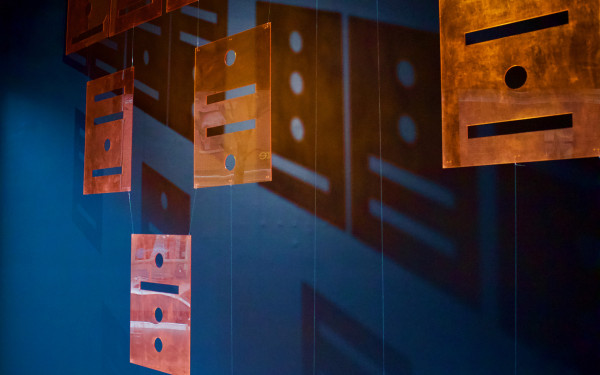
Collin van Uchelen, a pyrotechnics artist who is visually impaired, created Fire Flower, a series of interactive visual-tactile representations of fireworks that allow differently abled audiences to experience the pyrotechnic arts.
Fire Flower uses illuminated, engraved acrylic panels that show the burst pattern of a firework frozen in time, allowing viewers to trace the firework’s trajectory with their fingers.
The panels also have adjustable knobs, which allow those who are partially sighted to control the light’s intensity and colour, making it more perceptible and accessible.
“[Fireworks] create structures of light that are complex, sophisticated and ephemeral, and they only last mere seconds at most,” van Uchelen said. “What I’m hoping to do is open a window of perception, so that people who are both blind and who are sighted can more deeply appreciate the nuance and the essence of this art form.”
van Uchelen, who was sighted earlier in life, relies on memories and alternative ways of interacting with fireworks to create his pieces, such as having a sighted interpreter trace the pattern on his back with their fingertips.
“With the loss of my eyesight, I’m finding that there are other ways that I can understand the shapes of light that a fireworks shell burst creates,” van Uchelen said.
He also pointed to fireworks patterns named after flowers such as the peony, chrysanthemum and dahlia.
“Through touching flowers of these shapes, I can start to better comprehend how a firework would look if I were sighted,” he said.
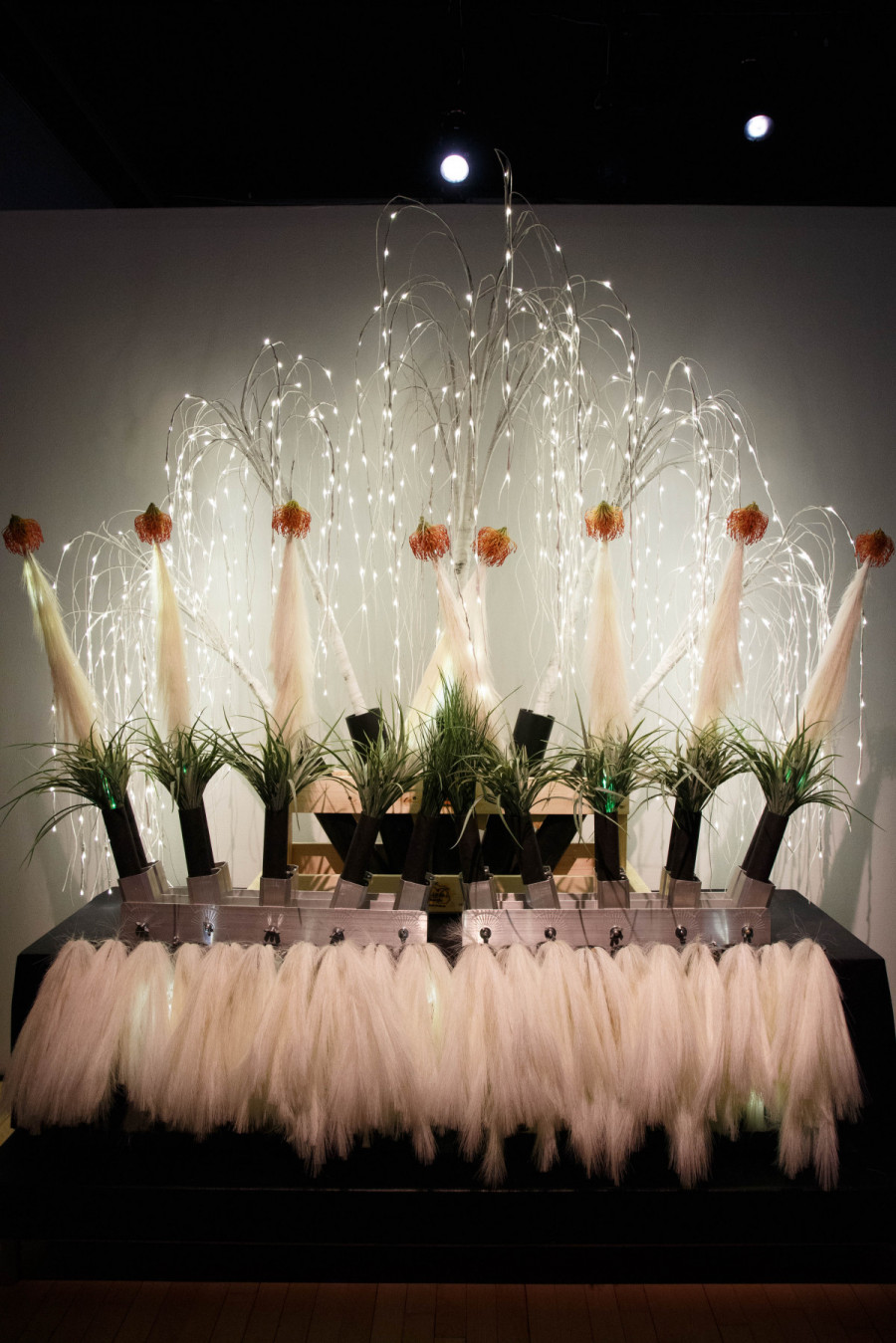
Social artist Salima Punjani created the multisensory project Sensory Glisk in collaboration with Glaswegian artist Greer Pester.
The piece includes colourful fabric sculptures that represent body parts such as fingers, eyes, ears and neurons, and five tableaux—including representations of artichoke flowers and Scottish waterways.
It also includes multicoloured lights and a vibrating platform that people can lie or sit on.
Vibrotactile transducer speakers play sounds such as those of waves, birds and a bush of berries being pruned.
Punjani says that the project is about sharing how she and Pester nourish themselves, and about the spaces that they find nourishing.
She notes that there are many ways for people to interact with the sculptures, such as touching, hugging, playing with or holding them, feeling the vibrations and listening to the sounds.
“Accessibility is creating different entry points so that people can choose how they want to interact with the piece,” Punjani said.
Punjani, who prioritized accessibility from the very start of the project’s development, said disability arts challenge traditional gallery norms by shifting away from visual hierarchies toward more inclusive, sensory experiences.
“It’s not just about having a visual hierarchy but rather thinking about different ways to incorporate the senses so that more people can feel welcome in art spaces and be welcomed into spaces of pleasure and joy and imagination,” she said.
Wayfinders: au gré des sens will run at the MAI gallery until May 16. Entry is free with no reservation required.