
Inside Mile End Kicks
Chandler Levack on Montreal’s music scene, early-2010s nostalgia and the charm of being awkward
Disclaimer: Answers have been edited for length and clarity.
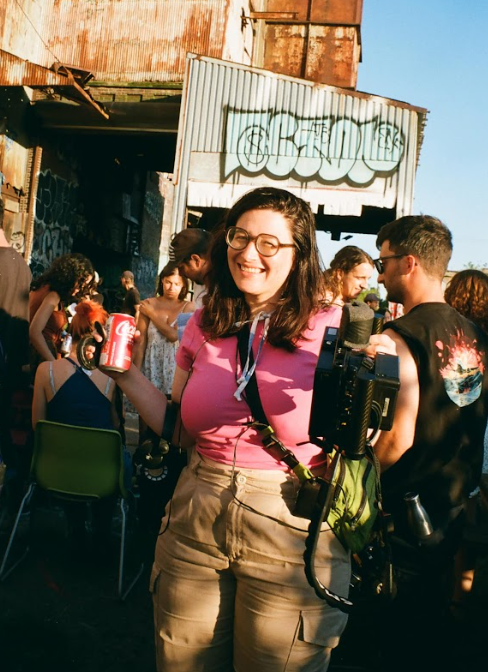
Chandler Levack is a Toronto-born writer, director, filmmaker and former music journalist whose work often explores characters drawn to creative scenes and the tensions that come with trying to belong to them.
Her debut feature, I Like Movies, premiered at the Toronto International Film Festival, where it was met with critical acclaim.
With Mile End Kicks set to release on April 17, Levack spoke to The Link about revisiting her early 20s, capturing the feeling of a Montreal summer and navigating the in-between space of being close to a scene, writing about it, and figuring out where you fit within it.
You’ve mentioned before that the film Almost Famous had a big impact on you, and even in your film, there’s a poster of it in the main character Grace Pine’s room. What was it about that film, or that idea of being a critic, that pulled you in at such a young age? Can you talk about that transition, from wanting to live inside those stories to eventually realizing you wanted to create them?
I think I really imprinted on Almost Famous. It was just kind of like, “How do I live inside of this movie?” And the answer I came up with was, “I’ll become a music critic.” When I was really young, like 19 or 20, I immediately started writing for magazines and newspapers. I always loved film too, but I didn’t think I could be a filmmaker at the time.
Over time, though, maybe from my early 20s into my 30s, I started realizing that I was really drawn to filmmaking and storytelling. It wasn’t like one big moment; it was more gradual. It felt like this quiet voice in my head that kept saying, “You want to make movies,” and it just got louder and louder and louder until I couldn’t ignore it anymore.
I started making short films and slowly building toward that, and that eventually led to I Like Movies. And then this past year has been this really strange experience where I’ve been working in Hollywood, doing a project with Netflix and Adam Sandler, while also releasing Mile End Kicks.
Those two projects are actually coming out at the same time, which feels kind of surreal. It’s this mix of something very personal and something much bigger in scale happening all at once, and I’m almost 40 now, so it’s been a bit of a crazy journey.
The film is set in Montreal, and Mile End in particular feels really central to it. What drew you to the city and that neighbourhood? Did you have personal experiences that shaped the story you wanted to tell?
I first moved there in the summer of 2011, when I was 24, which is when the film takes place. I had just finished my university degree, and I had always wanted to live there. I was obsessed with Montreal from a really young age. I actually got into Concordia University, but I got scared about the logistics of moving and living on my own at 17, so I didn’t go. But it always had this pull and allure for me.
So when I was 24, I thought, “OK, I’m not working, I’m going to try living in Montreal for the summer and just see what it’s like.” And it ended up being one of the greatest summers of my life. I met so many wonderful people and got really entrenched in this amazing art scene.
I found my apartment on Craigslist, right at the corner of Saint Urbain St. and Fairmount Ave., and at the time, it was $500 to live with someone, which felt unreal. I remember thinking, “Wow, all my Montreal fantasies could be coming true.”
As a music writer, I already knew the mythology of Mile End, that it was where bands like Arcade Fire were coming out of, and it really did feel like the epicentre of something. I had visited before, gone to shows, walked through the neighbourhood, and I was just completely enamoured with it. It felt like the most beautiful and interesting neighbourhood I had ever been in.
And I think that’s why it felt important to actually show the city as it is, not just the well-known landmarks but also the smaller, more subtle in-between spaces that people who live there recognize right away.
In the film, Pine blurs the line between critic and participant. She starts off wanting to write about the scene, but ends up being pulled into it. How much of that dynamic came from your own experience navigating those spaces?
I feel like I was always toggling between these two sides of myself when I was a young music critic. On one hand, I really wanted to be a serious cultural critic. I loved writers like Susan Sontag, Chuck Klosterman, Greil Marcus and Joan Didion. I had strong opinions, I cared deeply about music, and I wanted to write about it in a way that really situated it within a larger cultural context.
But at the same time, there was another part of me that just wanted to feel close to the people making the art. I wanted to feel cool, to feel like I belonged in those spaces. When you write an article about someone, or review an album, or even just get on the guest list for a show, those things can make you feel like you belong, or like you’re important in some way, even if that feeling is temporary.
It creates this really strange dynamic, because as a journalist, you’re often only given a short window into someone’s life, maybe 15 minutes to talk to them, and then you’re expected to write something that somehow captures who they are. In that moment, you have a lot of power, even if you don’t feel like you do.
So there’s this constant tension between feeling powerful and feeling completely insecure, between wanting to observe something and wanting to be part of it. That contradiction was really important to me when writing Grace (Pine), because it felt very true to how I experienced those spaces.
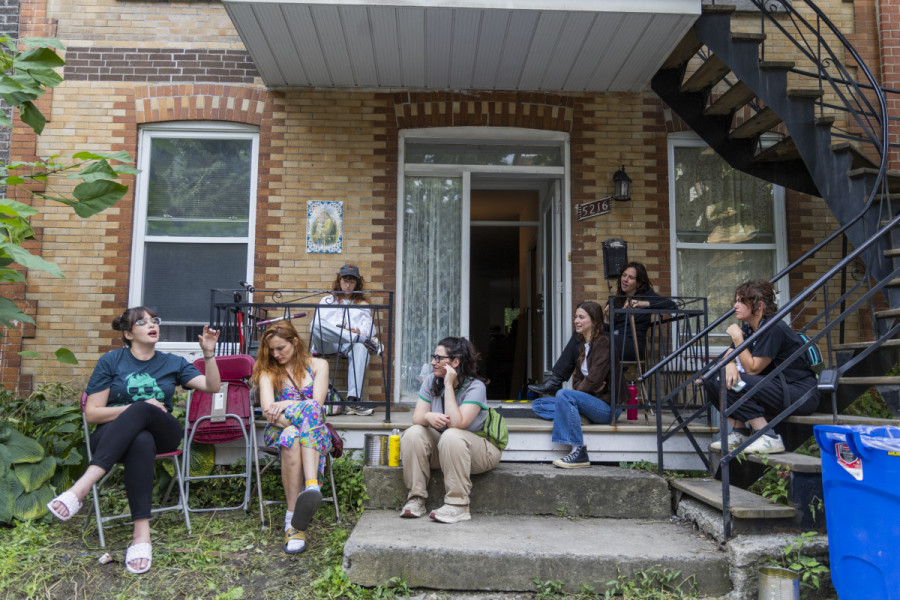
There’s a line in the trailer about whether girls who date guys in bands just want to be in bands themselves. How did you want to explore that idea, especially that feeling of being close to a scene but not fully inside it, and how that can shape identity?
For a long time, I thought I would never want to date a musician. I was really invested in critic culture, and a lot of the people I admired were older men who embodied that world.
But then I did fall really hard for someone in a band, and I started to understand the appeal. It’s very easy to project onto someone like that and give them qualities that might not actually be there.
I think I had a tendency to see those people as more than me, or more important than me, when really I just wanted to be them. I didn’t realize that I already had my own place in those spaces.
And I think that confusion, between wanting to be close to something and wanting to actually be it, can really shape how you see yourself, especially when you’re young and still figuring that out.
In a past list you shared of your favourite 2017 films, including Lady Bird, Call Me by Your Name, and Ingrid Goes West, there’s a clear interest in characters who are slightly awkward, deeply passionate and often navigating identity through art, culture and love. Your films seem to follow a similar thread. What draws you to that kind of protagonist?
I think I’m obviously writing about myself. I feel awkward all the time.
I also think that in a lot of films, protagonists are presented as very polished and well-adjusted, and that’s supposed to make them more likable. I don’t really relate to that. I don’t think a character has to be sanitized or bland for an audience to connect with them. I think people want to see characters who are messy and confused and who make mistakes.
I’ve found that in my own life, I often have to learn things the hard way. I’ve made a lot of decisions that, in hindsight, could have been avoided, or I’ve spent time on people or situations that weren’t good for me.
A lot of the work I’m doing now is me looking back at those moments and trying to understand them better, whether that’s relationships and friendships that ended, things I regret or ways I didn’t show up for myself.
I think making films is a way for me to process that and to try to make sense of who I was at that time. And maybe also to feel understood or to understand myself a bit more.
There’s been a lot of discourse about whether the rom-com is 'dead,' but Mile End Kicks feels like it engages with that genre in a really specific way. How do you see the film fitting into that space today?
I love romantic comedies, and I think they’ve always shaped me. When I first started writing this script, I kind of wanted to make my version of a rom-com.
I think they sometimes get a bad reputation, but a lot of the greatest films ever made fall into that category in some way. For me, it was about taking those familiar elements, like the love story or the love triangle, and approaching them from a different angle.
I was interested in what it looks like to tell a romantic story about someone who doesn’t feel deserving of love, and who is maybe drawn to the wrong people because of that.
So it’s still working within the genre, but also pushing against it a bit. It’s romantic, but it’s also awkward and messy and sometimes uncomfortable, and that felt more honest to me.
There’s been a lot of conversation online around nostalgia and the film, especially with people revisiting that early 2010s era. Some viewers in their 30s are joking that they feel old with their 20s being romanticized, while younger audiences are seeing it as the 'Montreal they were promised.' There’s also that Tumblr-era aesthetic, especially with casting someone like Barbie Ferreira, who was such a defining presence online at the time. How do you feel about engaging with that kind of nostalgia?
I saw some of those comments too, and I thought they were really funny. Someone said something like, “Is this a movie for 40-year-olds to feel nostalgic about their PBR (Pabst Blue Ribbon) days?” and I wrote back, “Hell yeah, brother.”
I’m a very nostalgic person, and for a long time, I would go back to places that meant a lot to me and feel disappointed that they didn’t feel the same. But I realized I wasn’t trying to recreate a place, I was trying to recreate a memory.
We looked at old photos, Facebook albums, what people were wearing, how rooms looked, all of those details. And with someone like Barbie Ferreira, there’s also that layer. I remember seeing her on Tumblr, just thinking she was so striking and special.
It was also funny because I was also working with younger actors for my Netflix movie, and when I’d suggest things, they’d be like, “That’s cringe,” and I was like, “OK, I’m officially old.” But that made it even more meaningful to go back and really recreate those small details in this movie.
Montreal also felt really different then. It was more affordable, people weren’t as consumed by social media, and there was a stronger sense of community. People were just at shows, meeting each other, existing in those spaces. So it’s been really meaningful to see both older audiences and younger audiences connect to that, whether it’s nostalgia or curiosity.
What do you hope people, especially young women navigating creative or music spaces, take away from the film, particularly when it comes to finding their place and sense of self?
I think what Archie says—one of the band members Grace (Pine) becomes close to—sums it up. He tells her, “Act casual. Swag it out. Nobody cares.”
I spent so much time worrying about what people thought of me and trying to be liked. But most people are just thinking about themselves. You make mistakes, you hurt people, you hurt yourself, and that’s part of it. Those experiences, the confusion, the heartbreak, all of it becomes something you draw from later.
It might feel overwhelming in the moment, like it’s going to last forever, but it doesn’t. You just have to give yourself the grace to move through it and figure out who you are on your own terms.





_600_375_90_s_c1.jpg)