Concordia prayer rooms future uncertain
Religious groups across Canada challenge Quebec’s Bill 21 in court
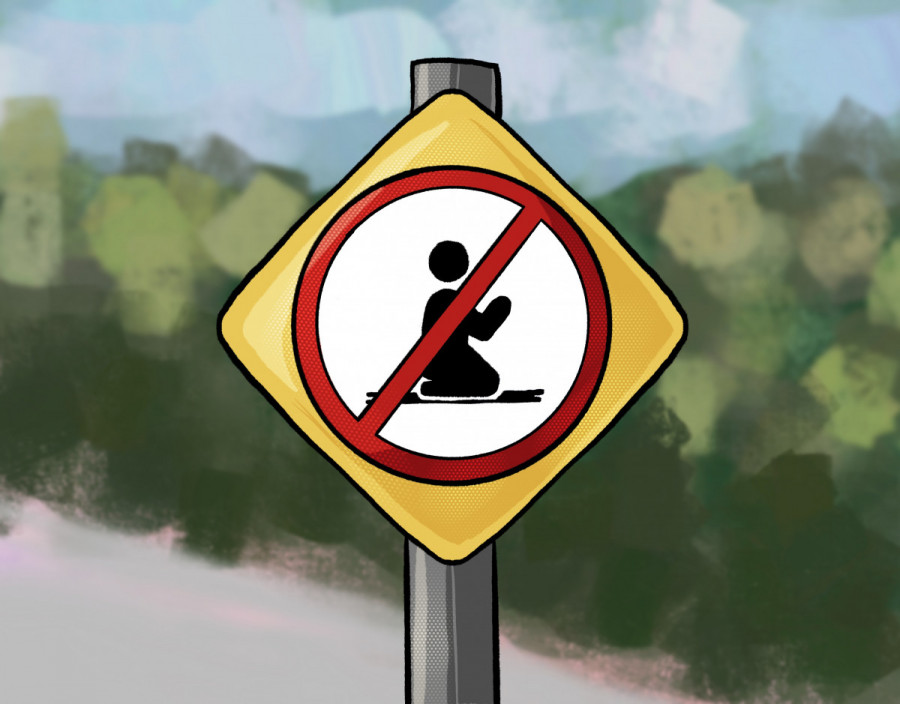
Concordia University spokesperson Julie Fortier has confirmed with The Link that the prayer rooms at Concordia will have to be shut down if Bill 9 gets signed into law.
In November 2025, the Coalition Avenir Québec (CAQ) government passed Bill 9, an expansion to Bill 21, the 2019 secularism legislation that seeks to limit public prayer and extend a ban on wearing religious symbols to daycare workers.
Bill 9 would require public institutions, including universities, to ban prayer spaces, unless municipally authorized, and prohibit public spaces from only offering religious-specific food menus.
“The bill prohibits prayer spaces, so if it is adopted, we will have to comply with the law,” Fortier said.
Bill 9 would also expand on Bill 21’s restrictions by forbidding daycare workers from wearing face coverings and requiring individuals to “have their face uncovered” when receiving a service.
Now, Bill 21 is being challenged in the Supreme Court of Canada, with the court opening deliberation on the case on March 26.
Samy Khelifi, president of Concordia University’s Muslim Student Association (MSA), said Concordia’s prayer rooms are currently open to students and will be until Bill 9 passes in the Quebec government.
In the meantime, Khelifi said that MSA is working with the university’s administration, fellow religious groups on campus and the Multi-Faith and Spirituality Centre on how to handle the potential upcoming changes.
Religious freedoms across Canada
On March 23, the Supreme Court began a four-day hearing in Ottawa on a constitutional challenge to Bill 21.
The bill is being challenged by 13 groups, including the Canadian Civil Liberties Association, the National Council of Canadian Muslims (NCCM), the World Sikh Organization of Canada and the English Montreal School Board.
Steven Zhou, NCCM’s media and communication lead, said the legal challenge is a turning point in their battle against the bill.
“Bill 21 [is] a second-class citizenship law, where people are forced to pick between their faith and their jobs,” Zhou said.
Zhou outlined that the Supreme Court lawsuit aims to challenge the “unfair, Islamophobic and unconstitutional” precedents the law is bringing to Quebec. He said the suit seeks clarification and change regarding “how politicians can abuse the notwithstanding clause when they are passing laws.”
According to NCCM statistics, 73 per cent of Muslim women in Quebec have considered leaving the province due to Bill 21. Additionally, 45 per cent of Quebecers either oppose or do not support the bill.
Similar legislation around religious freedoms might also be adopted across Canada soon.
On the federal level, Bill C-9, the Combatting Hate Act, proposes amendments to the Criminal Code to “crack down on hate crimes and public intimidation,” as stated on the Government of Canada website.
However, religious groups have criticized Bill C-9 for its broad interpretation and unclear standards. Their concern is over the bill not clearly defining the word “hatred”and about its removal of the religious exemption.
Civil liberties groups have also raised alarms about the bill, arguing it could criminalize peaceful protest and silence unpopular expression.
Despite criticism, the House passed the bill on March 25 and is moving to a vote in the Senate.
Meanwhile, in Quebec, Bill 9 is now moving through the parliamentary committee stage, with the latest amendments being made on March 17.
Danna Ballantyne, the Concordia Student Union (CSU)’s external coordinator, believes that Bill 9 will be consequential for Muslim students.
“It's quite clear to those of us who are in these meetings that there will be individuals and groups on campus who will be waiting with bated breath to make complaints against Muslim students who are praying in the halls or holding events related to prayer,” Ballantyne said.
Ballantyne added that the CSU is waiting to see if Bill 9 will be adopted before they make plans, but that in the meantime, concerns surrounding the bill are still very real.
“Our concern isn't just a loss of access to student spaces,” Ballantyne said. “It's also the way that Islamophobia is going to be really enabled through these policy changes.”
With files from Matthew Daldalian.
This article originally appeared in Volume 46, Issue 12, published March 31, 2026.