Labour advocates call for unionization of incarcerated workers
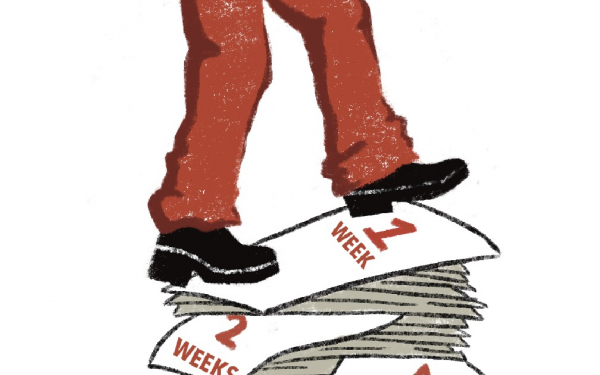
Payment under Canada’s correctional employment ranges from $5.25 to $6.90 per day
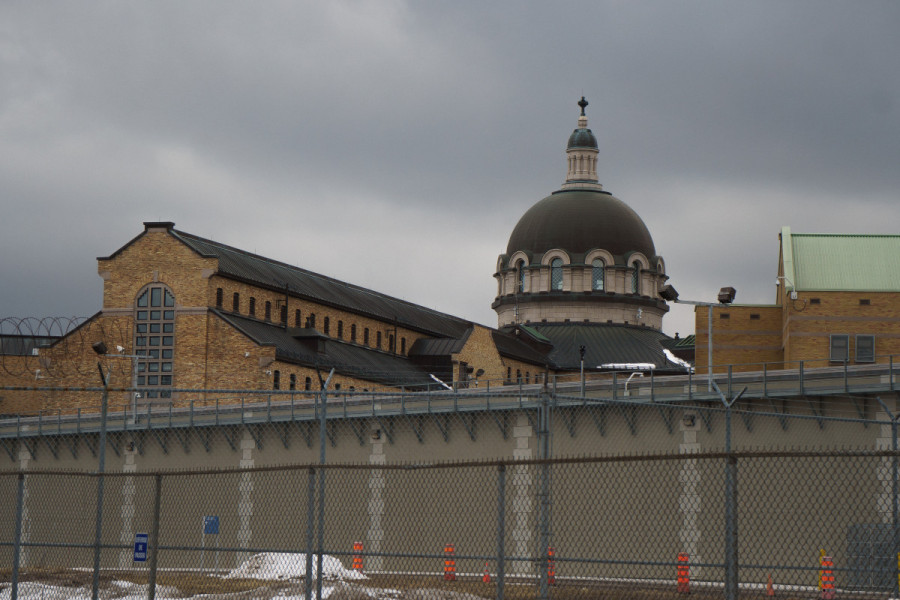
Before Jeff Ewert was the president of the Canadian Prisoners’ Labour Confederation (CPLC), he began picking up work inside the federal prison where he was incarcerated.
“You have something to do, [to] keep busy during the day, you get out of the unit, you're not stuck in the cell,” he said.
According to Ewert, for many inmates, working is one of the few ways they can venture outside the cell regularly.
“In many prisons, if you’re not working, they lock you in your cell during the workday,” he said. “It’s another coercive effect.”
Ewert primarily worked for CORCAN at first, a special operating agency within the Correctional Service of Canada (CSC) that offers employment to inmates throughout their sentence.
He was hired to build barriers for construction sites, but stopped when he no longer received bonus payments for working overtime, after the Stephen Harper government eliminated them in 2013.
“It's hard, it's physically intensive labour,” Ewert said. “When they took the bonus pay, I said, ‘No, I'm not doing this anymore.’”
Payment under CORCAN still approximately follows the same rates that were introduced in 1981 under the CSC pay program by security level.
The 1998 Commissioner’s Directive under the Corrections and Conditional Release Act created a system for inmates to receive different levels of pay from A to D with different criteria.
Level A earners receive the highest pay at $6.90 per day, while level D earners get paid $5.25 per day. Only 4.6 per cent of the incarcerated population make level A pay, according to a 2023 report by the Office of the Correctional Investigator, Canada’s federal prison watchdog.
“There are all sorts of issues of occupational health and safety, of injuries, of death, even in some cases, workplace accidents. Then there’s just the fact of working under threat of punishment, frankly.” — Jordan House, professor
Wages have also been a significant issue since Harper’s government implemented new room and board fees for prisoners in 2013, which amounted to a 30 per cent wage claw back. It also ignores that the original pay structure in 1981 was designed to account for room and board deductions.
Some experts believe that inmates don’t have a choice in deciding whether to work or not.
Jordan House is an assistant professor of labour studies at Brock University and co-authored Solidarity Beyond Bars: Unionizing Prison Labour.
House believes that inmates, like any other workers, possess economic incentives to find work.
“Prisoners need income to buy personal hygiene products, to supplement their diets,” House said. “It also costs money to maintain community connections, to have phone calls or stamps to talk to friends and family.”
He also said that federally, working can often be a part of an inmate’s release plan, meaning they may face pressure to continue working or risk compromising their release.
“In the federal system, the coercion is more roundabout, which is to say that work is a part of people's correctional plan,” House said. “Once they agree to work in a correctional plan, if they don't live up to that correctional plan, that can jeopardize their chance of parole.”
The problem is not necessarily the labour itself, House said, but rather the conditions in which this labour is conducted.
“There are all sorts of issues of occupational health and safety, of injuries, of death, even in some cases, workplace accidents,” he said. “Then there's just the fact of working under threat of punishment, frankly.”
House believes that since inmates don’t have an exit option, they are highly at risk of forms of mistreatment, abuse and unreasonable paces of work.
These conditions also present issues for women and gender-diverse inmates.
Brianna Bourassa is a project manager for the B.C.-based Centre for Research into the Processes, Outcomes, and Impacts of Incarceration. Bourassa believes there are many challenges that women and gender-diverse prisoners face.
“Access to healthcare and access to gender-affirming care are so challenging in prison,” she said. “Also, access to the material goods that you need for women, [such as] reproductive health items.”
Bourassa also said that, since there are a lot of inter-regional transfers—meaning transfers that happen between prisons—it makes it very difficult for incarcerated parents to remain in contact with their children.
Around two-thirds of incarcerated women in Canada are mothers, according to a 2017 study.
Bourassa also finds that, in her experience, many of the jobs available for inmates, such as sewing, cleaning or helping the elderly, are antiquated and aren’t always transferable after release.
“It seems like it's more [about] filling time rather than actually supporting people and giving them skills for future employment,” she said.
Ewert added that most prison jobs don’t provide inmates with the confidence to find employment after being released, which can lead them to reoffend.
“If you're sitting in prison for years on end, feeling like you're exploited, then you get out of prison, that's a terrible way to be,” Ewert said.
In May 2025, CORCAN announced the launch of their wildfire program, where inmates would be trained to provide support, mop-up and patrol operations once wildfires have been contained.
House said he worries that inmates will continue to be exploited there.
He added that a precedent has been set recently in the U.S., with critics arguing that California is overdependent on its inmates' firefighting program.
“I think there's going to be a temptation to squeeze prison labour in order to deal with some of these climate change issues,” House said.
Christopher Rootham is an adjudicator at the Federal Public Sector Labour Relations and Employment Board. In a 2024 preliminary decision responding to a constitutional challenge brought by the CPLC, Rootham said that prisoners do not have the same legal protections as other workers do, as they are not considered federal employees.
Ewert’s organization advocates for prisoners' rights to unionize and collectively bargain. He is currently being represented by the Ontario law firm Cavalluzzo and is taking the Treasury Board of Canada, which represents CSC, to court for this exclusion.
Ewert believes that gaining the right to collective bargaining will enable inmates to receive protections that will improve prisoner working conditions.
“In Canada, if you're a union member, you're entitled to the bare minimum wage,” Ewert said.
He said he also intends to bargain for workers to make a percentage of the CORCAN revenues on top of minimum wage.
“It needs to be done because you've got some of the most vulnerable members of society being treated abusively, in my opinion,” Ewert said. “We're being used to generate profit for the corruption of Canada.”
A previous version of this article misquoted Brianna Bourassa, writing that she had spoken about the challenges of accessing "gender reforming care." This is incorrect, the correct term Bourassa used was "gender-affirming care." The Link regrets this error.
This article originally appeared in Volume 46, Issue 12, published March 31, 2026.