Concordia to extend contract with food provider with ties to ICE
The decision comes after students voted to end exclusive contracts with Aramark in the 2024 by-elections
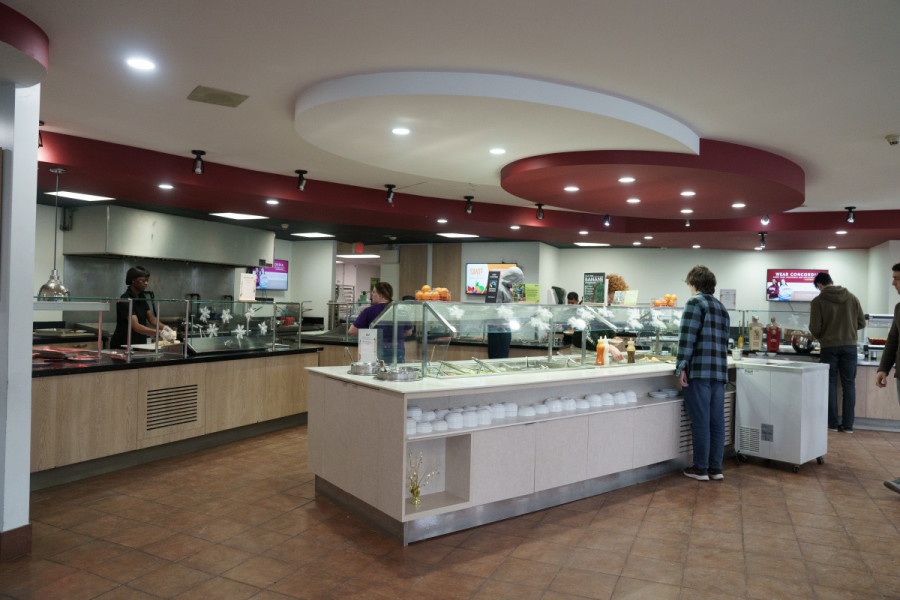
Concordia University confirmed with The Link it will extend its contract with food provider Aramark for another year following the contract's original end date in May 2026.
The decision comes after students voted to abolish contracts with the U.S.-based company in 2024. Its subsidiary, Aramark Correctional Services, provides food to 450 prisons and jails and has contracts with facilities in at least 35 states.
In 2015, Concordia officially made Aramark its primary food partner for on-campus meals.
Aramark handles the university’s dining halls, which cater 2,700 meals a day, seven days a week. Aramark also operates five retail locations on campus: Starbucks, LBEE Café and the Stingers Café at the university’s downtown campus, as well as Faro Café and Sweet Bees Café at Loyola campus.
Student disapproval
In the 2024 Concordia Student Union (CSU) by-elections, 83 per cent of students voted to abolish “exclusive food service contracts with multinational corporations like Aramark,” after which the position was added to the union's Positions Book.
Despite students adopting the position, Concordia has not moved to cancel its contract with the prison food provider.
According to Concordia spokesperson Julie Fortier, the university is exercising its option to renew its contract with Aramark for another year.
In an email to The Link, Fortier wrote that the decision was made after a “comprehensive evaluation of Aramark’s performance and also takes into account feedback from students received through a number of channels.”
Adam Semergian, the Arts and Science Federation of Associations (ASFA) academic coordinator, says the association, like the CSU, is strictly opposed to Aramark.
ASFA’s Positions Book outlines a number of concerns with Aramark and mandates that the association “see through the abolition of multinational corporate food service provision on campus.”
The position further mandates that ASFA, alongside the CSU, actively works on developing on-campus food service alternatives.
Semergian actively disagrees with the renewal of the Aramark contract. He compares it to Concordia's continued employment partnership with Lockheed Martin.
“Concordia is complicit in that it is supporting not-so-great companies," Semergian said.
Aramark’s history
Students have raised concerns with Aramark for over a decade, namely due to food quality issues, the company's ties to the U.S. Immigration and Customs Enforcement (ICE) and its use of prison labour in the U.S.
According to an American Friends Service Committee (AFSC) investigation, Aramark provided food to ICE immigration jails through subcontracts from the private prison company CoreCivic.
The AFSC also uncovered that Aramark provided food to state and local prisons used by ICE in Illinois, Michigan, Oklahoma and Rhode Island. Records listing Aramark as a food provider date back to 2020, apart from Oklahoma, where documents go back to 2012.
In an email to The Link, Chris Collom, Aramark’s VP of corporate communications, said that “Aramark does not and never has had contracts with U.S. Customs and Border Protection, ICE or the Department of Homeland Security to provide food service to immigration detainees.”
“The company also does not have operations anywhere in the country with Correctional Services Canada,” he added.
Aramark has also been accused of unfair prison labour practices by advocacy groups in the U.S.
Aramark uses prison labour to prepare and package food in some of the U.S. prisons where it operates. Under the company’s In2Work program, over 6,000 incarcerated people have worked in Aramark prison kitchens.
Eight inmates in California sued the company in 2020 for unpaid labour and demanded that they be paid the state’s minimum wage.
In 2024, after the case went to California’s Supreme Court, the court ruled that “the state’s minimum wage law does not apply to people working for private companies while they are held in pretrial detention in California’s jails.”
Plans for the future
Gabriela Lopes, the Concordia Food Coalition (CFC) general coordinator, says that the coalition is opposed to Aramark’s place at Concordia.
“Our stance on Aramark is we want to replace them. We want a different food provider,” she said.
However, Lopes acknowledged that replacing them might be a challenge. She also believes that focusing solely on the food provider is not the most useful strategy when it comes to improving food systems at Concordia.
“It doesn't matter how good Aramark is. It doesn't matter how sustainable their metrics are, because we're talking about systemic problems. We're not talking about the little Band-Aid solutions,” she said. “We need to look at it at that level.”
The CFC’s 2026 Phoenix Report, which presents CFC’s history, accomplishments and future goals, outlines that scale, profit, risk aversion, ideological mismatch and economic pressure are the main factors preventing a contract between the university and a more local campus food provider.
According to the report, the CFC is focused on “strengthening what already exists and preparing for future transformation through five guiding goals.”
The goals include: supporting local food systems, growing food literacy and connection, reclaiming campus spaces, supporting free and affordable food programs, and securing stable funding for food justice work.
For students who want to avoid Aramark on campus, Lopes suggests looking to the CFC for guidance.
“We've got all kinds of resources that try to help people establish in their mental map what the food that they like and is affordable to them and is relevant to them is on campus,” she said.
This article originally appeared in Volume 46, Issue 11, published March 17, 2026.