Red cards and red flags
How Trump and increasing political tensions could upstage the 2026 FIFA World Cup
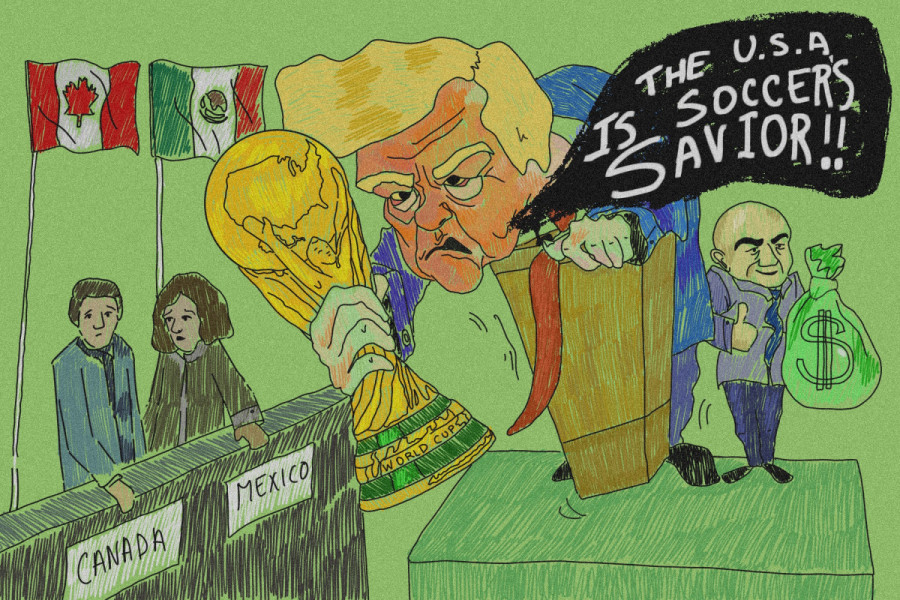
As the 2026 FIFA World Cup draws ever closer, soccer fans have many reasons to be excited. With qualifiers in full swing and the upcoming tournament featuring 48 teams (12 more than the previous format), the excitement seems almost palpable.
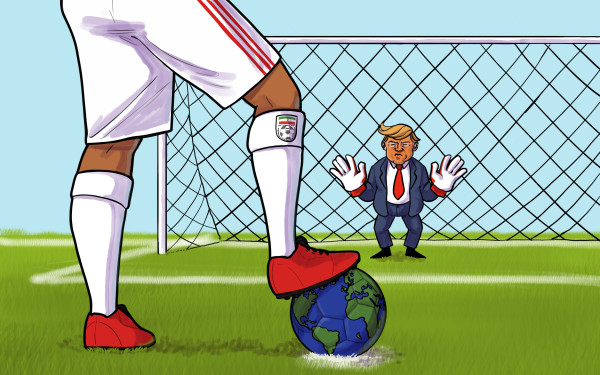
However, many soccer fans are concerned with Donald Trump’s involvement in the tournament as president of one of the three host nations, alongside Canada and Mexico.
In fact, Trump’s already made a poor first impression with the global soccer audience. This past summer saw the FIFA Club World Cup hosted by the U.S., where Trump sparked multiple controversies.
During the championship ceremony for eventual winners Chelsea F.C., Trump was seen pocketing an extra medal meant for the players. The U.S. president also crashed the team’s championship photo.
One might think FIFA President Gianni Infantino would try to do as much damage control as possible, but he seems to be just fine with Trump. In fact, Trump claimed that the actual Club World Cup trophy was given to him by Infantino, with the eventual champions, Chelsea, only receiving a replica.
Infantino has even been compared to Trump for using his wealth to maintain his power behind closed doors. Some even point out that the new format, with its larger size, is purely a profit-driven reform.
Trump, of course, has also repeatedly drawn international ire for, among many other things, his general lack of respect when addressing other nations and their peoples. The two other host nations know this all too well. Canada dealt with taunts about becoming the 51st state for months, and Mexico was subject to many racist remarks by President Trump, alongside the whole border wall ordeal.
During the early years of his first presidency (nearly 10 years ago), Trump made references to African and Haitian immigrants coming from “shithole” countries, and said the U.S. should take more immigrants from Norway instead.
With Norway likely to qualify alongside at least nine African nations, one could wonder if there will be bad blood towards Norwegian fans from many African teams’ supporters for a comparison that Norway had no part in.
This gets at the larger issues here: the U.S. has the potential to negatively impact Canada’s reputation and, to a lesser extent, Mexico’s. There is already a general sentiment that “Americans” (mostly the U.S.) in general don’t get the sport or its culture; in fact, the supremely popular show Ted Lasso was built upon this stereotype.
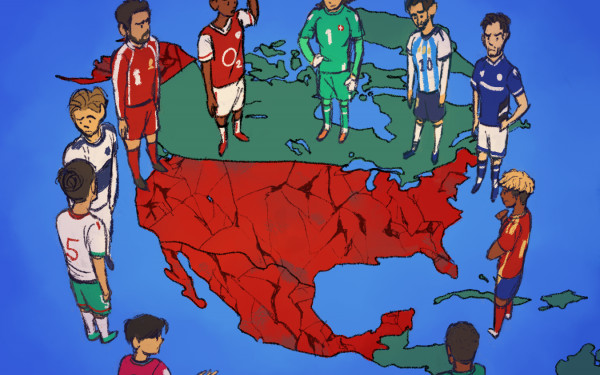
Yet, instead of creating a welcoming atmosphere for soccer fans of the world, the U.S. has created an environment where the largest of the three host nations is supremely controversial and the two other host nations have increasingly souring relationships with the former.
Additionally, with multiple global military conflicts still raging and the increasing prevalence of political violence in the U.S., some fans are worried about a more violent type of political expression from fans. This would not be a new or American phenomenon; soccer fans have long engaged in violence under the veil of fandom.
An example of this plays out in the Scottish Premiership, where two Glasgow clubs (Celtic F.C. and Rangers F.C.) have seen their matches against each other tainted by violent sectarianism.
It doesn’t require an overactive imagination to see how a similar environment could form during the World Cup, seeing as fans from 48 different nations will share stadiums this summer.
Although I have painted a fairly grim picture of how the increase in political tensions may taint the World Cup, I’d like to conclude with a potential alternative.
While international sporting competitions can provide a potential breeding ground for expressions of political violence, they can equally be an outlet for those who feel politically dispossessed, powerless or attacked to have a relatively harmless outlet for their political anxieties.
We saw this less than a year ago during the National Hockey League’s new 4 Nations Face-Off, which saw Canadian fans boo “The Star-Spangled Banner.” But in terms of actual political violence, the worst of it happened on the ice, and Canadians got their catharsis with their eventual triumph over the American team.
This article originally appeared in Volume 46, Issue 2, published September 16, 2025.