Speculative Futurisms takes shape at CUJAH annual conference
Multidisciplinary artists imagine what comes next in the arts
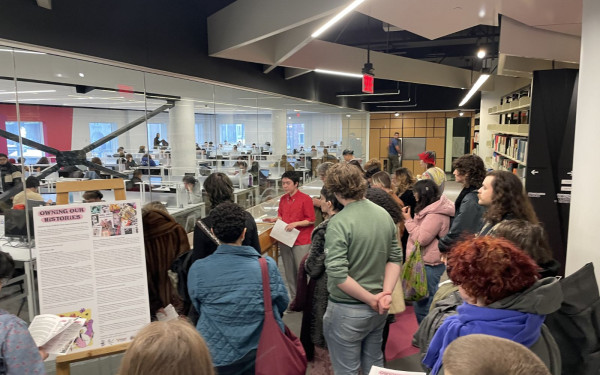
On March 27, artists and art enthusiasts gathered at the Gail and Stephen A. Jarislowsky Institute for the annual Concordia Undergraduate Journal of Art History (CUJAH) conference, which is celebrating its 15th year.
Titled "Speculative Futurisms: Visual Imaginings of Change and the Unknown," the conference sought to explore how art can be used as a tool to imagine and shape the future in a multitude of ways.
Open session discussions topics ranged from highlighting Palestinian short films to understanding deep-sea ecosystems, diversity in video games and beyond.
This diversity in subjects was an intentional choice by the organizers. Leni Bonjour-Liss, one of the conference organizers, said the goal was to expand dialogue beyond traditional disciplinary boundaries.
“We really wanted to open the discourse, and that’s reflected in our outreach,” Bonjour-Liss said. “That’s reflected in the presenters that we have today that are not just from history or fine arts. It's multidisciplinary, so we want to broaden our reach and have more multidisciplinary conversations.”
Leo Litke, a communication and cultural studies student and the Concordia Student Union internal affairs coordinator, presented a talk on the futuristic intricacies of perfumes, an unexpected medium that reflects the conference’s multidisciplinary scope.
“It’s understandable to not inherently think of scent as art, because it exists in a weird area where it’s creative but also very much commercial,” Litke said.
He added that online spaces have made perfumery more accessible as an artistic practice.
“Especially now with the internet, more and more people can access information about smaller perfumers, as well as access information about how to do perfumery themselves, to develop their own artistic practice,” Litke said.
The multidisciplinary approach allowed for attendees to leave with a deeper, more intertwined understanding and definition of art.
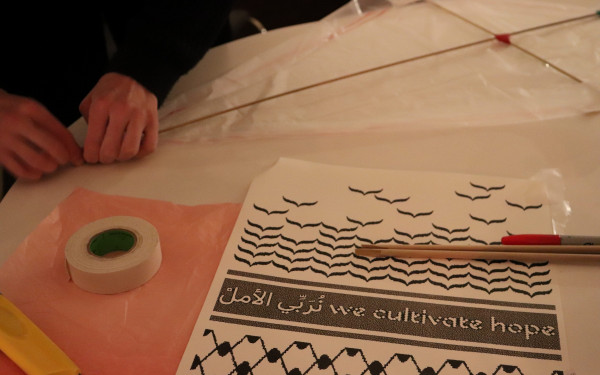
Community is also a central focus of CUJAH, with the conference hosting several workshops aimed at fostering interpersonal and authentic connections.
“When we were thinking about what we wanted this year’s theme to centre around, people were definitely expressing a want to recentre around community, especially in a time where a lot of us feel isolated,” Bonjour-Liss said.
These community values were explored in a group discussion about curatorial care facilitated by Jade Lacoste on behalf of the Ethnocultural Art Histories Research group.
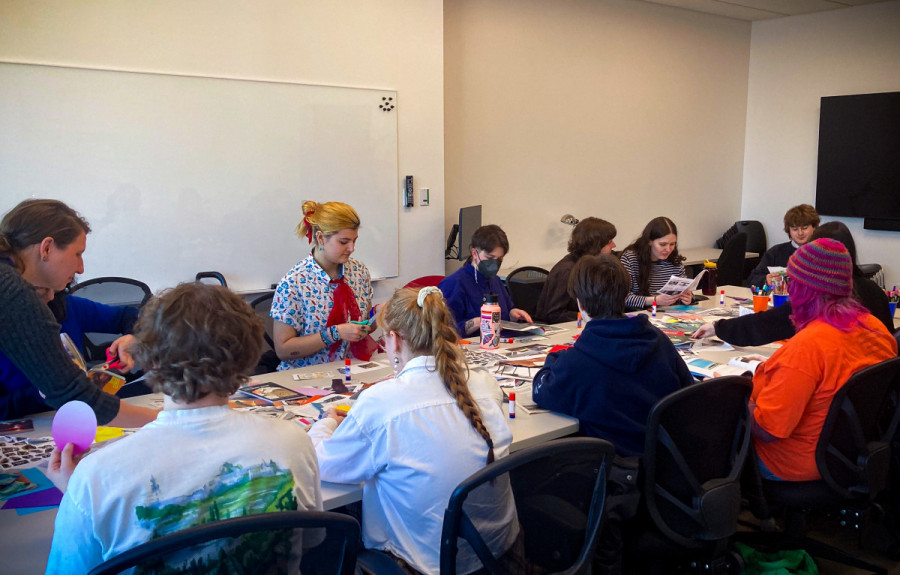
Also featured was a collage workshop led by Milo Puge, a member of the Indigenous Futures Research Centre. The inspiration behind Puge's workshop was the Indigenous concept of seven generations, which calls for a sustainable future that can be preserved for seven generations into the future.
Puge said hands-on workshops help create connections among participants.
“The reason I keep choosing these workshops to facilitate is that there is something about having everyone hands-on,” he said. “Creating and making side by side, that act in itself breaks the ice for a lot of the shyer people around the table.”
As the topic of the conference was a rumination on the speculative future, Puge sees community as having a vital role in changing the world of tomorrow to being more supportive of BIPOC and queer people.
“You see this over and over again, where when the world is dominated by these particular kinds of forces and where you don’t get a diverse set of voices creating collaboratively, you get these really miserable conditions where things aren’t going super well,” Puge said.
Deviations from the dominant narratives of art history's traditionally white and patriarchal nature were a key feature of the conference.
Talks on queer narratives in videogames, representations of the female body and the need to preserve deep-sea marine biology provided hope that a new appreciation and interdisciplinary understanding of art is possible in the future.
CUJAH’s annual publication is set to be released in the coming weeks, with more information available on the journal’s Instagram page.