
Listen to Iron Maiden, baby, and maybe listen to teenagers too
A generation paying the price for problems they had no hand in making
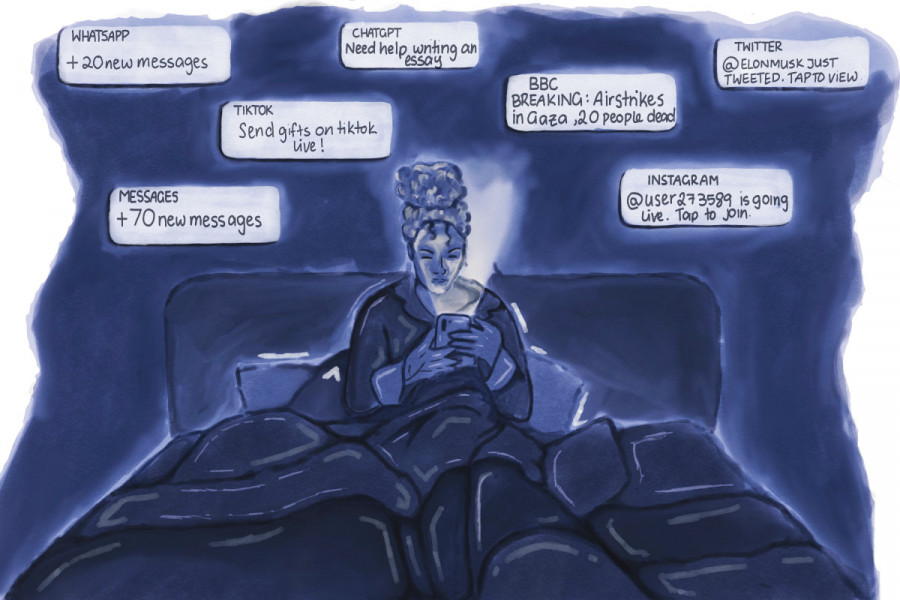
Being a teenager has always been hard, but coming of age in the post-COVID-19, social media era adds layers of pressure that previous generations could never imagine.
Yet, society’s response has been to blame the very people least responsible for the conditions they’re living in.
The physical and psychological upheaval of adolescence has remained broadly consistent across generations. What has changed is the environment in which teenagers now navigate it.
Social media brings the challenges of being a teenager to a public and largely unregulated arena, where content created by and consumed by teens with developing brains is displayed permanently to peers and, in many cases, the wider world.
A Public Health Agency of Canada report found that nearly one-third of Canadian adolescents report high psychological symptoms, while only about half report high life satisfaction, with problematic social media use linked to poorer mental health outcomes.
But rather than interrogating the platforms that adults built and profit from, older generations have dismissed teenagers as shallow or attention-seeking for using them.
Socializing in the post-COVID-19 era is also far more difficult than it was in previous decades.
Although most COVID-19 restrictions were lifted around 2023, the sense of community disrupted by lockdowns never fully recovered for the generation that came of age during them. A 2022 University of California, Santa Barbara survey found that less than 20 per cent of teens viewed society as a good place or as becoming a better place. This represented a 13 per cent drop from 2019.
Artificial intelligence now presents a further complication, this time to education and career prospects.
ChatGPT generates homework answers immediately, calling into question the value of learning and education as a whole. Around 30 per cent of high school students report using AI for school work, but this reflects accessibility, not moral failure. But this, again, is a technology released without meaningful regulation or guidance, adopted predictably by its youngest users, and then used as evidence of their failings.
Beyond the classroom, AI’s displacement of workers makes the career landscape facing today’s teenagers more uncertain than ever, replacing many entry-level jobs and destroying the traditional promise of effort being rewarded.
Alongside all of this, teenagers are processing existential pressures—climate change, the rise of fascism, geopolitical instability—while their brains are still undergoing significant neurological development.
The horrors of being a teenager have always been assuaged by the assurance from adults that things will be better in the future. But that advice doesn’t hold as much weight in a world where a better future seems unlikely, and a future at all is harder to promise.
The least society could do, in the absence of an easy answer, is stop treating the people living through these conditions as the ones responsible for creating them.
This article originally appeared in Volume 46, Issue 12, published March 31, 2026.



_600_375_90_s_c1.jpg)