
The benefits of consuming OiL
Montreal’s OiL magazine is reclaiming digital space for messy, human art, one edition at a time
OiL magazine is a Montreal-based online publication founded in 2025 with a clear mission: to spotlight small artists and create space for work that might otherwise go unnoticed.
But beyond simply publishing art, the team behind OiL attempts to rethink what the internet can and should be used for.
OiL’s origin story began as overlapping conversations.
Co-founders and students David Morales and Sabine Salim-Ullyot were discussing launching an uncensored zine centred on unpopular opinions around the same time that Morales and fellow co-founder Sola Spiegelman were planning on starting a magazine.
Once the project's focus shifted toward art, V Nguyen joined the team, drawn to the opportunity to curate and build something cool and community-driven.
The team said they had simply wanted to start something of their own. Since launching in August, they’ve grown increasingly proud of the project, noting that they notice improvements in each edition, alongside their own development.
From the beginning, they resisted polish in favour of personality.
“One of the best uses of the internet is to find cool art, things that are made by humans,” Spiegelman said. “It’s a great tool that’s owned by assholes who are making it addiction technology.” — Sola Spiegelman
“We don’t want to be boring or corporate, ” Spiegelman said. “We want to get down and gritty with it.”
In between full-length online editions, OiL also publishes zines, a format the team values for its accessibility and deep roots in punk culture.
Though OiL exists entirely online, its relationship to the internet is intentionally conflicted. The name stands for Overt Internet Literature, a title Spiegelman describes as meant to feel bold and confrontational.
“We want it to be overt, shocking, in your face,” she said.
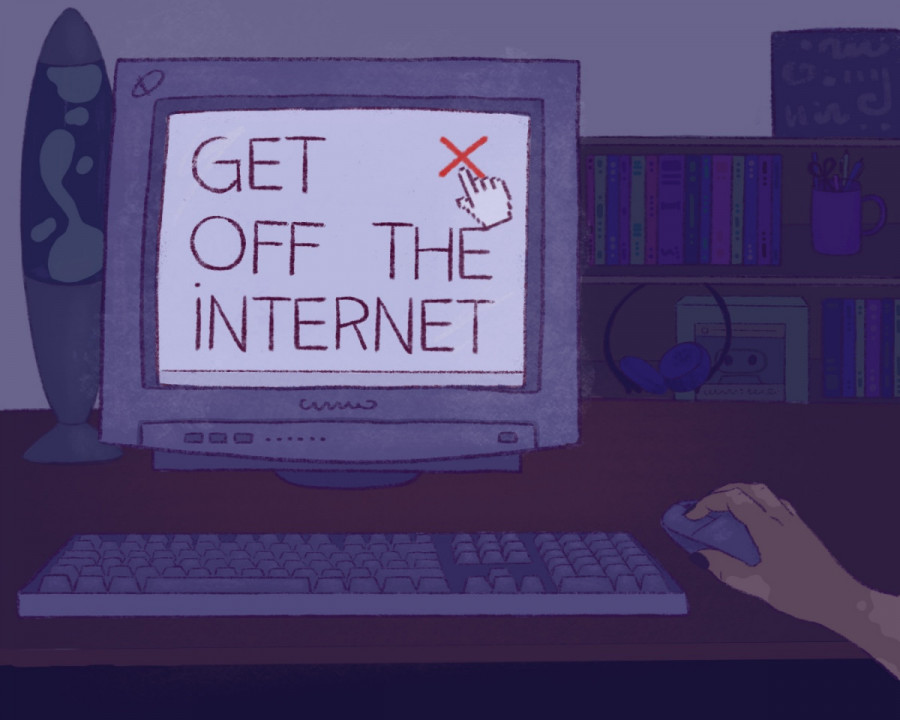
Early drafts even carried the tagline “Get Off The Internet,” reflecting what the team sees as a complicated dynamic between digital platforms and real-world engagement.
"One of the best uses of the internet is to find cool art, things that are made by humans,” Spiegelman said. "It’s a great tool that’s owned by assholes who are making it addiction technology."
Morales echoes that tension, recalling what he calls the “romanticism of the early internet.”
“It started in weird forums,” Morales said. “It used to be much more oriented around cool subcultures, but it’s since become homogenized.”
OiL, he says, hopes to revive some of that earlier energy, using the web as a space for experimentation rather than performativity.
The team’s concerns extend beyond platform fatigue. Salim-Ullyot sees parallels between digital shifts and broader political anxieties.
“The devaluation of art through the rise of AI parallels the devaluation of minorities and diversity through the rise of fascism,” Salim-Ullyot said. “Despite how small our contribution is, we’re still trying to maintain the integrity of artistry and provide support to people who don’t have it.”
That philosophy informs the magazine’s charitable focus, with the publication donating profits from a recent zine launch to the Native Women’s Shelter of Montreal.
“We live in a crazy world, and a lot of people want to make change but are scared,” Spiegelman said. “There’s a need to do something.”
For Nguyen, the willingness of young artists to contribute feels especially meaningful in a time when many feel disconnected.
“It’s so inspiring,” Nguyen said. “A lot of young people feel isolated, so it’s heartwarming to know there are people who care and want to help.”
While the significance of the internet is intrinsic to OiL, the team is wary of how the internet reshapes in-person communities.
“The internet takes away from community now because you’re on the internet instead of going out,” Morales said. “It used to be a place where outsiders went to find community.”
OiL attempts to exist within that contradiction by circulating art digitally while encouraging tangible engagement beyond the screen. The magazine operates with an open-door ethos. Rather than acting as gatekeepers, the team emphasizes inclusion.
“So much of being an artist is being told 'No,'” Morales said. “Being able to just say 'Yes' to people is great.”
Spiegelman agreed, emphasizing the magazine’s openness.
“We’re not picky at all,” Spiegelman added. “We’ll publish anyone we get.”
Every member of the team agreed that, beyond publishing art, this project has had an impact on their personal and professional lives.
“I didn’t really consider myself a creative until, like, a year ago,” Salim-Ullyot said. “I wanted to feel like I was participating more in the community. I wanted to respect my ability to create art and be inspired by other people.”
Nguyen says joining the project has been a privilege.
“When you guys asked me [to join], I was honoured,” Nguyen said to the other members of the team. “I’ve always wanted to curate and do something creative. This is my passion project, my opportunity to use my free will and really make a difference in the community.”
For Spiegelman, the magazine gave them a clear path forward.
“To me, community is always going to be central to what I do,” they said. “I want to do this type of thing for the rest of my life, this community-oriented thing, so it’s a step in that direction."
Producing something every month, Spiegelman said, has reshaped how they see both themself and the city around them.
“I feel more connected to other artists in the city," Spiegelman said. "It feels disjointed sometimes, seeing everyone’s art individually, but with this magazine, it feels like we all came together.”
For Nguyen, the process has deepened their appreciation for the labour behind creative work, especially in a digital landscape where people often consume art in five second increments and forget it just as quickly.
“I feel more appreciative of the creative industry because it’s hard work,” Nguyen said.
In a space defined by feeds, metrics and endless scrolling, OiL insists on something slower: deliberate participation.
Their message to readers is direct: submit work, take risks and don’t be afraid to be controversial.
This article originally appeared in Volume 46, Issue 11, published March 17, 2026.



_1_600_375_90_s_c1.jpg)

