Sex workers deserve protection
It can be hard to separate a corrupt industry from the people working within it
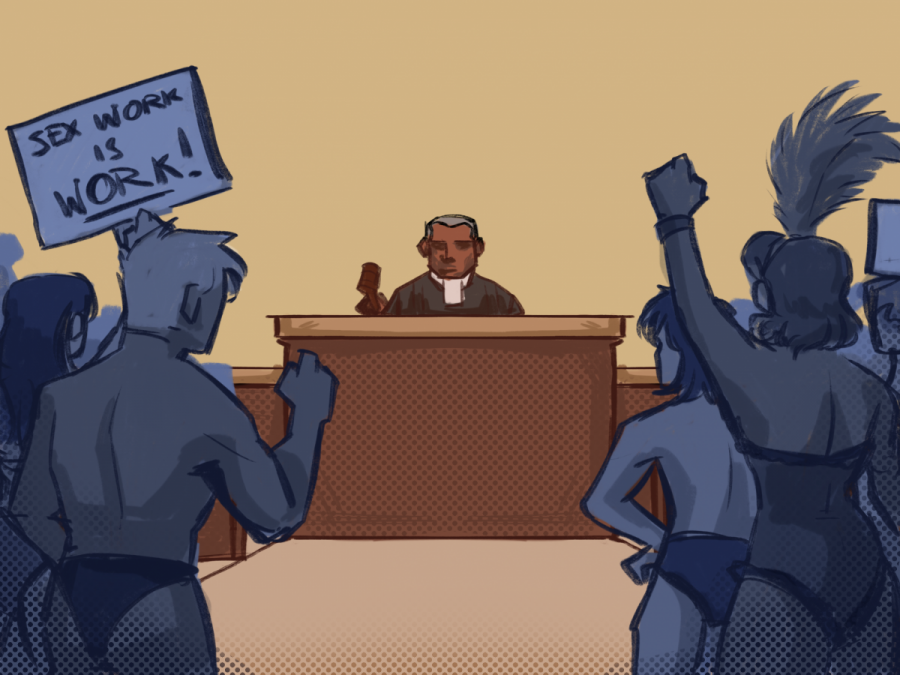
The societal push to destigmatize sex work is a discussion which often stops at the catchphrase “sex work is work.”
Despite aiming to empower sex workers, this perspective can be reductive and ignorant of the corruption and mistreatment that is rampant in the sex industry. Sex workers are absolutely workers who deserve basic safety and dignity.
Sex workers are subject to a unique degree of exploitation because they exist at an intersection between profit and consent. University of British Columbia posits that “there is no voluntary consent when someone uses their power or authority to manipulate your answer.”
Everyone needs to make money at their job. Those relying on sex work for income are inherently subject to the authority of employment, contradicting the fact that consent cannot be freely given if it is subordinate to authority.
Consent in the context of the sex industry that cannot be given freely of economic incentive is inherently dubious. Paired with the fact that 76 per cent of sex workers reported that sex work was their primary source of income, it is clear that even for those who choose to pursue sex work as a career, coercion is still a factor in the day-to-day reality of those in the sex industry.
Although the selling of sex is legal in Canada as of 2014, both third-party profiteering and buying sex are still illegal, which leaves sex workers in a vulnerable position if they try to seek legal aid when their rights are violated, making them especially vulnerable to workplace exploitation.
While sex workers deserve the same degree of basic respect and protection as everyone else, that does not mean that the sex industry should be viewed through the same lens.
The sex industry, particularly the pornography industry, is responsible for harm that transcends the realm of sex and those who work within it. There have been several recent petitions with hundreds of signatures by United Kingdom schoolgirls to ban the use of school uniforms in pornography. This petition was supported by student testimonies of young girls feeling sexualized, as porn warps public perception of school uniforms and the treatment of those who must wear them.
The rise of OnlyFans has also created a genre of influencers that glamorizes sex work to an impressionable audience, ignores the many risks it poses and advertises it as an easy and rewarding job, when in reality only a small percentage of creators make a lot of money off it. According to OnlyFans, 86 per cent of creators are between the ages of 18 and 24. This is right before the age when the part of the brain responsible for long-term decision-making develops.
In these cases, the line between victims of a corrupt industry and those who perpetuate it blurs.
The sex industry is responsible for numerous exploitative practices, with coercion being inherent to the treatment of workers, and the effects of sex work perpetuating harmful views towards vulnerable populations. Fetishization, the practice of reducing an identity to its sexual appeal, dehumanizes women, people of colour and transgender people. Many workers in the industry see it as a last resort or an alternative to traditional industries they feel cannot accommodate them, not as a first career choice.
It can be hard to separate a corrupt industry from the people who work in it. We must reconcile the reality of a deeply harmful industry with the notion that all workers deserve protection—especially those made vulnerable by social stigma. At the same time, we should hold those who perpetuate harm accountable and urge them to be honest about the dangerous nature of their industry.
We can and must advocate for the safety and rights of sex workers while remaining critical of the sex industry as a whole and condemning the harm it does to society.
This article originally appeared in Volume 47, Issue 4, published October 27, 2026.