Concordia’s department of biology earns Hollywood credit
Loyola campus appears in Amazon Prime new release The Love Hypothesis
Alaska, the Hamptons, 1960s New York or 1980s San Diego; Montreal's range makes it a Hollywood favourite regarding filming locations. The 2026 Profil de l’industrie audiovisuelle au Québec indicates the value of foreign productions and production services totalled $1.68 billion in 2024-2025 across 164 projects, after a slowdown tied to the 2023 United States writers’ and actors’ strikes.
What began as a space-efficiency review for Concordia University has turned into campus buildings becoming in-demand film sets—with two productions in one summer—while giving students on-set experience in the process.
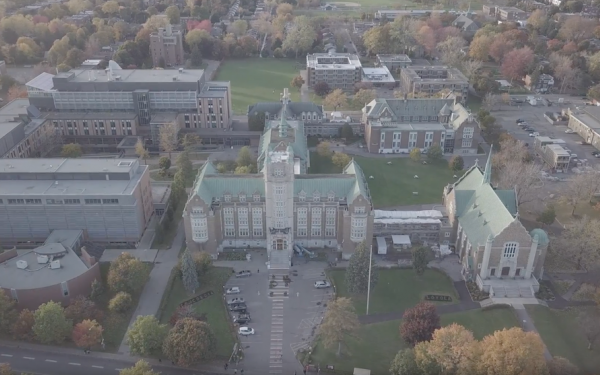
Concordia’s Loyola campus was recently used to portray Stanford University in Amazon Prime’s new movie The Love Hypothesis. The production built 10 sets on campus, including an airport.
Sarah Dorrell-Caille, director of Hospitality Concordia, said Loyola has been used to portray several different universities.
“We were able to do that on the same campus because of how different the architecture of the AD and the SP buildings [are],” Dorrell-Caille said.
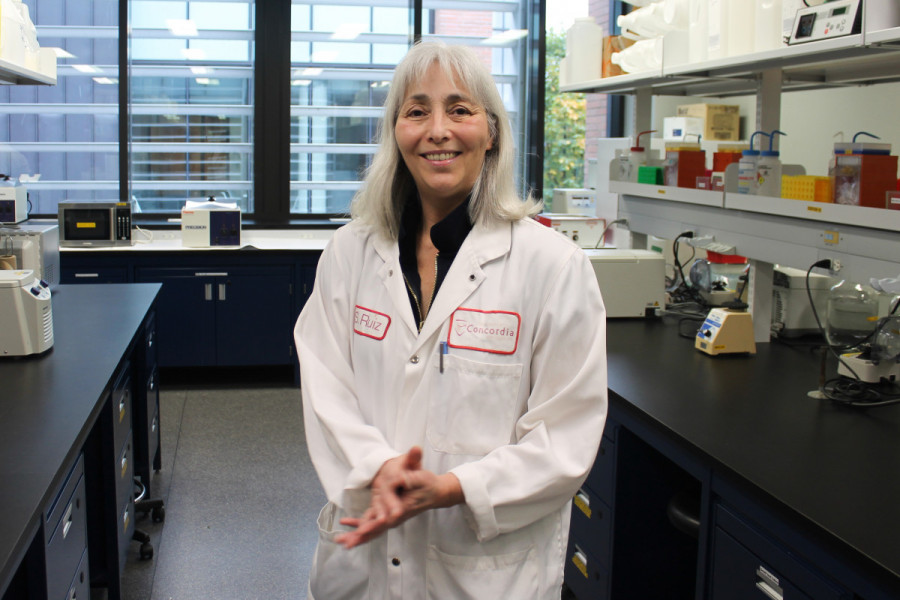
According to Dorrell-Caille, Concordia biology department technical officer Sonia Ruiz played an instrumental role in The Love Hypothesis.
“I think when they realized we were willing to help, and there is an expertise, they were very open to it. Claire Scanlon, the director, said, ‘I hope we made it true to science.’ — Sonia Ruiz, technical officer in the biology department, Concordia University
“When the [SP] building came up, I was involved with the plans like nobody else in the department of biology,” Ruiz said.
Her familiarity with the building got her a seat at a June 2025 meeting with the production team to discuss filming in her labs and office.
The Love Hypothesis is an adaptation of a 2021 novel by Ali Hazelwood. It follows Olive, a PhD student researching pancreatic cancer and her fake romance with a professor.
Ruiz lost a close family member to the disease. She was on board from the moment she heard the plot. She sees awareness as a win, since no progress has been made on finding a cure.
In the meeting, Ruiz mentioned that she often sees actors holding the pipette incorrectly in movies. The production team took note of that comment. As filming was about to begin, they approached her to have her team provide training on tool setup and handling.
“I think when they realized we were willing to help, and there is an expertise, they were very open to it,” Ruiz said. “Claire Scanlon, the director, said, ‘I hope we made it true to science.’”
That commitment extended to casting biology students as extras.
Gabrielle Schick, a second-year master’s student exploring cytokinesis, read the book with her best friend and found it serendipitous that the film was being shot at their school.
“What are the odds?” Schick said.
Seeing Concordia’s campus pass for an Ivy League school made Schick proud.
“It felt really cool that people could feel the vibe of the school in a sense,” Schick said.
PhD biology candidate Anthony Arsenault appears in seven scenes. Working in the labs felt routine, but the actors made him nervous and starstruck. For Arsenault, the experience was surreal.
“I didn’t see it coming. I’m in my second year and I end up in this Amazon production. That was a fun summer,” Arsenault said.
Dorrell-Caille said these projects don’t disrupt academics.
“The first priority of the university is its academic mission and anything we can do to support that,” Dorrell-Caille said.
This article originally appeared in Volume 47, Issue 4, published October 27, 2026.