
Concordia Health Services partners with ACCM to bring HIV tests to pop-up clinic
The initiative seeks to improve access to sexual health resources and fight stigma
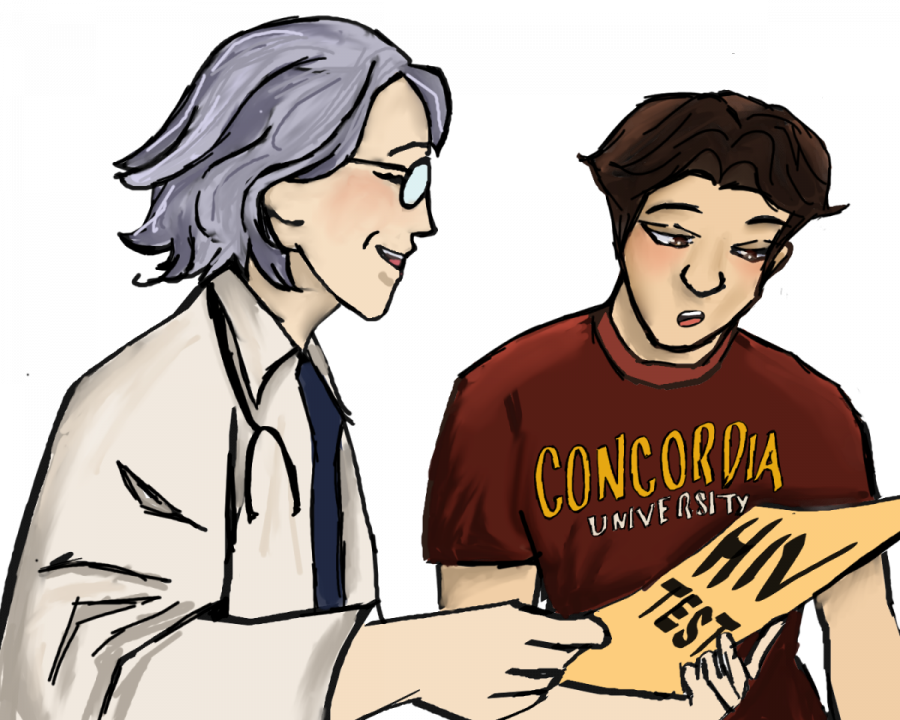
Concordia Health Services (CSH) filled Oscar Peterson Concert Hall on Loyola campus not with music, but with HIV tests on the afternoon of Oct. 1.
This semester, Concordia University has partnered with AIDS Community Care Montreal (ACCM) to offer free rapid HIV tests to students on both campuses through their mobile clinic. The drop-in clinic titled “Pee to see, swab to know” also offers chlamydia and gonorrhea testing.
The ACCM is a community organization focused on sexual health education and support, as well as HIV and hepatitis C advocacy. ACCM education for prevention manager Verne Virostek sees stigma as the biggest barrier to receiving care, but accessibility can pose a challenge for students with packed schedules.
“Students are quite busy, and there's a lot going on,” Virostek said. “I think it’s nice for there to be an opportunity to be in the spaces that students are, so they can come quickly, get it done [and] continue on.”
Students can take rapid HIV tests on campus with assistance from a facilitator from the ACCM and get their results immediately, or can take tests at home. CSH performs chlamydia and gonorrhea testing on site, and sends samples to a lab to deliver results within a few days.
According to Concordia health promotion specialist Gaby Szabo, testing on campus in an outreach format is designed to help students know their status and get treatment quickly. Szabo believes holding the mobile clinics in busy campus spaces reduces stigma.
“We are testing in Concordia's principal performing arts venue, because testing is just another act of self-care, like enjoying music and arts!” Szabo wrote in a statement to The Link.
The university has offered free HIV tests in collaboration with the Concordia Student Union in the past, but this is the first time they are available through the mobile clinic.
“Especially with HIV, a lot of people see it as a ‘gay issue.’ A lot of straight people are very ignorant about it. Anyone can get it, and that’s why it’s so important to spread awareness that Concordia offers these services.” — Samuel Ramirez Ochoa, co-president of Sex and Self Concordia
In addition to testing, “Pee to see, swab to know” seeks to educate students on sexual health, offering pamphlets and a guessing game on safer sex practices.
Samuel Ramirez Ochoa, co-president of Sex and Self Concordia, sees the university’s mobile clinic as a crucial way to support students’ health and to fill in gaps in their sexual education. He believes this is especially important because many students may feel embarrassed to seek these resources.
“I think offering these services to people and just educating people on the importance of STIs [sexually transmitted infections], and HIV is really important,” Ramirez Ochoa said. “We all come from different backgrounds. We don’t all get the same sexual education in high school, or our surroundings. Our families don’t talk about it, or friends don’t talk about it, or aren’t as informed.”
More than a quarter of first-time HIV cases in Quebec are made up of people aged 15 to 29, according to a 2024 overview of sexually transmitted and blood-borne infections by the Institut national de santé publique du Québec. This age range makes up nearly 68 per cent of chlamydia cases and 39 per cent of gonorrhea cases.
Ramirez Ochoa highlighted the importance of getting tested every few months, even for those in long-term relationships, as symptoms of some STIs can go dormant for long periods of time. He noted that stigma around HIV in particular deters people from getting tested.
“Especially with HIV, a lot of people see it as a ‘gay issue.’ A lot of straight people are very ignorant about it,” Ramirez Ochoa said. “Anyone can get it, and that’s why it’s so important to spread awareness that Concordia offers these services.”
For more information about getting tested for the mobile clinic and STI testing, visit the Concordia Health Services website.