Queer Concordia considers lawsuit against CSU
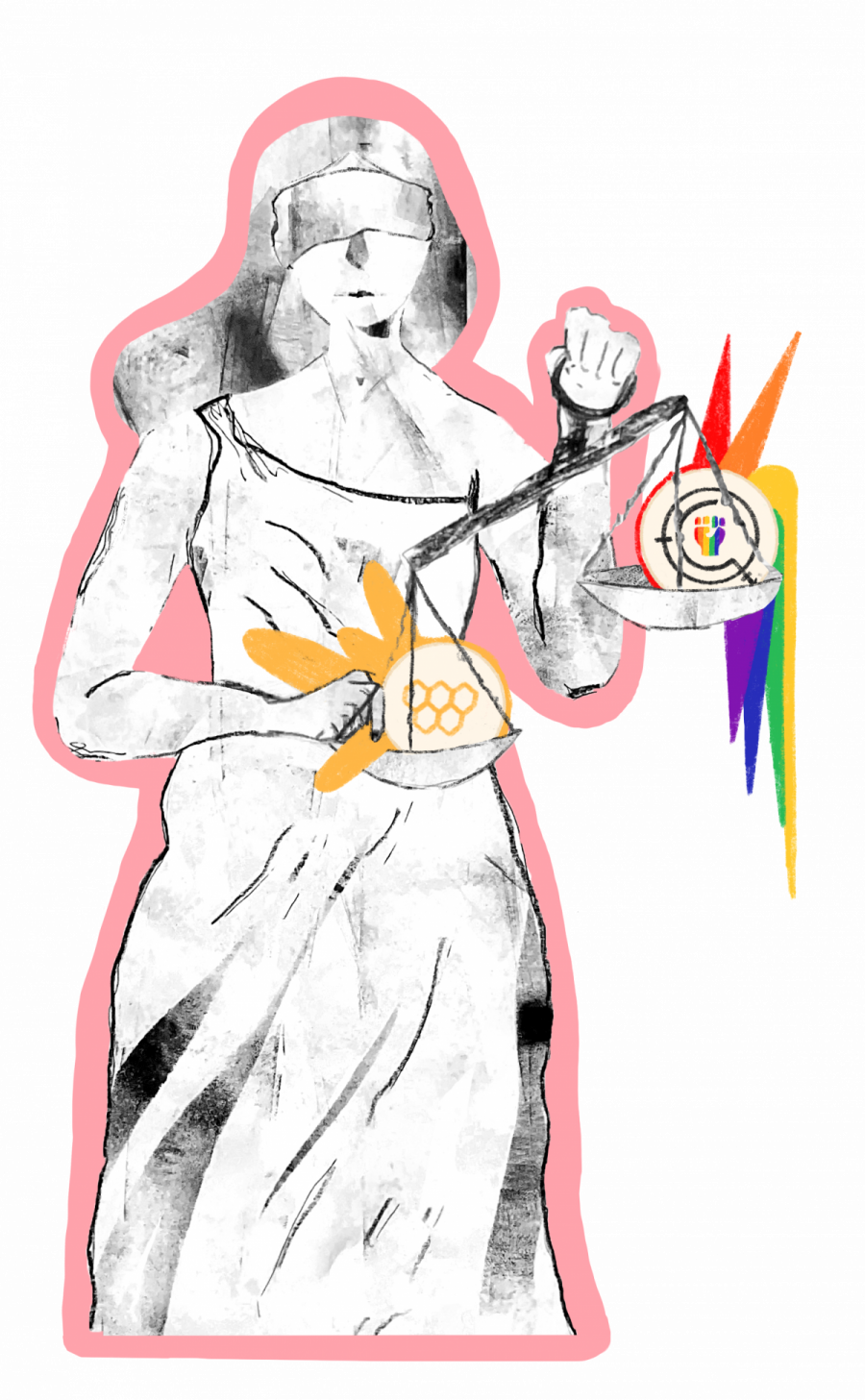
Queer Concordia is considering a human rights commission complaint lawsuit against the Concordia Student Union (CSU) for alleged discrimination over the past several years.
The non-for profit association would lodge the lawsuit with the Commission des droits de la personne et des droits de la jeunesse (CDPDJ) and is being considered due to a variety of incidents that occurred over the past three years, according to Queer Concordia executive director Jessica Winton.
Queer Concordia is a fee levy group at Concordia University and resource centre for queer students on campus. It holds community events and provides a gender-affirming insurance fund for Concordia students.
Concordia students receive aid for gender-affirming care through StudentCare, provided by the CSU. This service provides up to $5,000 per eligible procedure, and a lifetime maximum of $50,000, which was $10,000 before community advocacy. However, this per-procedure cost isn’t always enough.
“I kept telling the CSU that's not really enough. I had my procedures in 2022, and it was $33,000. The reason why I was able to get that covered was because my parents' insurance also had this kind of coverage," Winton said. "Most students don't have that privilege."
Additionally, Alumo insurance requires the student to pay upfront for the procedure before getting refunded. This is where Queer Concordia’s gender-affirming insurance fund comes in, providing interest-free loans of up to $50,000 to receive care.
“You have to have the funds to be able to get the funds back. We help mitigate and alleviate that pressure so that students can have the funds. Then when they get their refund, it goes back to our loan program,” Queer Concordia’s administrative coordinator Jace Mac Rae said.
According to Winton, she initially presented the program to the CSU in August of 2024 because the CSU had expressed interest in making gender-affirming care more accessible. However, when the program was presented at a September 2024 CSU council meeting, Winton met opposition.
“There was a councillor who, after my presentation, spoke, saying that he does not believe the CSU or himself and his constituents should support this motion due to his religious values,” Winton said. “The chair never interrupted him when he was going on this little rant. The CSU never acknowledged this incident publicly, [and] they never apologized.”
The motion was tabled to the finance committee, where, according to Winton, the councillors voted no despite paying little attention to the motion's content. According to Winton, when she tried again to present it to the CSU in October after removing parts the chair had asked her to move, the motion was not allowed to be presented. Winton was told that if she had a complaint, she could submit it to the judicial board, which was inactive at the time.
After this, Winton decided to start up the program independently, first applying with the Concordia Council for Student Life (CCSL), which told her to apply for a fee levy increase.
When the 2025 winter semester started, Queer Concordia applied to increase its fee levy, which was two cents per credit, giving them a budget of around $10,000 a year.
The CSU Loyola coordinator acknowledged the application then, but when the February meeting came around to approve fee levy applications, Queer Concordia’s application wasn’t mentioned.
“[You're] not funding the program that on your website says you should fund. You told us to apply for a fee levy increase because you didn't want to give us money, and now you're not accepting our application,” Winton said of the CSU.
Winton also mentioned the CSU's lack of response over the past few years.
She said the judicial board was reinstated last year, but the form wasn't available on the CSU website and was never sent to Queer Concordia. The group never filed its complaint, despite frequent emails sent to executives, the judicial board and the CSU’s general manager.
“It just doesn't make any sense to continue to wait on this mythical judicial board that never took us seriously even when they did briefly exist,” Winton said.
Over summer 2026, a new group of executives was voted in to the CSU, initiating a new phase of Queer Concordia’s relationship with the union.
“The next slate [that] won during the regular election period came to Queer Concordia's office, and they [said], ‘We're so sorry all of that happened. How can we support Queer Concordia going forward?’” Winton said.
However, Queer Concordia was not mentioned in the CSU’s current student handbook, something Winton feels is unacceptable.
“There were sections on sexual health; we weren't on that. There were Pride alternatives, and there's also one for gender-health resources. We weren't on those ones. And there was a page at the end for fee levy groups, and we weren't on that one either,” Winton said.
CSU student life coordinator Emma Doyle said the exclusion of Queer Concordia from the handbook was not intentional, as the book is mostly reused from previous years, due to limited time.
“They’re not the only fee levy group that’s not featured,” Doyle said. “I have my own ideas of how [expanding the agenda] could work, considering the print count and the cost and everything, because there’s a bunch of other elements that affect how many pages you’re able to use for what content.”
This alleged systemic discrimination of Queer Concordia isn't the first time the CSU has been accused of marginalizing the queer community.
In 2022, the CSU released an apology for slurs, stereotyping and inappropriate behaviour, including laughing and eye-rolling when queer people were discussing their personal experiences.
In the apology, the CSU admits to creating a homophobic and transphobic space in meetings that protects perpetrators—to the point where queer students resigned from the CSU.
Winton pointed to this incident when discussing the systemic nature of the CSU’s discrimination against the queer community. However, Doyle brought up the frequent changeover in the CSU, stating that it’s difficult to be accountable for actions perpetrated by past members
“I can’t speak to the many other people who have passed within the doors of the CSU. I can’t speak to their character or lack of professionalism in the way that they act in the office, let alone any kind of discriminatory or prejudicial action against Jessica and the rest of Queer Concordia,” Doyle said.
In September 2026, Queer Concordia finally received a fee levy increase, bringing it to 29 cents per credit.
“I've given them, each time, months and months of warning or chances. And now that we have money for a lawyer through our fee levy increase, I'm not really holding back,” Winton said.
The CSU hopes to avoid a lawsuit and, after speaking with Queer Concordia, to work together to thrive.
“Jessica and the rest of Queer Concordia all need to be treated with respect. I just really hope their experiences with us this year are an improvement,” Doyle said.
Winton said she hopes Queer Concordia and the CSU can resolve their issues to avoid filing the lawsuit, but the documents are ready if they can't reach an agreement.
“Something has to be done. I want Queer Concordia to be a resource and a safe space for all of Concordia,” said Mac Rae.