
Ottawa monument dedicated to LGBT Purge survivors now open
The Government of Canada opens monument in accordance with a 2018 class action lawsuit settlement
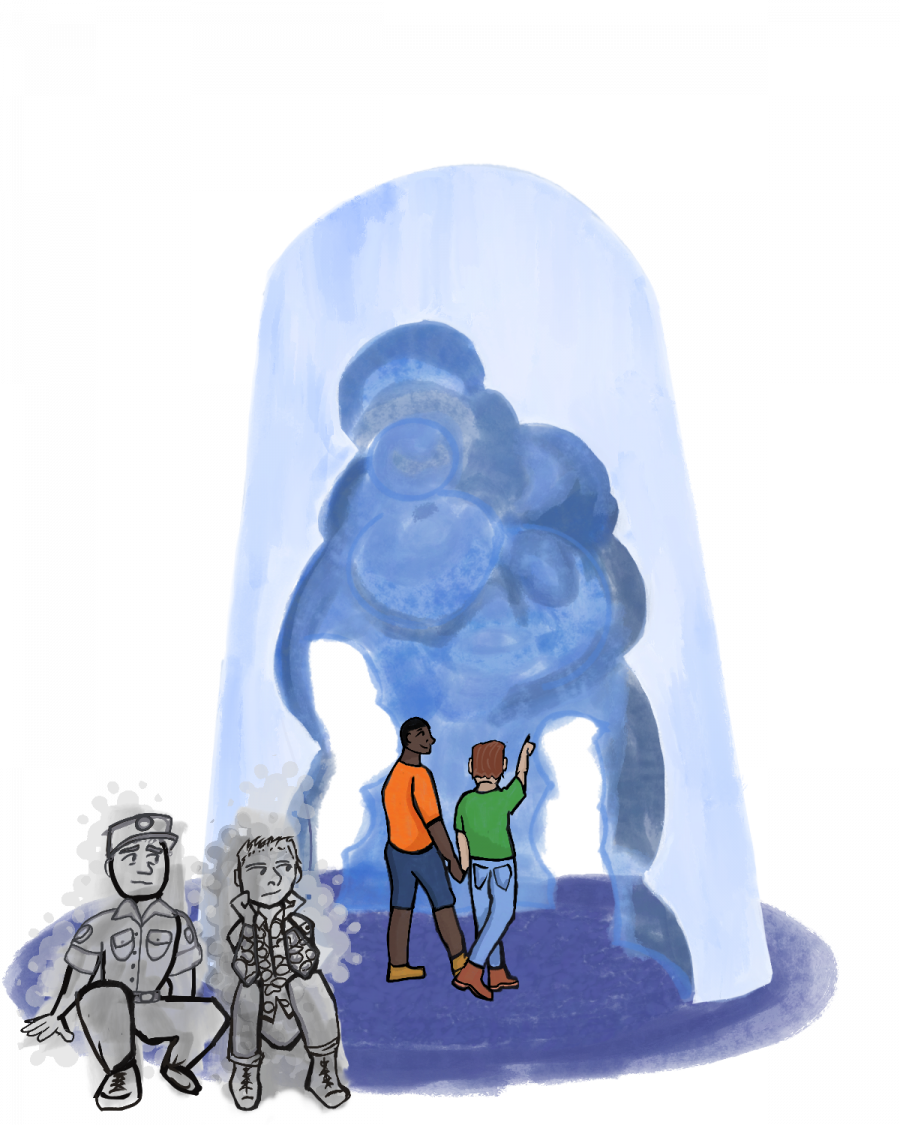
A monument dedicated to queer civil servants who served during the LGBT Purge is now open in Ottawa.
The National Monument, called "Thunderhead," was erected in Ottawa to memorialize those affected by Canada's LGBT Purge. It recently had its grand opening, led by purge survivors, community leaders and Indigenous partners. The funding for this monument was given to the LGBT Purge Fund as part of a $145 million settlement after a class action lawsuit by 2SLGBTQI+ service members.
The LGBT Purge was a well-documented systemic hiring-discrimination policy the Government of Canada implemented from 1955 to 1996. It involved the investigation, harassment, interrogation, abuse and subsequent firing of over 9,000 2SLGBTQI+ individuals. The firings were mainly from the Canadian Armed Forces, the Royal Canadian Mounted Police and other civil service branches.
One such survivor, an officer in the Canadian Armed Forces and executive director of the LGBT Purge Fund, Michelle Douglas, shared how hard being queer was at the time.
"It was a very difficult time, and even though I was a great soldier and very loyal to my country, that didn't matter," Douglas said. "It was simply the fact that I eventually confessed under interrogation to being a lesbian that I was kicked out of the military by 1989."
The purge removed 2SLGBTQI+ service members from their sources of income, pensions and opportunities for future employment. These measures would result in the deaths of many targeted 2SLGBTQI+ citizens through suicide and later during the aids crisis. The methods used by the Canadian government during the purge created long-lasting trauma for the survivors.
Douglas said it completely changed her life because it cost her his job and turned her into an activist.
"The military literally forced me to come out to my family probably long before I was ready to do so by threatening me with having the police out me to my parents if I failed to do so within 24 hours," Douglas said. "I think more deeply, it was a diminishing of [my service] and many others for simply our sexual orientation or how we identify."
The Government of Canada implemented this policy amidst concerns that 2SLGBTQI+ service members were more vulnerable to blackmail from foreign powers. The sexual orientation of Canadian citizens could be seen as a threat to national security, and the federal government used this reasoning to sanction several invasive, abusive and inhumane tactics, according to Douglas.
"A common thread that we can see during this time through queer labour activism is that people needed jobs," Alex Ketchum, queer historian and McGill associate professor, said. "The kind of histories that you see with military personnel who are purged, a lot of times it's about their ability to work in their field."
The purge culminated in a 2016 class action lawsuit against the government of Canada, launched and represented by purge survivors Todd Ross, Martine Roy and Alida Satalic, on the grounds that the purge fundamentally violated the Charter of Rights and Freedoms and caused irreparable damage to the 2SLGBTQI+ community.
In June 2018, the government reached a settlement: it would pay $110 million to purge survivors, plus an additional $40 million as part of a reconciliation and memorialization fund.
However, this is not without some criticism about the Government of Canada's motives for funding the monument. Ketchum said Canada is good at public relations, and though she is not necessarily claiming the monument's creation is insincere, she does recognize it makes Canada look good.
"The creation of the monument is led by people who have been impacted by the purge and subsequent generations of people," Ketchum said. "It's really important to elders who have been really involved in that. But also, when tourists come to Ottawa, and they see this monument, it looks good for Canada."
The monument's design was done via a competition, where several design teams submitted concepts for approval. The winning design is meant to replicate the negative space created by a storm cloud.
Albert McLeod, a two-spirit activist and member of the design team behind the monument entitled “Thunderhead,” said his team held several meetings to develop concept designs.
"We asked what would reflect being queer," McLeod said. "So we centred on the disco ball. And what reflected the prairies? We centred on the cloud as symbolic of being on the plains. So what we felt was that the rising cloud would be sort of the core piece of our vision."
The intersectionality between Indigenous heritage and 2SLGBTQI+ heritage was central to the design process, with dedications to both groups. The monument serves as a community space and features a medicine garden, a healing circle and an orchard.
McLeod's goal for the project was to encourage future generations to learn about 2SLGBTQI+ history, emphasizing the importance of safe and inclusive spaces for that education.
"Inclusivity means talking about who we are and not having to always explain it or apologize for it in our education system, right?" McLeod said. "We should be way beyond that. You know, it's the 21st century and still have that sort of homophobic, transphobic pushback."
With a recent rise in homophobia and transphobia in North America, McLeod sees the "Thunderhead" monument as a means to resist this and ensure that the government of Canada is held accountable for the harm caused by the purge and maintains its commitments towards upholding dignity and equality for all citizens.
Douglas said "Thunderhead" is a beacon of hope for her. She believes that its existence is a powerful reminder of the importance of visibility.
"There are many things that the monument does, and its soaring presence in the shadow of Parliament Hill is a profound reminder that the purge happened, but also [of] a community [that] was incredibly resilient and resisted this kind of oppression," Douglas said.