SHIFT’s fellowship program brings social change
Graduate students work with community organizations during a year-long placement
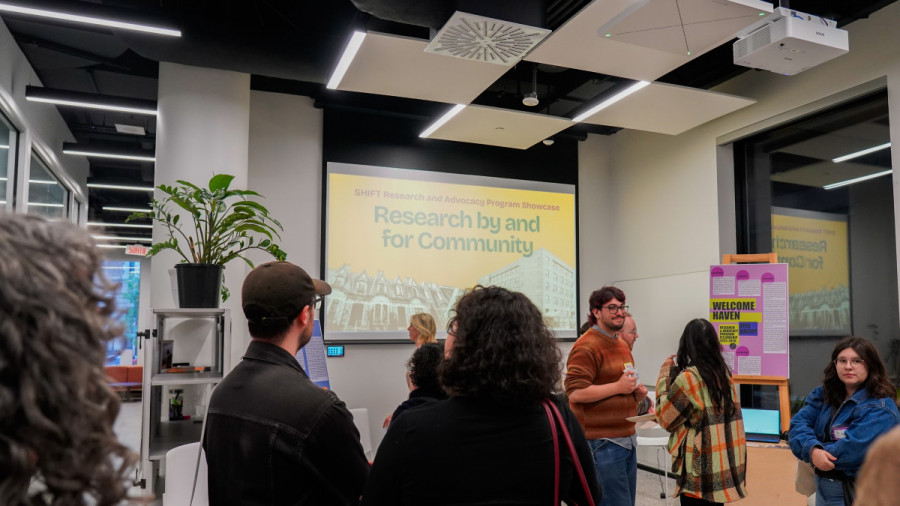
While traditional research often sits in academic repositories, the SHIFT research and advocacy program takes a different approach by enabling students to work directly with community partners to drive social change in Montreal.
As part of the SHIFT Centre for Social Transformation at Concordia University, six graduate students embark on a year-long fellowship in partnership with a community organization to identify priorities and conduct research projects that serve community objectives.
The fellowship program grew out of SHIFT’s longstanding work with communities in the city, including participatory grant-making initiatives, research projects with community organizations and paid internship opportunities for undergraduate students.
Last year, the institute launched a cohort model to bring master’s and doctoral students together to undertake research rooted in community needs and priorities.
“This is an opportunity to apply research skills in a real-world context and see how [students] can be of service by working with and in communities,” Elisabeth Cramer, SHIFT’s program manager of community-based learning and research, said.
During the year, students also participate in training sessions and workshops on topics such as research methods, power-mapping and policy analysis.
“Research to me is a tool that helps identify and name things that are important, but it should be taken further to help those at the margins of society, remedy social problems, support community organizations and support those who are made vulnerable by social systems.” — Erykah Yasmine Kangbeya, a fellow in the 2025-2026 cohort
Erykah Yasmine Kangbeya was a fellow in the 2025-2026 cohort. By working with the DESTA Black Community Network, her research explored the employment barriers affecting formerly incarcerated people in Quebec.
During the placement, she found that employers who hire formerly incarcerated people frequently identified soft skills as an area where candidates and former employees required additional support.
Putting the research into action, DESTA is now looking to partner with community organizations that offer soft skills training to prepare participants to enter the workforce.
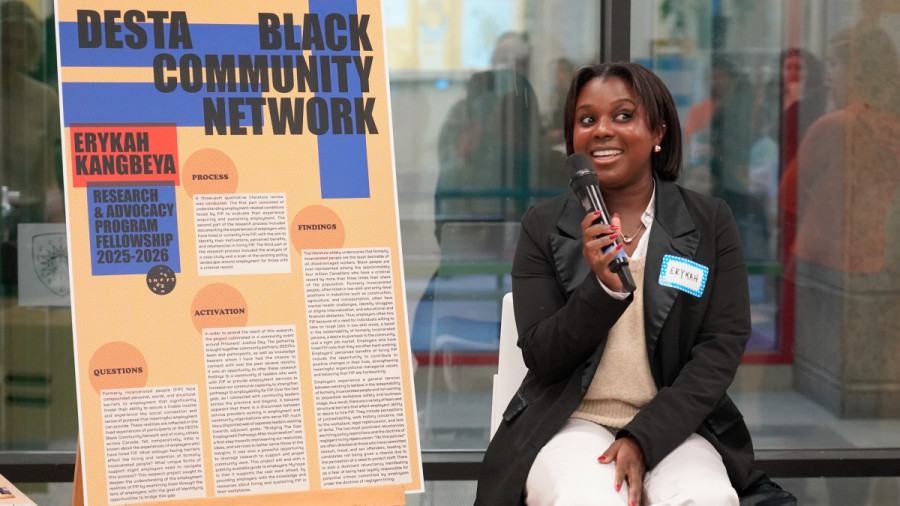
For Kangbeya, research isn’t just about conducting it for its own sake.
“Research to me is a tool that helps identify and name things that are important, but it should be taken further to help those at the margins of society, remedy social problems, support community organizations and support those who are made vulnerable by social systems,” Kangbeya said.
On Aug. 9, one day before Prisoners’ Justice Day, Kangbeya hosted a community event at SHIFT, bringing together formerly incarcerated people and community stakeholders who support re-entry and employment for these individuals reintegrating into society.
She also worked with DESTA to create a guide with resources for employers on hiring and retaining formerly incarcerated people.
The SHIFT fellowship gives community organizations, which tend to have limited capacity, the ability to build strategies to realize their long-term vision of challenging systemic problems.
Climate Justice Montreal, for instance, benefited from the fellowship to advance its campaign to push the city to provide free, expanded and accessible transit.
Christian Favreau, a long-term organizer with the group, said the SHIFT program tackles issues around extractive research practices.
“This program is addressing what research needs to be, which is to be serving society. It needs to be engaged in changing a system that isn’t working for 99 per cent of us,” Favreau said.
He added that the program gives groups like Climate Justice Montreal the research, policy and strategizing expertise needed to advance advocacy efforts.
This year, the program has evolved further, with graduate students working under one overarching theme titled: A Livable City for All: Development without Displacement.
The shared framework emerged following discussions with community organizations working on similar initiatives.
“It’s a theme that has specificity but also has enough breadth to speak to a lot of the issues and groups that we work with,” Cramer said.
Throughout the year, six fellows will work with community organizations in Montreal to explore how neighbourhoods can be healthier, greener and more livable without displacing long-term residents and local businesses.
Current and past projects of the research fellows are available on SHIFT’s website.
This article originally appeared in Volume 47, Issue 4, published October 27, 2026.