
Do the police really protect us?
The Defund La Police Festival highlighted issues regarding the misuse of police funding over the weekend
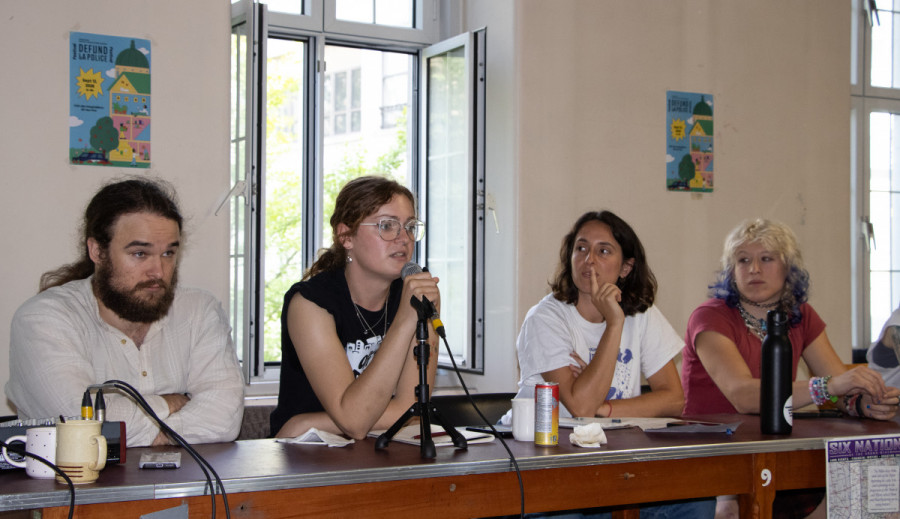
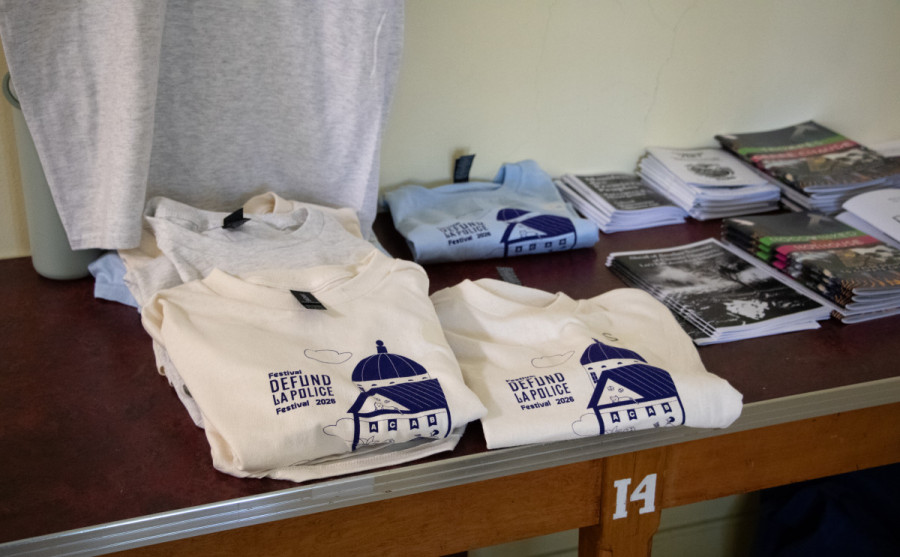
The Defund La Police Festival held its fifth iteration on Sept. 12, where people attended panels and participated in community activities which informed citizens about issues related to police funding. The festival took place at Cité-des-Hospitalières and focused on topics such as police surveillance, housing, harm reduction and racial profiling.
“There's a number of organizations that came together living various kinds of lives,” festival organizer Orlando Nicoletti said. “But they are all affected by policing. There were militant organizations that had been fighting against state violence and policing for a long time.”
The Defund la police coalition was formed in June 2020, following the murder of George Floyd and Breonna Taylor in the United States and Chantel Moore in Canada. It aims to fight police racism and violence, creating collective protection for Montrealers.
One late-afternoon panel discussed rising police surveillance in Montreal, focusing on increased bodycam use against civilians. This contrasts with what the Service de police de la Ville de Montréal promotes: that bodycams are a tool for transparency and trust between the public and police.
Montreal Mayor Soraya Martinez Ferrada announced last month that 3,500 officers and 600 police vehicles would be equipped with cameras within the next year. However, research done by George Mason University in 2019 shows bodycams do not increase citizen protection.
Panellist and Concordia University associate professor Ted Rutland said police have used bodycam footage against people in court.
“They're using it to gather information about people,” Rutland said. “It's often connected to facial recognition software at [police] headquarters. [The police] gather surveillance in an event like this and in protest, etc.; it's also used to defend police when citizens complain against them.”
An earlier panel addressed housing and the difficulties of holding landlords accountable because the rental system favours the ruling class. Panellists said people who report their landlords to the Tribunal administratif du logement (TAL) risk being put on a “tenant blacklist” and being refused future lodging by new landlords if they move.
The panel, composed of representatives from Syndicat des locataires autonomes de Montréal and Offensive Populaire, emphasized that the police play a significant role in securing private property, especially when evicting tenants at the TAL’s request, maintaining a power imbalance between tenants and landlords.
“The TAL positions itself as this perfect mediator between the opposing interests of landlords and tenants, which, you know, we can determine to be a lie,” Esther Côté said, an Offensive Populaire organizer.
She emphasized the importance of tenants taking direct collective action against their landlords.
“A big part of overcoming these sorts of divisions created by precarity in neighbourhoods is being honest and direct with people, not sugarcoating it,” Côté said.
Even with the effort displayed by panellists in defunding the police, some festival attendees feel there is still a long way to go.
“The government loves the police, and they don’t really love us, and [the government] is going to underfund us, so we have to work with [the police]. People are trying really hard to walk this thin line between being politically correct, [while being] against them, but it’s not that simple.” — Noa Mezerette,
Nicoletti said the festival’s fourth edition experienced alleged sabotage from ex-Saint-Jacques municipal councillor Robert Beaudry last year, who blocked the event from happening in his district. The festival still took place after Defund la police found a last-minute venue nearby. This year, the festival is grateful to Cité-des-Hospitalières because it is a building that is harder for the government to control.
“We're very lucky that we're able to do it here,” Nicoletti said. “Unfortunately, censorship and political meddling are things we need to deal with.”



4_600_375_90_s_c1.jpg)
_600_375_90_s_c1.jpg)
1_600_375_90_s_c1.jpg)