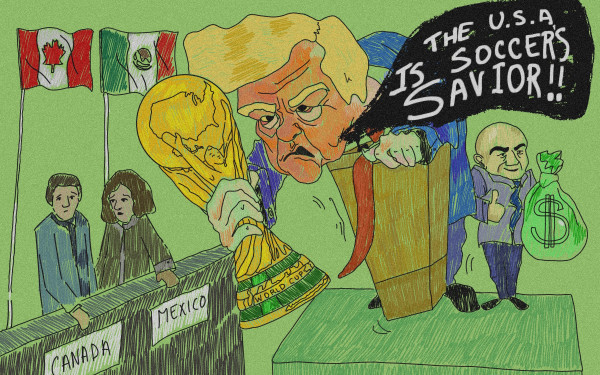
Hockey is becoming too American
The NHL consistently pushes policies that promote American interests over Canadian ones
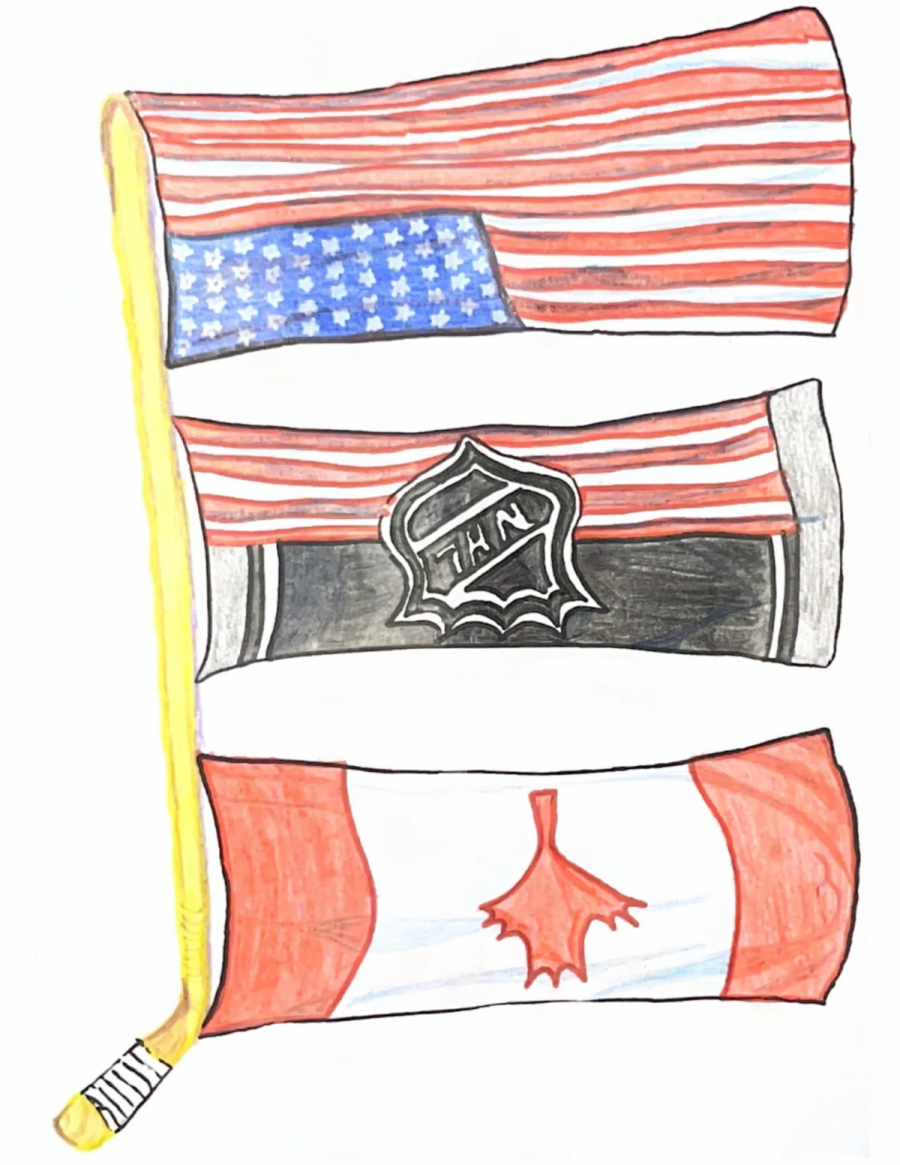
The National Hockey League's (NHL) official history portal offers a comprehensive timeline of the league’s history and team origins. The league was founded in 1917, replacing the National Hockey Association of Canada (NHA), and the first NHL games were played between teams from Montreal, Ottawa, Quebec City and Toronto.
You might think that the NHL would want to preserve the commitment to Canadian excellence upon which it was founded. However, a century later, the United States has more than twice as many teams as Canada, and no Canadian team has won the Stanley Cup even once in the 21st century.
Part of hockey’s lasting place in the Canadian cultural zeitgeist stems from the long, cold winters most of Canada endures. The NHL’s expansion into the U.S. in 1925 included teams from Boston, New York, Chicago and Detroit, all Northern U.S. cities. At the time, the ratio between Canadian and American teams was still fairly even, with the American teams in question having formed organically out of a shared love of the game.
In the late '60s, the NHL gained six new teams, nearly doubling its size. The new teams formed the Western Division while the “original six” became the Eastern Division. Notably, all of these new teams were American. On top of that, two teams were Californian, a southern state with a warm climate and no strong cultural connection to hockey.
Hockey remains a significantly more popular sport in Canada than the U.S., with 22 per cent of Canadian youth enrolled in hockey compared to under 1 per cent in the U.S. While it's more strongly viewed as a source of entertainment in the U.S., the disparity in population between the two countries means that Canada still sees more viewers per capita.
During the NHL’s expansion from the '70s to the '90s, the U.S. gained 14 teams while Canada gained just four. While this reflected the U.S.’s surplus of major cities compared to Canada, it still begs the question of why the league wouldn’t prioritize hockey interests in Canada, given its cultural ties to the sport.
The NHL moved its headquarters from Montreal to New York in 1989, and then added 10 new teams throughout the '90s, all of which were American. Current NHL commissioner Gary Bettman took office in 1993 and has used the position to strongly advance American hockey interests, including relocating the Quebec Nordiques to Denver, Colorado and the Winnipeg Jets to Phoenix, Arizona. The last time a Canadian team, the Montreal Canadiens, won the Stanley Cup was in 1993, and an American team has won it every year since.
This disparity in wins doesn't indicate a lack of Canadian skill in hockey—42 per cent of NHL players are Canadian despite only 22 per cent of NHL teams being Canadian. By contrast, the U.S. owns 78 per cent of NHL teams despite only 26 per cent of NHL players being American. As of 2006, all NHL players are paid in USD, which strains Canadian teams that must compensate for the exchange rate, yet another economic field in which Canada must bend the knee to America.
While the Americanization of the NHL has been gradual, President Donald Trump's administration’s recent threats to make Canada the 51st American state make this gradual change all the more threatening. Now more than ever, we Canadians must strengthen our sense of identity amid threats to our sovereignty.
Patriotism and identity are Canada’s strongest weapon against American cultural hegemony. In 2025, Canada defended its sovereignty by electing Mark Carney as prime minister after his “Elbows Up” campaign to promote Canadian patriotism. But how can we expect to completely preserve our sense of identity when one of our strongest cultural institutions is so bent on appeasing the U.S.?
The American men’s hockey team celebrated their victory over Canada at the 2026 Winter Olympics by inviting FBI director Kash Patel to drink with them in their locker room and later accepted the White House's invitation to eat dinner with Trump. Two of these players played for Canadian NHL teams at the time, including Brady Tkachuk, the former captain of the Ottawa Senators. The team took a firm pro-Trump stance in these celebrations, implying an endorsement of his policies—policies that aim to rob Canada of its sovereignty.
It's worth noting that the American women’s hockey team, despite also claiming Olympic gold over Canada, didn't include the Trump administration in their celebrations. While this partly responds to the Trump administration’s sexist agenda, it also reflects the Professional Women's Hockey League's (PWHL) clear value of respect between Canada and the U.S. in hockey. The league is headquartered in Toronto and features five Canadian and seven American teams. The PWHL sets a positive example for the NHL, proving it's possible to maintain balance between Canadian and American interests while keeping both countries engaged.
Now more than ever, it's important for Canada to maintain a strong sense of identity in response to American cultural hegemony. In today's political climate, the NHL’s consistent commitment to American interests reads as disrespectful to hockey’s Canadian roots and culture.
This article originally appeared in Volume 47, Issue 4, published October 27, 2026.