
The politics of internet access
From Syria to Canada, digital access follows power, not equality
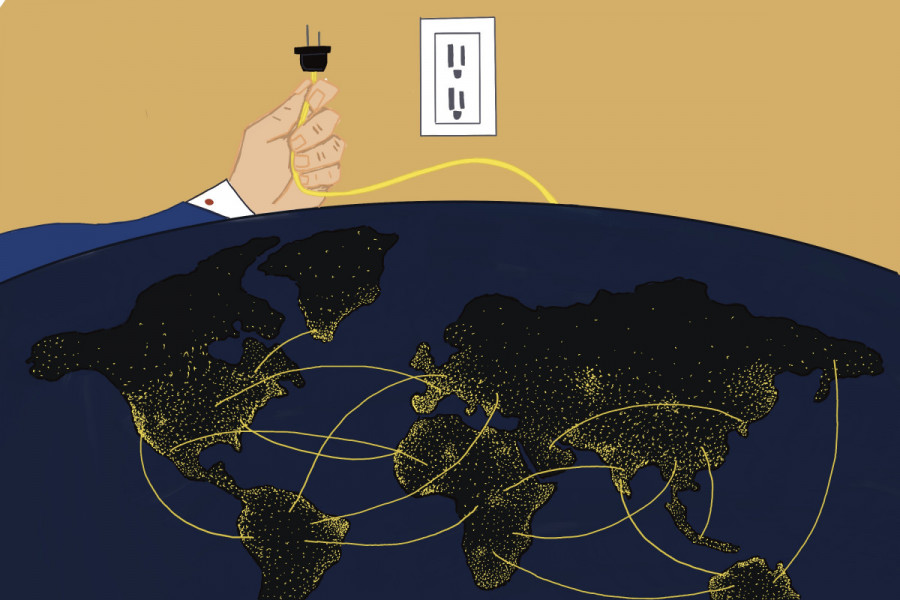
For years, the internet has been described as a borderless digital commons. It is upheld as a place where geography fades, and speech flows freely.
In theory, the internet flattens hierarchies. In practice, it reinforces them. The internet is not neutral. It is infrastructure, and infrastructure is political.
Let's start with access.
In Syria, years of conflict and infrastructure breakdown have made stable connectivity unreliable. When electricity falters, telecommunications collapse with it, and internet access becomes unreliable. Education, news consumption and communication are interrupted.
No formal censorship order is required to produce exclusion. Fragile systems alone can determine who participates in the digital public sphere and who does not.
In other contexts, exclusion is intentional.
During recent protests in Iran, authorities imposed sweeping internet restrictions and shutdowns. Monitoring groups documented nationwide blackouts that disrupted messaging platforms and limited independent information.
When a state can shut down connectivity, it does more than restrict access. It controls visibility and circulation. It determines which images circulate and which testimonies disappear. It isolates citizens from outside scrutiny and severs ties with diaspora communities.
Shutdowns are not technical failures. They are tools of political control.
Censorship can also be permanent and structural rather than episodic.
In China, state authorities block major international platforms and tightly regulate domestic ones. In Russia, regulators have restricted access to independent websites and escalated pressure on tools used to bypass state filters. In the United Arab Emirates, voice and video services on certain platforms have been restricted, and the use of VPNs to circumvent blocks can carry legal risk.
In these environments, access is conditional. Digital borders are enforced.
It would be easy to treat this as a problem unique to authoritarian regimes, but that would be overtly simplistic. Democratic systems rarely rely on direct shutdowns, yet regulation, platform governance and corporate decisions can still reshape the flow of information online.
In Canada, the Online News Act was designed to require major platforms to compensate news organizations. In response, Meta blocked news content on Facebook and Instagram for users in Canada.
The result was not state censorship. It was a regulatory dispute that reshaped how Canadians accessed and shared news. Meanwhile, Google negotiated a framework that includes a significant annual financial contribution to Canadian news outlets.
The episode revealed something important: Governments and corporations together influence what gains reach. Platform policies, algorithmic design and regulatory frameworks quietly structure public discourse.
The myth of neutrality becomes even harder to sustain when we look at the internet’s origins. ARPANET, the precursor to today’s internet, was funded by the U.S. Department of Defence. It was built to connect research institutions during a period of geopolitical tension. Its purpose was resilience and strategic communication, not democratic deliberation.
This history does not condemn the internet, but it reminds us that control and survivability were embedded in its architecture from the outset. The internet did not begin as a democratic project. Its democratization came later.
Even where access is stable and censorship is limited, inequality persists.
English accounts for roughly half of the known content on websites worldwide. The largest social media platforms that shape global discourse are owned by a small number of corporations, many headquartered in North America. When language dominance aligns with corporate concentration, narrative dominance often follows.
Stories from the Global South can struggle for sustained visibility in Western-dominated media ecosystems. Attention cycles move quickly. Algorithms reward engagement patterns shaped by dominant-language audiences. Representation online shapes representation offline. If certain regions and perspectives are structurally harder to amplify, the internet cannot honestly be described as culturally egalitarian.
Taken together, these realities challenge the romantic image of the internet as inherently democratic. Access is uneven. Connectivity can be revoked. Visibility is filtered. Narratives are amplified selectively.
The conclusion is not that the internet is irredeemable; it is that its governance matters.
Digital rights advocates argue that this trajectory is not inevitable. Organizations such as the Electronic Frontier Foundation, a nonprofit defending civil liberties in the digital world, have long pushed for stronger protections for free expression, privacy and open access online. Advocacy groups like Access Now monitor internet shutdowns globally and campaign against government-ordered disruptions.
International institutions have also increasingly framed connectivity as a rights issue. The United Nations Human Rights Council has affirmed that the same rights people enjoy offline must also be protected online. Human rights organizations, including Amnesty International, have similarly warned that internet shutdowns can violate freedom of expression and restrict access to information.
If access to information, speech and civic participation now depends on connectivity, then the internet is no longer layered onto democracy. It is part of its foundation. And foundations are not optional. They are either protected or they fracture.
This article originally appeared in Volume 46, Issue 11, published March 17, 2026.





_600_375_90_s_c1.jpg)