Hands that carry Eid
For henna artists, Eid al-Fitr means back-to-back clients and lasting memories
_900_1350_90.JPG)
The holy month of Ramadan has come to an end. Mosques have finished their Eid al-Fitr prayers, dresses and abayas have been hung back in closets, and Muslims can now drink coffee again.
But something that stays beyond the festivities of Eid is the henna art on the hands of at least one girl you know.
The work of a henna artist is all about practice, where one mistake leaves a lasting mark. Literally. It can start to feel like every 30-minute appointment is booked up until the day of Eid.
Curious about the work behind it, I spoke with henna artists Sheeneza Husain and Rabia Khawaja to delve into the world of their artistry and business.
Four years ago, after doing it for fun for her mom and sister during Eid, Husain was encouraged to pursue the practice professionally by one of her friends after doing their bridal henna.
“This was around the same time Ramadan was about to begin, so I used this opportunity to push my page,” said Husain, who is a former secretary of the Muslim Student Association (MSA) at Concordia University.
Khawaja’s path is similar. She loved drawing with a pen on paper and in 2021 decided to transfer that craft to henna art. She mentions how, over time, she has become more used to the busy schedule that comes with Eid prep.
“Your back is in so much pain, but then you think about how happy that person is going to feel afterwards, how much the conversation might be something you needed, or they needed.” — Rabia Khawaja
“The night before, I prepared all my cones from the freezer, my lemon sugar spray, my gloves, scissors and tape,” Khawaja said. “Throughout the years, it takes me less and less time. I remember in 2021, I would have been stressed for three or four days, but now I grab this and that and go.”
Henna itself comes from the dried and crushed leaves of the henna plant, Lawsonia inermis, which are turned into a paste and applied to the skin.
The plant contains a natural dye molecule called lawsone, which binds to the keratin in skin to create the signature orange-red stain that deepens over time.
The lemon-sugar mixture Khawaja prepares plays a key role in that process. Applied over the dried paste, it creates a sticky seal that keeps the henna moist and adhered to the skin for longer, helping the stain develop darker and last longer.
Husain says the reaction she gets from clients helps keep her going.
“[I love] seeing the pure joy on their faces,” Husain said.
Khawaja is motivated by something similar, but is mostly motivated by the emotional connections formed during appointments.
“The stories and the meaningful conversations, the bond of sisterhood," Khawaja said. "Your back is in so much pain, but then you think about how happy that person is going to feel afterwards, how much the conversation might be something you needed, or they needed.”
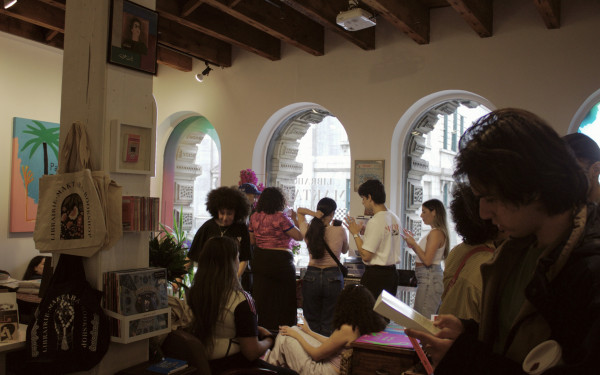
After booking a large number of appointments during an MSA event at Concordia’s library, Husain recalls being asked how she prepares for hours of back-to-back clients. Practice, she explains, is everything.
“I would say I have to train, but the more practice you have, the better,” Husain said. “Not only do you improve your designs, but you also improve your speed and creativity to do freestyle designs.”
Khawaja shares a similar perspective on growth over time. A design that once took her an hour now takes half that time after five years of practice.
A kind of henna that both Husain and Khawaja always look forward to doing is bridal henna, even though it is challenging. Husain describes the process as demanding but rewarding.
“I feel the most accomplished after bridal henna because of the long hours having to perfect each single line,” Husain said. “During this, you get to see each bride’s family cultures and their traditions and be part of it.”
Khawaja recalls a particularly memorable request from a bride.
“A bride asked me to do a circle in the middle of the mandala she wanted and draw her wedding ring with her husband’s rings,” she said. “It was a cute touch to her design.”
People look forward to getting their henna done because it adds to the joy of Eid festivities. For some, it is also a nostalgic and magical experience.
Heba Al-Sharif, a Concordian student, says that she loves watching the henna artist work and finds the scent deeply comforting and familiar.
“It is sort of like magic,” Al-Sharif said. She describes watching the paste stain her hand, darkening after initially being orange, as an enthralling part of the experience.
“It for sure adds that special Ramadan, Islamic vibe,” she added.
Henna artists bring their work to the hands of hundreds during the final week of Ramadan, and their efforts do not go unnoticed. Compliments follow fresh designs everywhere, with girls wiggling their fingers to show them off. The memory of getting dolled up for Eid lingers long after the henna fades.