The future of age verification software
Platforms like Discord struggle to find a balance between privacy and protecting minors
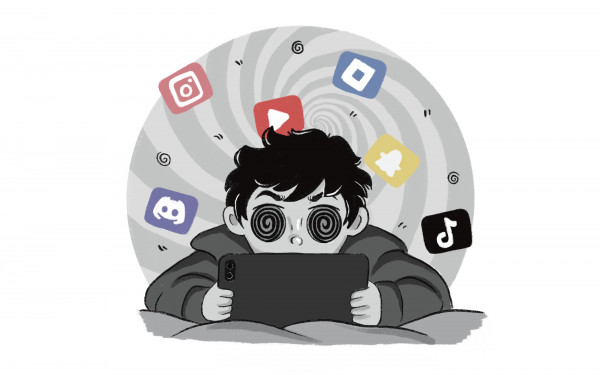
Young Canadians spend more time online than any other age group and report higher-than-average usage rates for online activities, according to a data snapshot from Statistics Canada.
Video calls and online gaming have become central to their online usage, with the platform Discord becoming increasingly popular. Currently, the application has over 200 million global monthly users.
The platform has faced criticism from parents on its safety measures for minors, which has prompted Discord to develop an age verification service for its users. The subsequent backlash from users over privacy concerns with age verification software has raised questions on how platforms can find the right balance between data privacy and user safety.
Discord’s rise in popularity
According to long-time Discord users Alexandru Burgoci and Elizabeth Zwick, the main reason why they use the platform is to interact with others while gaming.
“I was probably in high school when I discovered it," Zwick said. "It was just the easiest platform to be able to talk and play [games] at the same time."
About three in 10 teenagers use Discord, according to a 2023 Pew Research Center survey of U.S. teens aged 13 to 17.
The platform enables users to create private servers in which they can foster their own communities for anything from video games to school projects. This environment has been shown to facilitate predators’ access to grooming children or online extremist groups sharing child sexual abuse material.
In 2025, Discord and the online gaming platform Roblox were sued following the alleged grooming of children on their platforms. Following this, last month, Discord started developing an age verification software to check the age of its users.
Risks of age verification software
Azfar Adib is a PhD candidate in electrical and computer engineering at Concordia University whose research specializes in age verification software. He says that age verification has always been an important limit.
“If you look back, it's not actually a new idea, because there are things like alcohol, tobacco [and] gambling in the casinos,” Adib said. “These are always for 18-plus people.”
He said he believes that a lot of the pressure for the implementation of age verification software comes from parents’ concerns about their children’s social media usage.
“We are having a lot of challenges for kids," Adib said. "They are very addicted to social media, they are not able to study properly, [and] some of them are becoming violent."
According to the Canadian Psychological Association, excessive social media usage among adolescents is associated with reduced self-esteem, distraction from school, and addiction, which can interfere with daily functioning.
Adib explained that most age verification software, like that used by Roblox, verifies people’s ages through two methods.
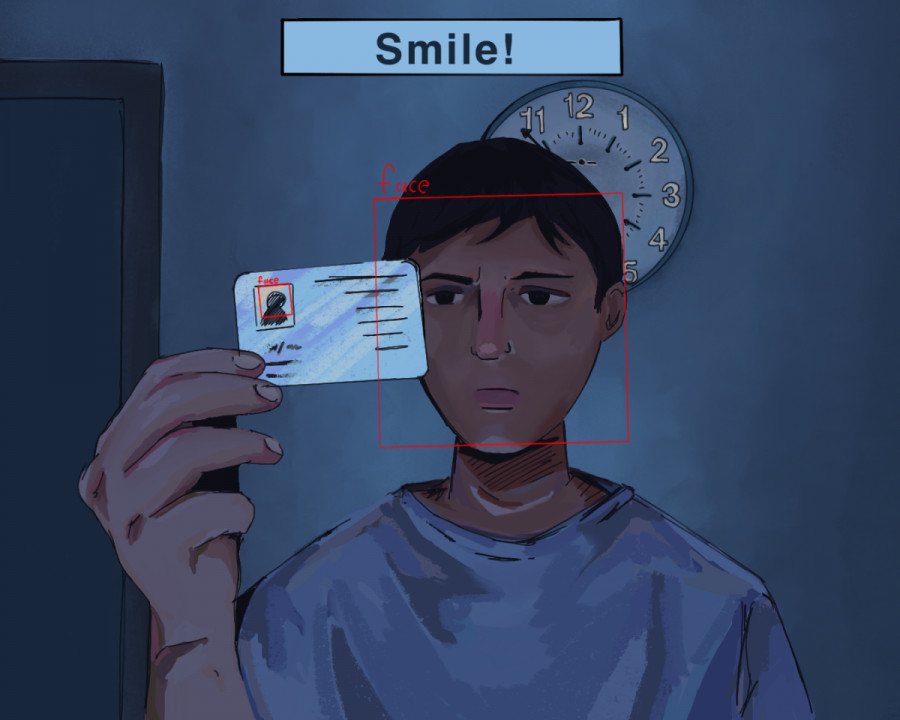
The application may ask a user to turn on their camera so that it can take a selfie of the user; then, artificial intelligence is used to scan the photo and determine whether the user is 18 years old or younger.
The second method consists of uploading a picture of some form of identification—often government-issued—that confirms the user’s date of birth.
Users like Zwick understand the need for age verification, yet also have concerns about the information they collect.
“I can understand why age verification is required, and I do understand why ID would be the easiest way,” Zwick said. “On the other hand, I was also raised in a household where my mom always told me, ‘Don't say your real age. Don't say your real name.’”
Discord announced in February that it would be rolling out age verification globally in March. All users will be put into a “teen-appropriate experience” by default, which means that only verified adult users can change their settings to access age-restricted content.
Following the announcement, the platform received backlash from users and, in turn, delayed the launch of the software until the second half of 2026.
On their website, Discord officially announced on Feb. 24 that age verification will only be prompted when users try to access age-restricted content, and that the age verification will be done through a vendor like k-ID that will not store the data acquired.
This does not mean that personal data cannot be breached. In October 2025, Discord announced that a vendor they worked with had been breached, and the official ID photos of 70,000 users were potentially leaked.
According to Adib, it is impossible to completely eliminate risks of data breaches.
“If our data is leaked—my address, my date of birth, my name and other things—then it's possible that people can make use of that,” he said.
Adib also raised concerns about data concerning users’ physical characteristics, also known as biometric data, being leaked.
“Nowadays, we see a lot of deepfake content, like someone's pictures being used to make someone [who] factually doesn't go with them,” he said.
Generative AI has been increasingly used to manipulate videos, images and audio of people to create fake content. This has become a problem, particularly for women, who have been the main targets of deepfake pornography.
Who is behind age verification software?
Roblox and Reddit’s services are provided by Persona, a company that offers identity and age verification services. Persona is supported by investments from Founders Fund, a venture capital firm led by billionaire entrepreneur Peter Thiel.
Thiel is a co-founder of Palantir Technologies, an American software company that recently partnered with U.S. Immigration and Customs Enforcement (ICE) to develop a platform that utilizes AI and data mining to aid ICE in identifying undocumented immigrants.
According to Adib, the public’s faith in data collection software depends on how the government decides to use the data collected.
“If we have a responsible government and we can trust that they will not manipulate our data, [then] that should be our point of trust,” he said. “But now what's happening in the U.S., especially with ICE and with other organizations, people are really fed up.”
Discord announced on Feb. 24 that it no longer wished to work with Persona after running an age verification test with them in the U.K. to test its services. According to Discord, the biometric data collected from Persona’s facial age estimation did not exclusively stay on the user’s phone.
Adib is a part of the age verification team for the Digital Governance Council, a not-for-profit organization that recently published a new National Standard of Canada for age assurance technologies.
He hopes this standard can provide technical references for national legislation or guidelines for companies that want to provide age verification software.
“For legislation, we hope that at least from the technical side, they can take help from here,” Adib said. “Maybe there is a new company in need of [an] age verification service, then how do they do that, what are the guidelines to follow, what can be done, and what can not be done?”
For now, TeamSpeak, a rival platform to Discord, has seen a rise in new users since Discord’s announcement that it would develop an age verification system.
Still, users like Burgoci don’t believe that switching platforms will change much.
“I think TeamSpeak would eventually have to do the same thing [as Discord],” he said. “It would just be delaying the inevitable.”
This article originally appeared in Volume 46, Issue 11, published March 17, 2026.