Concordia Food Coalition stirs up the university’s food networks
From the campus bar to Loyola’s farm, the STIR program helps grassroots groups with funding and mentorship
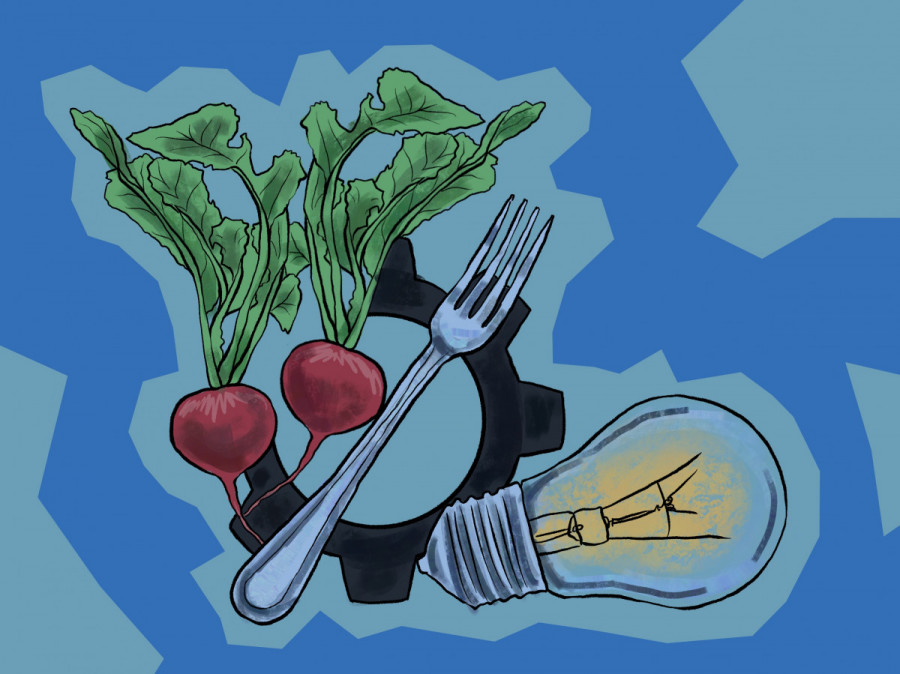
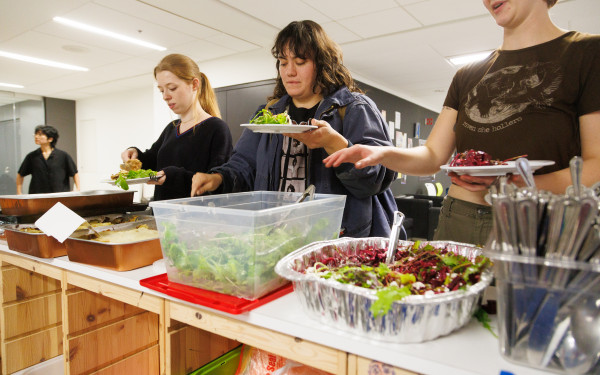
The Concordia Food Coalition (CFC) is cooking up a storm with its Support, Training, Incubation and Resources program—known as STIR—to help grassroots food initiatives at Concordia University find funding and support.
Since its inception in 2013, STIR has supported groups like Reggies, Mind.Heart.Mouth, and CultivAction.
STIR offers food initiatives $2,000 in seed funding for equipment, labour, hiring professionals and direct support. The program provided $4,818 of funding to different food groups between October 2024 and September 2025, and $8,000 since October 2025.
“It's really extensive, and we're basically there to just help you get your project up and running in any way, shape and form,” said Elena Tresierra-Farbridge, CFC’s food systems coordinator.
According to Tresierra-Farbridge, support includes communications, branding and fundraising, as well as connecting food groups with experts in areas they might need.
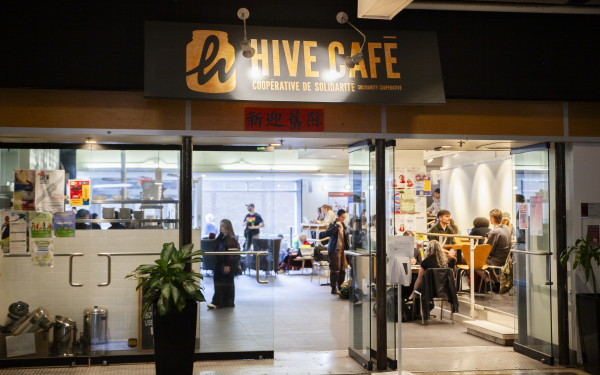
Reggies, the university’s campus bar, is among STIR’s recent aid recipients. The bar’s marketing manager, Goldie Webb, said the $500 received allowed the bar to hire two students in photography and graphic design positions, which they say reinvests the money into the student community.
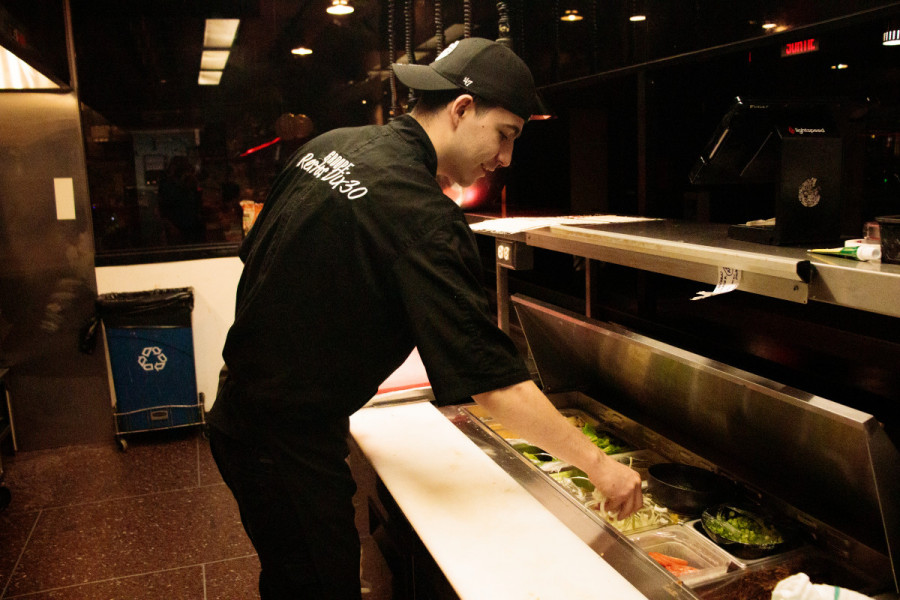
“The STIR program has helped a lot with getting in touch with professionals and training people in our kitchen," Webb said, "and hopefully [to] help them move out of Reggies and into a more serious kitchen or culinary role."
“Low barrier. That’s the name of the game with us, because everyone needs to start somewhere.” — Elena Tresierra-Farbridge, CFC
One of Reggies' recent hires is Ben Redhill-Simard, the bar’s official graphic designer and unofficial creative director.
“When you're just kind of starting out with stuff like this, it feels like you're doing a lot of work for free," Redhill-Simard said. "So having the grant be there, it's a nice little chunk of change, for feeling like you're getting something done and you're getting rewarded for it."
Concordia has a variety of initiatives that can help to develop food groups, such as the Sustainability Action Fund, a fee-levy group that supports sustainability in the Concordia community.
STIR was designed to uplift the smaller food initiatives on campus. According to Tresierra-Farbridge, these smaller initiatives often have trouble meeting the requirements of these funding programs, such as having well-established funding sources or several years of financial documentation.
“Low barrier. That's the name of the game with us, because everyone needs to start somewhere,” Tresierra-Farbridge said.
Food insecurity is an ongoing issue at Concordia, with 67 per cent of students being either marginally, moderately or severely food insecure, according to a 2023 campus report.
Due to such a vast need for food resources at Concordia, over the summer, the STIR program faced the possibility of running out of funding, only being able to split $2,000 between the groups it supported in the spring of 2025, rather than being able to offer $2,000 to each group.
In August, the CFC applied for funding from the CSU’s Student Space, Accessible Education, and Legal Contingency Fund (SSAELC) and received $25,100 for the STIR program and $4,900 for the CFC farmers' market.
This, along with the recent fee levy increase the group got this fall, raising its fee from 16 cents per credit to 32 cents, has allowed the CFC to continue helping student groups throughout the school year.
“Partnering with STIR and STIR providing grants, it keeps Reggies running," Webb said. "It keeps Reggies a place that people enjoy to come and grab food or study with their friends."
The STIR program closed applications for winter participants on Jan. 8.
In light of the fall fee levy increase, the CFC’s first since 2017, Tresierra-Farbridge hopes that STIR can eventually offer more funding and help larger and longer-term food accessibility projects.
With Concordia implementing cuts to student services like the shuttle bus to reach its target deficit of $31.1 million, Tresierra-Farbridge says the STIR program’s place as a stable community funding source is important.
“Our direction as the CFC is really gonna be [...] investing in the groups that exist, in new ideas, fresh ideas,” Tresierra-Farbridge said. “It seems the university's going through a lot, and we have to be resilient and lean on each other.”
This article originally appeared in Volume 46, Issue 10, published February 24, 2026.