
Beyond Sir George Williams University’s 1969 Computer Riot
In the decades since a 14-day occupation in protest of racism, students are reclaiming Black visibility on and off campus
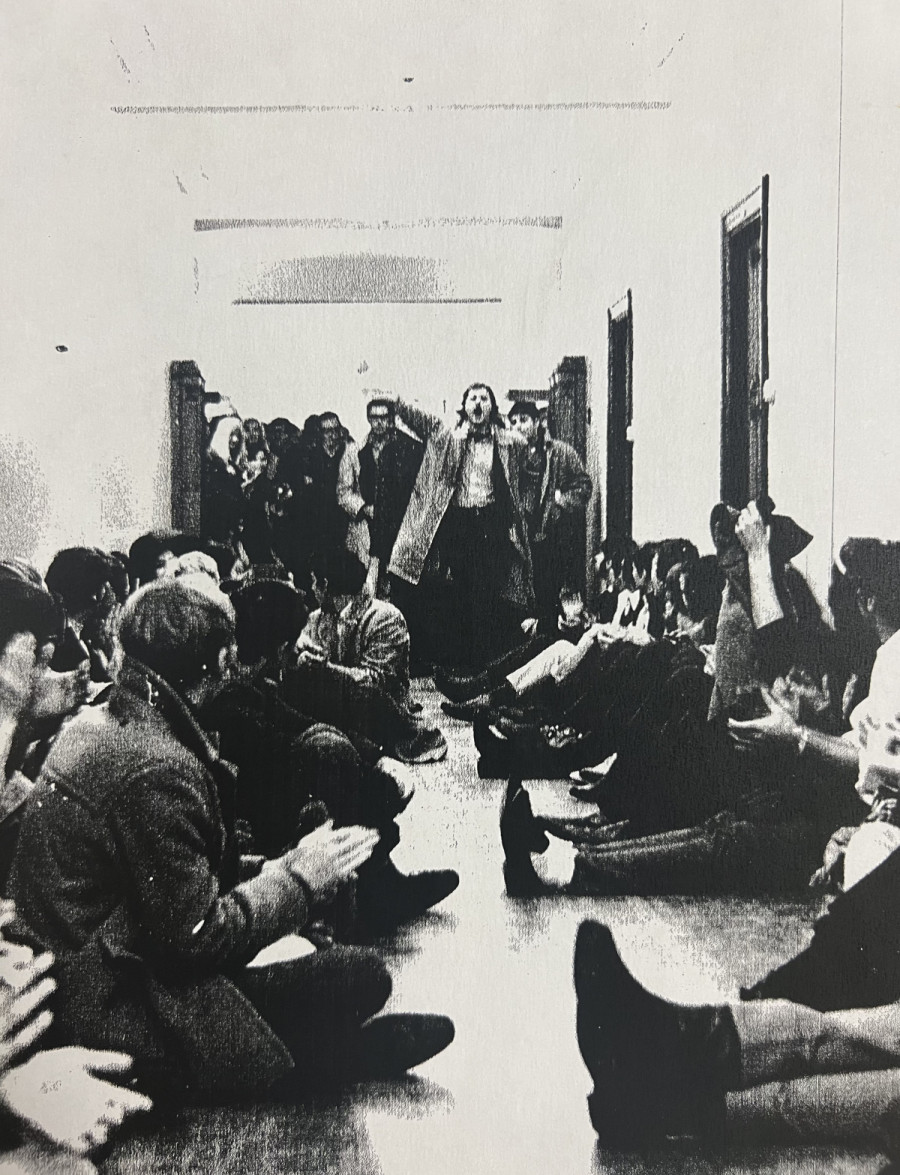
On this month 57 years ago, at what is now Concordia University, over 200 students occupied the ninth-floor computer lab of the Henry F. Hall Building for two weeks to protest institutional racism at the university.
This act of protest started on Jan. 29, 1969, and continued for 14 days until Feb. 11, costing the school—formerly Sir George Williams University—over $2 million in damages. Known as the Computer Riot, the demonstration brought national attention to racism in higher education and continues to influence how the university makes amends with its past.
It all started in April 1968, when six Caribbean students accused Perry Anderson, an assistant professor of biology, of intentionally failing and giving lower grades to Black students.
Students brought the issue forward to the university’s administration, after which the university created a hearing committee to investigate the allegations. Students did not approve of the committee representatives, leading to ongoing clashes between the administration and the student body.
On Jan. 28, 1969, student newspaper The Georgian—which later merged with Loyola News to form The Link—had handed over editorial control to student protesters, who published an issue known as The Black Georgian. The issue was centred on the ongoing racism at the university.
During the two-week-long student occupation, negotiations between the university and the students were ongoing.
On Feb. 11, it seemed that an agreement had finally been reached, but it quickly fell apart as students began to leave the Hall building to go home, believing an agreement had been reached. The university used this as an opportunity to call the police to expel the remaining protesters on the ninth floor.
The SPVM brutally arrested 97 students, and a fire broke out, destroying the computer centre. Coralee Hutchison, an 18-year-old student from the Bahamas, received head trauma inflicted by the police and later passed away.
For many in Montreal’s Black community, this event created a clear distrust and disconnect toward the university, reinforcing that institutional systems were not designed to protect them.
“Just the depth of what happened here should be known by all students, but definitely should be a core part of anything that the university talks about,” said Danayit Bobrowski, member of Concordia’s Pan African Student Union, Black Perspectives Office and anti-racism task force.
Bobrowski says that this was not the first time Montreal’s Black community had been neglected.
From a history of slavery to restrictive immigration policies to labour discrimination, Black communities in Montreal have faced systemic barriers that limited their full participation in society.
According to the historical context published on Concordia’s website, in the early 20th century, migrants from the Caribbean faced policies that would only allow them temporary or low-status labour roles. Even highly ski
lled newcomers were frequently underemployed due to racial bias in hiring practices.
Subsequently, the civil rights movements of the 1960s created a new generation of students who carried a heightened political awareness into Canadian universities.
“Sixty-nine was very much international at its core, and the Black liberation movement was global in its scope,” Bobrowski said. “‘Injustice anywhere is injustice everywhere’ was really a core principle of what the students were fighting for, and also very much tied to fighting where we're at [today].”
In the years following the Computer Riot, Black students created their own spaces within campus through cultural student associations and clubs. For clubs like the African Students Association, celebrating African culture and creating havens for Black students is a personal mission.
The university has made attempts to make amends with the Black community.
In October 2022, 53 years after the fact, Concordia released an official apology recognizing its own racism. In the same year, the university president’s Task Force on Anti-Black Racism released a comprehensive set of 88 recommendations under four different pillars to dismantle systemic barriers and foster a more inclusive campus.
The university has since published annual progress reports to track this work, including the creation of new resources and accountability mechanisms.
Some in the university community see much of this progress as symbolic.
Danna Ballantyne, external and mobilization coordinator at the Concordia Student Union (CSU), says the best mechanisms are consultation with marginalized students and investment into student initiatives.
“From a CSU standpoint, a lot of the work that should be done to make reparations has to do with allowing student representation in decision-making on issues that affect the student body,” Ballantyne said.
One of the pillars the university implemented, called "Fostering Black Flourishing," was the starting point for what would later become The NouLa Black Student Centre.
Launched in Fall 2023, 'nou la,' meaning “we’re here” in Haitian Creole, offers various services and resources aimed at fostering the collective success and well-being of Black students.
Teeanna Munro is the manager at NouLa and has been part of its installation since the very beginning in the summer of 2023. As a former Concordia student, Munro said she recognizes how much the university has evolved, while understanding that some gaps still need to be filled.
“Unless there’s a true decolonizing of the university, it can never, really, fully be welcoming,” Munro said. “[But] we’re here, we’ve been here, and we’re here again because of those from before.”
Since its implementation in 2022, every recommendation made by Concordia’s anti-racism task force has led to tangible projects with clear deadlines being set.
According to the university, part of the pillar of "Driving Institutional Change" includes public recognition through initiatives such as the installation of a commemorative plaque in the Hall building marking the 1969 Sir George Williams student protest, along with the development of expanded online historical and teaching resources about the event.
Additionally, in Fall 2025, the university added the Black and African Diaspora Studies in the Canadian Context minor, allowing students to learn more about the Black presence in Canada and its challenges. In Fall 2026, the university added a new certificate option to respond to a different demographic of students.
However, Bobrowski says the aftermath is not all positive.
“I think the Computer Riot really set a precedent on the part of the administration on how to respond to student protesters,” Bobrowski said, pointing to on-campus policing, arrests during protests and the hiring of private security at the university.
“As we've seen since Oct. 7, increased militant student activism has been met with not just increased police presence, but a new aspect is increased private security presence and hyper surveillance,” Bobrowski continued.
A Concordia spokesperson previously told The Link that supplemental security staffing was added after reports of “aggressive behaviour, assault and vandalism” at demonstrations.
Ballantyne says the Computer Riot is a benchmark for student movements in the decades since.
“I think that the computer occupation was not the only time that such a strategy has been used by students to push demands, and historically it's been very effective,” Ballantyne said. “We can't deny that, in a system where students have very limited power, that kind of organizing is incredibly effective.”
With files from India Das-Brown and Matthew Daldalian.
This article originally appeared in Volume 46, Issue 10, published February 24, 2026.



__600_375_s_c1.png)
_600_375_90_s_c1.jpg)