New dinner initiative feeds students on Concordia’s downtown campus
The Spinach Collective aims to combat student food insecurity and bring people together
A new dinner program has popped up on Concordia University’s downtown campus.
A new dinner program has popped up on Concordia University’s downtown campus.
The Spinach Collective opened early September and holds collective suppers bi-monthly, courtesy of a group of four students looking to improve Concordia’s food network.
The collective’s founders, Maria Jennett and Mia Kennedy, hatched the idea for the free vegetarian supper program after Jennett interviewed Kennedy for a project about food systems for a class at Concordia. Kennedy, a former Concordia Food Coalition member, has been involved in food organizing since CEGEP.
Kennedy was familiar with the lack of dinner options at the university, especially at the Loyola campus. During the interview, she pitched Jennett the idea of doing something material to fix it.
From here, the Spinach Collective was born.
“I always felt that there were no options,” Kennedy said. “For breakfast, you have the Hive, you have Reggies now. For lunch, there’s The People’s Potato, and then there’s nothing for dinner.”
They recruited Allegra Ghiglione and Shannon Fejk, two friends with extensive cooking experience, and planned out how their initiative would work through vision boards and meetings with The People’s Potato.
After a spring and summer of applying for grants, they received funding from the Student Space, Accessible Education, and Legal Contingency (SSAELC) Fund; the Sustainability Action Plan; and the Sustainability Action Fund.
“This project, and every community-run project, is a band-aid solution to the severe food insecurity problem at Concordia.” — Mia Kennedy, Spinach Collective co-founder
Armed with around $20,000, the group of four were ready to begin providing food to students.
“It can be difficult to get funding from administration and SSAELC Fund,” Kennedy said. “But I think because this is such a pressing need and an urgent issue, they were able to get us funding.”
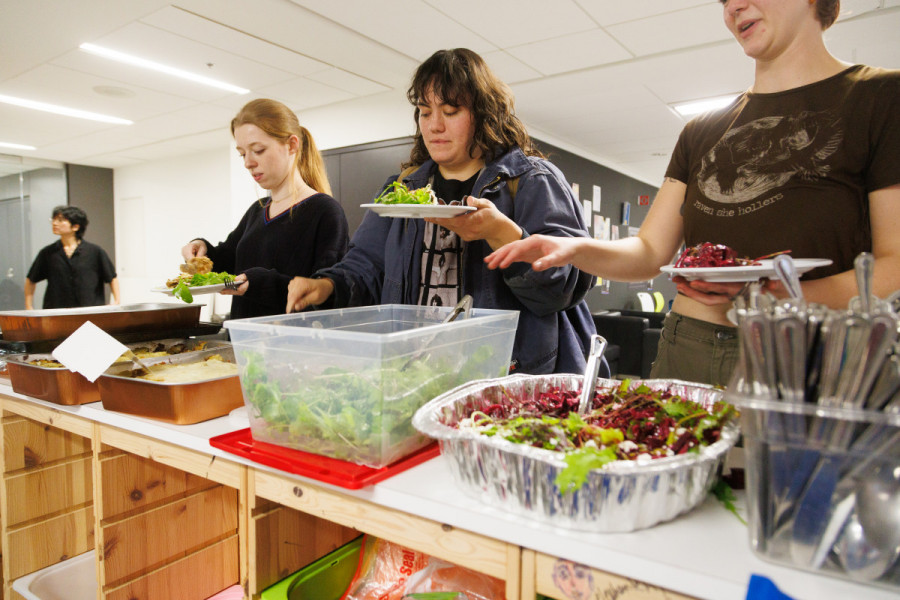
Students lined up around tables filled with food for the collective’s second dinner on Oct. 23, which took place in the Art Nook on the seventh floor of the Henry F. Hall building. The buffet-style spread featured a beet salad, a vegetarian shepherd's pie and an apple crumble with whipped cream.
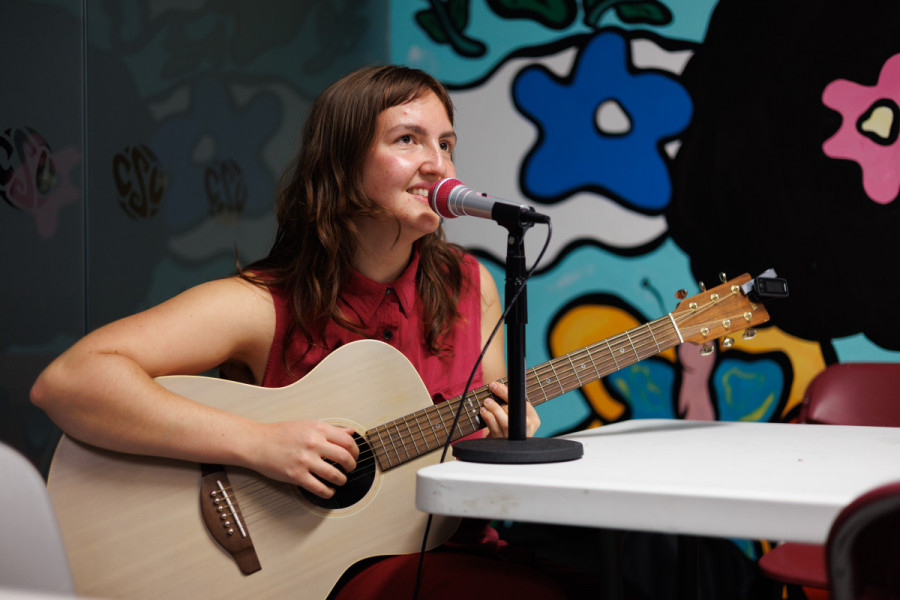
“Very excited to eat some food, share my music, and meet some people,” said singer-songwriter Rose Chisholm, who strummed a guitar and sang throughout the night.
“I’m here for the free food and the good company,” said attendee Natalia Martinez.
The Spinach Collective said they intend to continue to include artists and skill sharers in their suppers. To make this happen, they’ve dedicated part of their budget to honorariums for performers.
The food takes a long path on its way to the collective’s dinner table.
One of the Spinach Collective’s main goals is to provide high-quality food when feeding students, according to Ghiglione. Ghiglione handles the meal plans, prep and recipes.
With previous experience in fine dining, she starts planning each menu by considering what ingredients are in season and talking to CultivAction, the cooperative of urban farmers that operates on Concordia’s Loyola campus, to see what is available.
“We want to work with local farmers as much as we can, especially Concordia farmers,” Ghiglione said.
The collective then gets groceries from local student farms as well as the regular supermarket, preps the kitchen and cooks. Due to what they explained was a lack of kitchen space on campus, the group operate out of Ghiglione’s apartment and bring the food to campus in time for the meal.
Altogether, the process is a whole-day affair. The group makes around 50 portions of food, and by the end of dinner, there’s barely anything left, according to Kennedy.
There’s a lot on the horizon for the Spinach Collective. The group is hoping to come to an agreement with The People’s Potato to use their kitchen space, something which would ease the burden of cooking these dinners.
“It would allow for us to make bigger portions and more variety using the oven space,” Fejk said. “We’d also be able to get more volunteers and be able to teach people more about cooking.”
Additionally, the group hopes to get the word out about the program and increase their food quantities as more people show up, according to Kennedy.
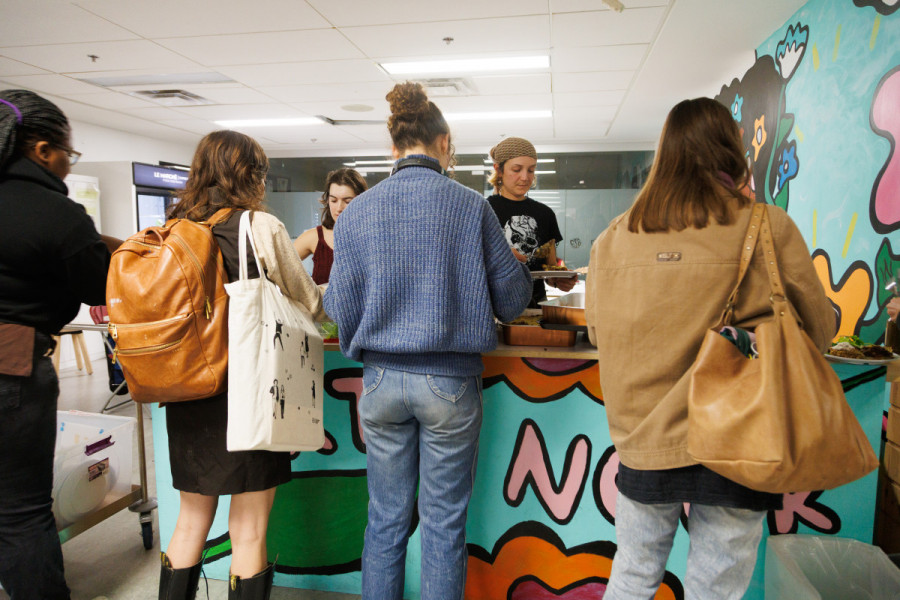
“It helps to be offering it in these high traffic areas,” Jennett said. “Our next step is really solidifying the spaces we’re gonna be cooking and serving out of, and getting the word out in a bigger and better way.”
The Spinach Collective also wants to push the program’s community aspect and highlight local artists and skillsharers like Chisholm. According to Ghiglione, the eventual goal is to have the program run every week and to alternate between the classic dinner setup and a more “chill event” like a workshop, where the team can focus on community.
"We really wanna be a space for sharing skills and have workshops or activities that get people to linger and build relationships,” Jennett said. “We’re still trying to figure out how that fits in.”
The program is a response to widespread food insecurity among Concordia students. The 2023 Concordia Student Food Insecurity Report found that 67 per cent of students surveyed experience some degree of food insecurity. With a 4 per cent rise in grocery prices in Canada over the last year, according to Statistics Canada, food is not becoming any more affordable for students.
Kennedy, who also acts as vice president of sustainability at the Concordia Student Union, said the dinner program is part of her mandate to improve food services at the university.
“This project, and every community-run project, is a band-aid solution to the severe food insecurity problem at Concordia,” Kennedy said.
She added that the university needs a “systemic food revolution” to tackle its students’ food insecurity from the ground up. And though Kennedy believes the Spinach Collective has a hand in aiding this, she explained that more action is needed.
“It’s only with the political will of the administration that it’s actually gonna happen,” Kennedy said.
The Spinach Collective is looking for volunteers who are passionate about food, building community spaces and combating food insecurity on campus. With both Kennedy and Ghiglione graduating this year, Kennedy said the collective’s future will depend on student involvement.
“As the demand for free food increases, it’s more work, so we need a larger team to meet that demand,” Kennedy said. “Come meet us, come listen to music and cook in the kitchen with us, and make a positive difference.”
The Spinach Collective’s next free dinner event will be held on November 6th in the Art Nook. More information can be found on the collective’s instagram at @spinach_collective.
This article originally appeared in Volume 46, Issue 5, published November 4, 2025.




.IMG_1928_600_375_90_s_c1.jpg)