Climate committee urges Concordia to fully divest from fossil fuels
The CSU and Climate Emergency Committee claim the university is far from their original 100 per cent divestment goal
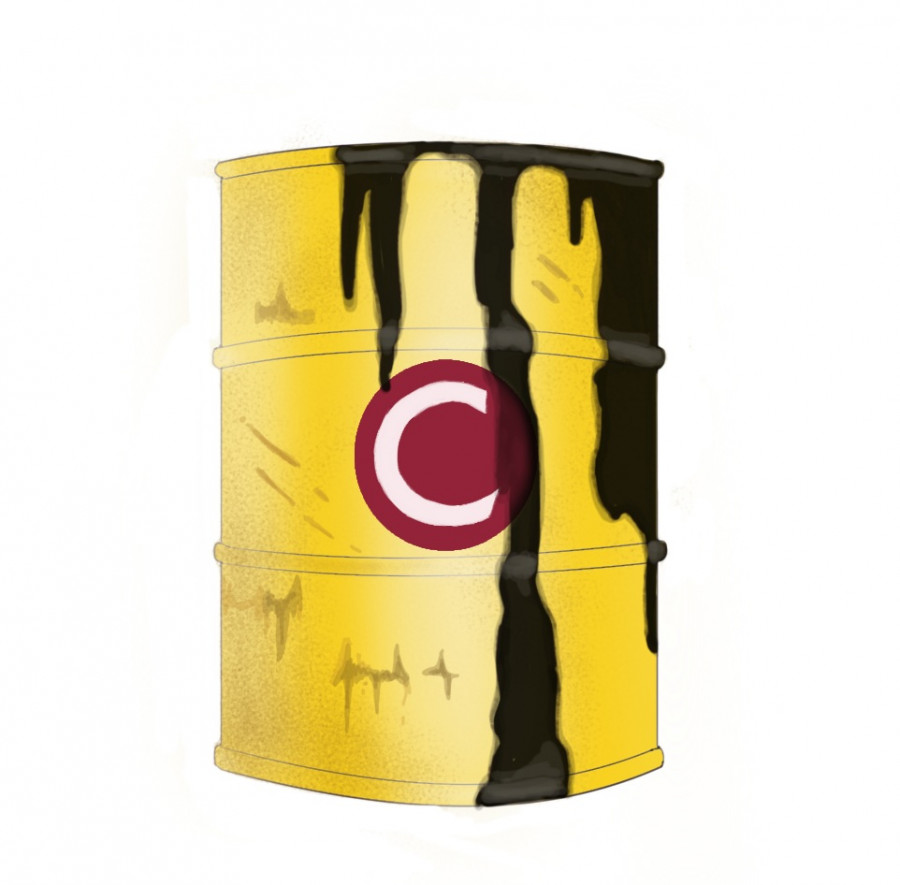
Concordia University remains far from its 2019 goal of 100 per cent divestment from fossil fuel companies, says a campus climate committee.
The university still holds over $853,000 invested in fossil fuel stocks as of August 2025, revealed when part of its investment portfolio was publicly released.
The Climate Emergency Committee (CEC), formed in 2019, aims to increase understanding of the natural processes behind climate systems and raise awareness of human-induced processes that are leading to climate change, per its website.
The CEC published a report in January alongside the Concordia Student Union (CSU), urging the university to end all investments in the fossil fuel sector.
CEC says they cannot estimate if the university has more investments in fossil fuels than what was released publicly, as the Concordia University Inter-Generational Fund (CUiF) holds 30 per cent of the university’s investments, according to the CEC.
The CUiF’s holdings are released twice a year, in April and in August.
“[The university] said they would do something. They said this was part of their values, and then they turned around and did the easier version of [divesting].” — Alex Pace, CEC founder
The CEC is also calling for negative screenings—a process that removes entire sectors from investment portfolios—for coal, oil and gas sectors on all externally managed funds of the CUiF and for the university to publicly announce changes made to the CUiF.
Concordia spokesperson Julie Fortier told The Link the portfolio has already completed negative screenings for coal, oil and gas.
According to Mia Kennedy, the CSU’s sustainability coordinator, the January report is an effort to keep the university accountable to students.
“The union is here to represent students’ interests, and frankly, the university doesn’t do that,” Kennedy said.
The push for full divestment comes in light of the university’s 2019 promise to fully divest by 2025.
However, in 2023, CUiF chief investment officer Marc Gauthier stated that the approach to reach 100 per cent divestment had changed.
The university’s commitment was now related to divesting from the world's top 200 publicly-listed coal, oil and gas reserves owners, known as the Carbon Underground 200, rather than all companies in the fossil fuels sector.
In 2025, Concordia announced that the CUiF had completed its transition to 100 per cent sustainable investments, following its divestment from the Carbon Underground 200 list.
Alex Pace, a Concordia PhD student and CEC co-founder, thinks the university’s shift from 100 per cent divestment from all fossil fuels to those in the top 200 companies is a failure to follow through on promises.
“[The university] said they would do something. They said this was part of their values, and then they turned around and did the easier version of [divesting],” Pace said. “They’re still contributing to the problem and profiting from the problem.”
When asked why the CUiF shifted focus following 2023, Fortier explained in an email to The Link that the Carbon Underground 200 is a “globally recognized screen for fossil fuel-free investment products.”
According to the Fossil Free Funds, a fossil fuel investment directory, the Carbon Underground 200 only tracks the top 200 companies, but it doesn’t “flag non-reserve owning subsidiaries or parent companies.”
The Link asked the university why it still holds investments in oil, coal and gas companies despite repeated public commitments to fossil fuel divestment.
“The list of the CUiF’s public equity holdings that is published twice a year is essentially a ‘photograph’ of the holdings on one date but in reality the holdings are constantly changing as portfolios are adjusted and refined,” answered Fortier.
Fortier further stated that the investments highlighted by CEC are in a “temporary parking place” and fall in line with the CUiF’s environmental, social and governance practices.
“These will shortly be liquidated and be redeployed in accordance with our commitment to 10 per cent mission-related investments, pending approval by the CUiF board this month,” said Fortier.
Kennedy and Pace urge the university to increase student representation in talks about sustainability.
“You have one person representing 35,000 undergraduate students, and that’s just not enough,” Kennedy said in reference to her position as sustainability coordinator.
Nonetheless, Kennedy said their team has received support for their fight for representation through student voices and the university’s Office of Sustainability.
“There is a clear value of student voices, and I think what is disappointing is not necessarily feeling that that’s reflected higher up,” Kennedy said.
For those on the CEC, the fight is far from over.
On Feb. 5, Pace and Kennedy sent over their report to the administration, hoping it would lead to change.
“There will be a time to see if we get a response from the administration. And if we don’t, then we escalate, we move on to something else to see what works," Kennedy said. “If they are ignoring us, then we demand attention.”
A previous version of this article stated that the university has close to $830,000 invested in fossil fuel stocks as of August 2025. This is incorrect, it has over $853,000 invested in fossil fuel stocks. The Link regrets this error.
This article originally appeared in Volume 46, Issue 9, published February 10, 2026.