Taking history into your own hands
A series of public events celebrating Montreal’s Queer and BIPOC community archives
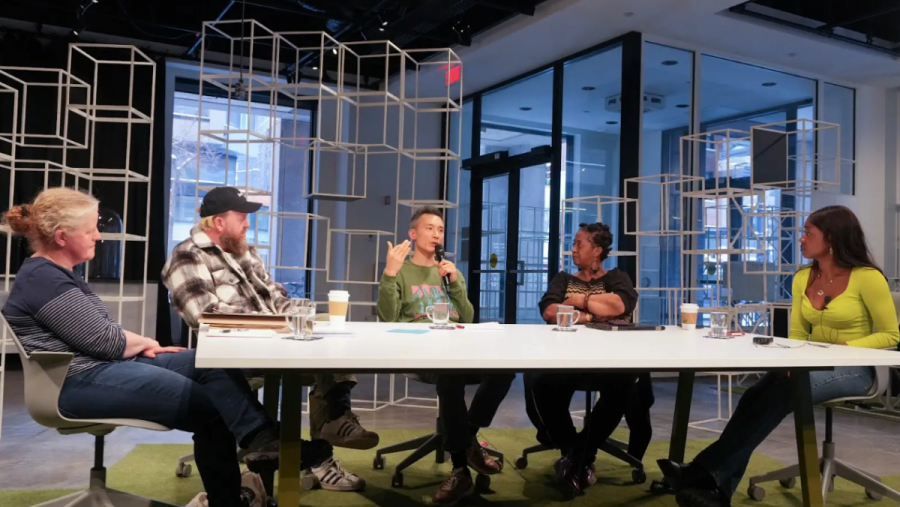
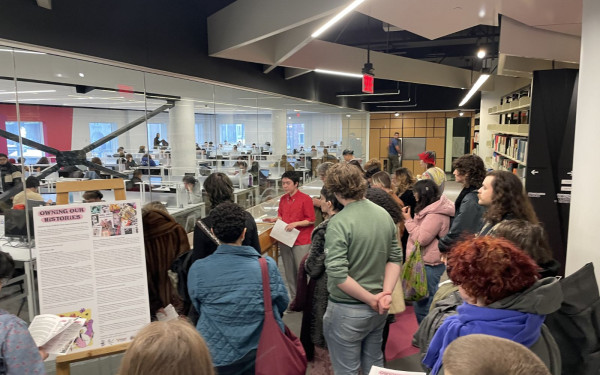
On Feb. 26, Concordia University’s 4TH SPACE hosted a discussion on queer, BIPOC community-based archives and the work that has gone into making them flourish. The event was streamed on both Zoom and YouTube, and is available in two parts.
Featuring five presenters and one moderator, the event covered a wide range of topics. Panelists discussed the process of selecting which materials to preserve and the importance of trauma-informed oral history and archival research.
The event opened with a keynote presentation by Scott Berwick, manager of the Arts and Archives Department at the Kanien’kehá:ka Onkwawén:na Raotitióhkwa Language and Cultural Centre. His presentation focused on archiving Indigenous visual, audio and material history; his excited demeanour throughout demonstrated that, for him, “it’s a lot of fun to do this work.”
With a background in the Fine Arts, Berwick began documenting his relationships with those in Kahnawà:ke through photography. He began working at the Language and Cultural Centre in 2019 and quickly moved to increase the photography collection, much of which had been sitting untouched in residents' homes.
Berwick has succeeded in his mission to increase the amount of material held in the Cultural Centre. Since 2019, its collection has doubled from 4,000 to 8,000 images. He has been working alongside other members to restore the photos, which illustrate and document the experiences and lives of many residents, many of whom have passed away.
Some of these photos captured the devastation of colonialism, such as one photo Berwick presented, which showed a group of people relaxing along the river before the St. Lawrence Seaway was developed.
“A devastating advancement in Western society that took away access from the river,” Berwick said.
Other photos were happier in nature, illustrating the pleasantries of regular, everyday life: photos of people’s parents when they were younger, a photo of a group of men, standing on a porch, dressed in their ‘Sunday best.’
Alongside photographs, the centre has digitized cassette recordings of a weekly talk show, preserving voices for future generations.
“So we don’t go back to a time where our story is being told by everyone but us.” — Pat Dillon-Moore
For Berwick, the work is both archival and communal, allowing him to give back to the community by hiring fine arts students and youth.
The second half of the evening shifted into a panel discussion featuring Parker Mah, Pat Dillon-Moore, Mark Andrew Hamilton, and Laure Neuville, moderated by Taïna Mueth.
With a diverse group of panelists, the conversation examined both the successes and challenges of building and sustaining community archives, underscoring the immense care and labour involved in taking archival work into one’s own hands.
All four panelists came to archival work through distinct lived experiences, each arriving at preservation from a different angle.
Parker Mah, a fourth-generation Chinese Montrealer, began long before he had language for what he was doing. Growing up in what he described as a family of “hoarders,” he sifted through photographs and objects as a child, piecing together family stories through what had been kept.
Pat Dillon-Moore’s work is rooted in music. She currently conducts Pioneer Grooves, an Afro-Caribbean oral history project documenting the lives and contributions of local musicians.
Historian and researcher Mark Andrew Hamilton focuses on queer archives and oral histories. He has curated exhibitions at Archives gaies du Québec and now works as a volunteer curator on a zine-focused project.
Laure Neuville, an archivist at Les Archives lesbiennes du Québec, has dedicated much of her research to lesbian communities in Montreal and across Canada.
For the panelists, archiving is more than documentation—it is a way of reclaiming narrative authority.
“So we don’t go back to a time where our story is being told by everyone but us,” said Dillon-More.
Working in and engaging with archives offers Mah and Neuville tangible proof of continuity. Seeing preserved photographs and records affirms what many have long known intuitively.
“We’ve always existed,” Neuville said.
For Neuville, who has been involved in LGBTQIA2S+ activism for years, archives opened a new avenue for engaging with lesbian community history. For Mah, encountering the past fosters what he described as a sense of engagement and connection across generations.
Hamilton noted that community archives are often far more accessible than governmental institutions. In Canada, he explained, national archives can be so bureaucratically restrictive that individuals struggle to access records about their own family members.
Yet autonomy comes with precarity. Without stable institutional funding, community archives remain vulnerable. Neuville described them as “much more fragile,” expressing uncertainty about securing funding for the coming year.
Despite that instability, the panelists emphasized the richness that community archives offer. The work can begin anywhere, at any stage of life. Mah encouraged attendees to start small.
“Would this be interesting for someone to look at?” Mah asked.
Through personal archiving, pathways open toward collective preservation. In doing so, individuals contribute to something larger than themselves.
“[We] strengthen the community in a very vibrant way,” said Hamilton.