
Tattooing in the past and future
CUJAH presents an artist talk by JUICY Tatts by Jalen Frizzell, focused on Afro-centric tattooing
The Concordia Undergraduate Journal of Art History (CUJAH) hosted an artist talk titled “Afro-centric Tattooing: A Relic of the Future” on Feb. 24 as part of its Black History Month programming.
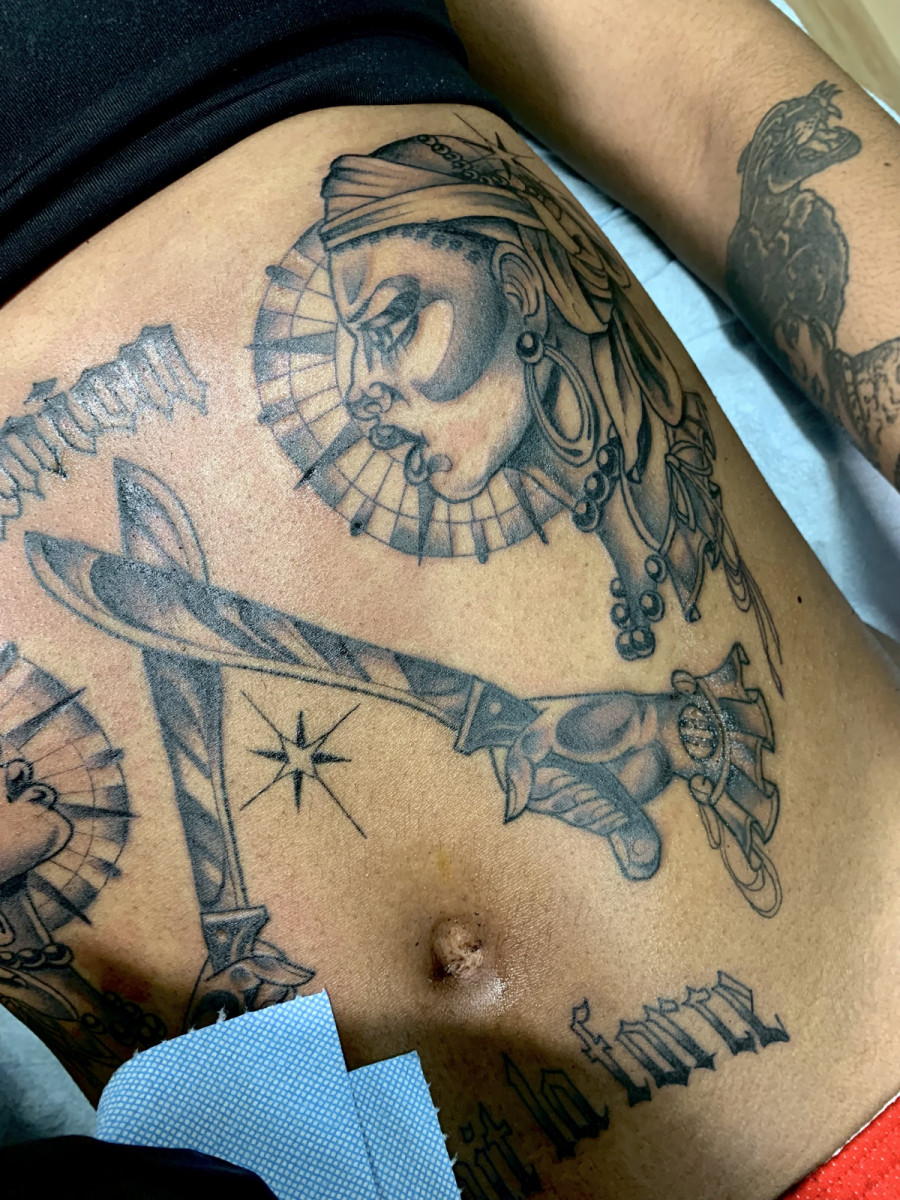
The talk was led by tattoo artist Jalen Frizzell. Frizzell has been tattooing for over a decade and is known for their Afro-Americana style, which draws on Black cultural memory and visual traditions.
“That is a style that focuses on motifs, visual vocabulary, that honour those of the African diaspora on this colonized land,” Frizzell said.
Frizzell also goes by @fuzzywuzzums on Instagram, a name that holds significance for them.
“Fuzzywuzzums was the name that I thought of myself when I thought about what it means to be an afro-descendant,” Frizzell said. “What it means to have fuzzy head, fuzzy braids and wear that with pride.”
CUJAH managing editor Tess Larsen moderated the talk, with about 30 people attending in person and online via livestream.
Larsen opened the discussion by reflecting on how tattoos can allow people to feel connected to their physical body.
“When I think about what is real, I think about the body and connection and art,” Larsen said.
After Larsen’s opening remarks, Frizzell spoke about their relationship to the tattoo industry today.
“There’s a level of isolation that can exist being a part of an industry that has a long way to go when it comes to bringing people in who have been at the hands of colonization,” Frizzell said.
Frizzell engages in many philosophies, one of which is Afro-Futurism, a cultural movement blending African diaspora culture with science fiction, history and technology.
They said that one of the things that drew them to Afro-Futurism was the art of spiritual jazz, specifically artists such as Sun Ra and Alice Coltrane who incorporate aspects of philosophy and science into their music.
“I feel like colonial ways of learning try to separate a lot of these houses of thinking, but really science, philosophy, music, health, spirit, they’re all interconnected,” Frizzell said.
When they first entered the tattoo industry, Frizzell learned about different styles and how to pay respect to the tradition of tattooing. They were encouraged to learn about American traditional tattooing, a style that prominently features military imagery and white women as subjects of desire.
“I would never get a white person tattooed on me, to be honest, so why don’t I see any options?” Frizzell said. “Why is there no pin-up of a Black person?”
Frizzell continued, addressing what they described as ahistoricism within the tattoo industry. Common motifs such as ships and compasses, they noted, carry troubling connotations when viewed through the lens of colonial expansion and the transatlantic slave trade.
They argued that colonialism has toxified these symbols, distorting meanings that are often reproduced uncritically in contemporary tattoo culture.
“What does it mean to get a full bodysuit in your skin forever of a motif that you don’t know the origin of, that you’re not connected to? Why would you do that?” — Jalen Frizzell
Throughout the discussion, Larsen guided the conversation with questions while allowing Frizzell space to move through a slideshow of their work which places an emphasis on positionality.
In some of their pieces, they reimagine cherubs as Black figures with butterfly wings rather than angel wings, reshaping familiar iconography to reflect diasporic identity and transformation.
“I really do consider getting tattooed as a symbol of hope, as a way of saying that I exist in the future,” Frizzell said.
Julien Johnson, a friend and client of Frizzell’s who attended the talk, said that he’s witnessed the care and dedication they put into their art firsthand.
“They really put their heart into their practice,” Johnson said.
During their presentation, Frizzell traced the origins of tattooing within settler society, noting that colonizers initially policed and suppressed Indigenous tattoo practices before later appropriating elements of them. They discussed how Indigenous artifacts housed in museums are often treated with pesticides, raising concerns about what happens to sacred objects once they are removed from their cultural context.
“I would consider tattooing a sacred artifact that is being returned back to the creators of it," Frizzell said. "But at the same time, this sacred artifact has been poisoned with commodification."
They emphasized the beauty and meaning of motifs from Indigenous and African communities, adding that it is natural to be drawn to these symbols in a society that deprives you of meaningful things.
However, Frizzell also spoke about how people get these motifs and symbols on their bodies without knowing or being informed of the meaning.
“It just makes me think," Frizzell said, "what does it mean to get a full bodysuit in your skin forever of a motif that you don’t know the origin of, that you’re not connected to? Why would you do that?”
Frizzell described this dissonance as a crisis of meaning, rooted in a lack of accountability among artists who build careers on culturally loaded symbols without acknowledging their origins.
When discussing landscape imagery, Frizzell argued that certain tattoo motifs can quietly reinforce the myth of an uninhabited land, erasing the presence of Indigenous Peoples. In these conversations, they stressed the importance of considering the wearer’s position and relationship to the imagery they choose.
Frizzell also touched on racial classism, which they say is prevalent in the practice.
“I found that when I started speaking my mind about topics that were important to me and important to those I loved, and the effects that it had on it, I started getting less non-Black clients,” Frizzell said. “It was always my dream to serve my community, but the reality of racial classism in tattooing is so blatant.”
They explained that it affects how they are able to engage with the industry, as tattoo equipment is expensive.
“Racial classism is very, very heavily wrought in this practice, all linking back to tattoos as a symbol of wealth,” Frizzell said.
Towards the end of their talk, Frizzell deconstructed some of the myths around tattooing Black skin. One of which is the idea that melanated skin is tougher, when in actuality, it is more delicate and needs to be treated with care.
“Melanin skin is very prone to scarring, and I even brought up this example of scarification because there’s body modifications that even play on that delicateness of the skin,” Frizzell said.
Léa Lagier is also Frizzell’s friend and client. They attended the event to hear Frizzell discuss their practice and share some of the ideas they haven’t been able to share yet.
“I think the main takeaway was how important it is to give reference and to look back in order to move forward and to really put a point to honour Afro-Indigeneity in our practices,” Lagier said.
For the last event in its Black History Month programming, CUJAH will host a film screening featuring the work of undergraduate filmmakers at Concordia University on Feb. 27. More information can be found on the journal’s Instagram page.



_600_375_90_s_c1.jpg)