
K-pop and the sanitization of Black culture
Black musical forms continue to be sanitized and commodified for profit
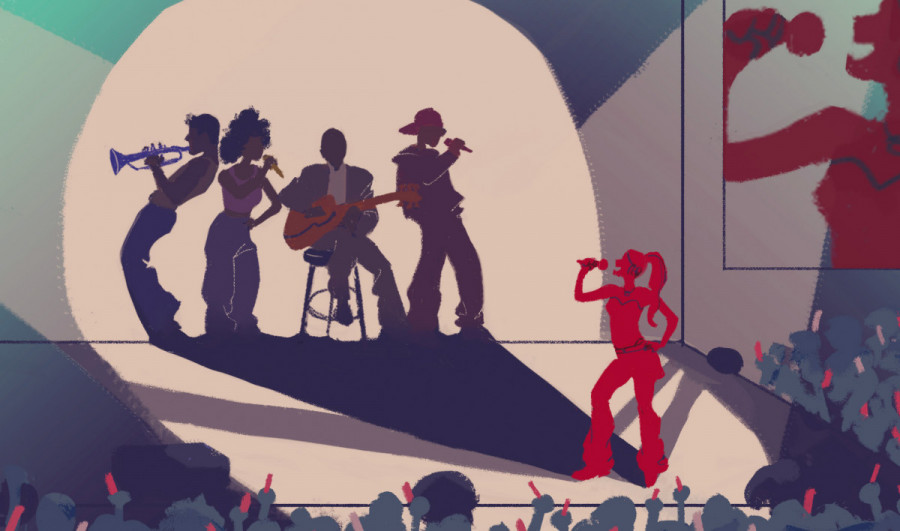
Whenever I listen to K-pop, I feel uneasy.
It's not because of the astonishing soullessness of some tracks (though that certainly doesn't help), but because its popularity in the West is a constant reminder that white audiences will always find ways to commodify Black culture while refusing to associate with it.
K-pop's liberal borrowing from Black culture is evident in the performances that mirror the choreographed routines of B2K and Destiny's Child, in the outfits that are lifted straight from TLC and in the poor imitations of Jay-Z's rap verses.
From their 2013 debut, journalists noted that BTS leaned into 1990s hip-hop aesthetics and rap structures in tracks like “No More Dream,” writing that the group was less of a traditional boy band and more as hip-hop-influenced idols.
In interviews, RM, leader of BTS, has explicitly cited that rappers like Nas and Drake as formative influences on his style.
The inspiration is clear. Of course, K-pop groups bring their own take on the sound, sometimes for the better and sometimes for the worse.
To my ears, K-pop often echoes an older pattern in American popular music.
In the 1950s, the U.S. music industry was segregated. Black artists were often confined to “race records” markets, while white performers recorded covers of their songs for broader distribution.
White artists like Elvis Presley rose to national prominence performing music rooted in Black artistry. While some may erroneously argue that Elvis was simply inspired by music he liked, it is undeniable that he became synonymous with rock and roll, not the Black pioneers of the genre.
Black music sprouted from lived oppression at (neo-)colonial hands. Across genres, music has functioned as a form of resistance, testimony and community-building. From blues to hip-hop, it documents lived experience and articulates forms of survival within systems structured against Black people.
K-pop stands in stark contrast to that reality. Hyper-commercialized, relatable inasmuch as it talks about generic human experiences, a large driver behind the genre's raison d'être is its function as a cultural export and as an economic engine.
Its rapid global expansion is the result of a concerted effort to expand South Korea's global influence. This so-called "soft power" drives interest in the country, and consequently, tourism and spending.
Much like Elvis before it, K-pop often profits off the innovation of Black artists and has cemented itself in the minds of many as the definition of the form.
K-pop gives white people permission to engage, appreciate and even celebrate Black music and culture without having to engage with the uncomfortable history of the repression of Black voices. It gives them permission to shake ass without being trashy and to rap without being seen as crass. It allows them to live out their gangster fantasy from the comfort of suburbia.
For example, in 2017, girl-group MAMAMOO faced backlash for performing in blackface while covering a Bruno Mars song.
K-pop artist G-Dragon has also repeatedly worn cornrows and adopted hip-hop fashion aesthetics associated with Black culture.
Meanwhile, Black music is disparaged. Remember the outrage when Kendrick Lamar was awarded the Pulitzer Prize for Music in 2018? For some critics, the idea that a rap album could merit one of the highest cultural honours exposed the racial biases embedded in definitions of “serious” art.
This isn't even getting into Black culture's historical association with debauchery and criminal activity.
Jazz bars were targets of police raids, rock and roll was demonized and rap lyrics are being entered as evidence in court. Hip-hop music has a history of being criminalized in North America. Rappers have and continue to be targeted by law enforcement because of the music's association with Blackness.
See, Blackness is, in the eyes of the law, criminal. This association is not new: this happened during all eras of Black resistance music, from slave songs to jazz. Even in Montreal, clubs and festivals that played hip-hop music were targeted and shut down due to their perceived association with gang violence.
In 2021, the Laval police force told the promoter of the LVL UP lab numérique et musique festival to cancel, arguing that cancelling the event was the only way to prevent further gun violence.
That is what makes K-pop so unsettling to me. Black musical forms are policed when they emerge from Black bodies and neighbourhoods, yet celebrated when refracted through distance, polish and exportability. Innovation is criminalized at its source and commodified once sanitized.
The pattern is not new.
This article originally appeared in Volume 46, Issue 10, published February 24, 2026.




_600_375_90_s_c1.jpg)