Annual MMIWG2S+ march continues to advocate for systemic change
Database tracking MMIWG2S+ cases to be released in a few months
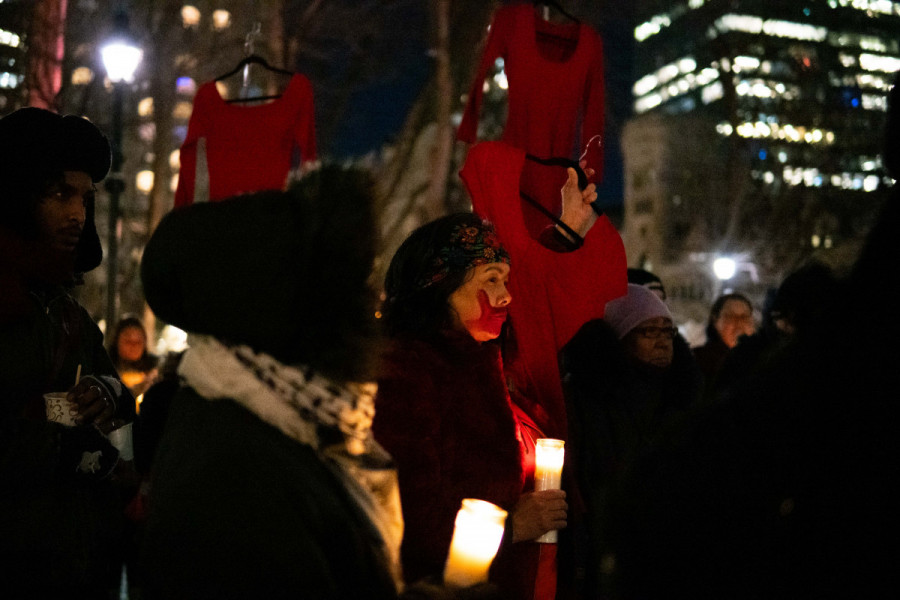
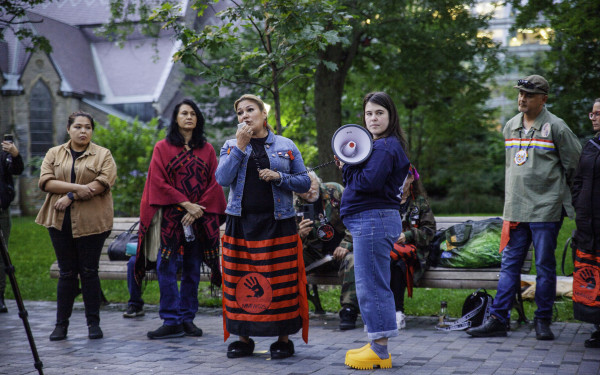
On Feb.14, the Native Women’s Shelter of Montreal, Iskweu Project and the Southern Quebec Inuit Association organized their 35th annual Missing and Murdered Indigenous Women, Girls and Two-Spirit+ (MMIWG2S+) memorial march.
The event began in 1992, after Cheryl Ann Joe, an Indigenous woman from the shíshálh Nation, was murdered in Vancouver, British Columbia.
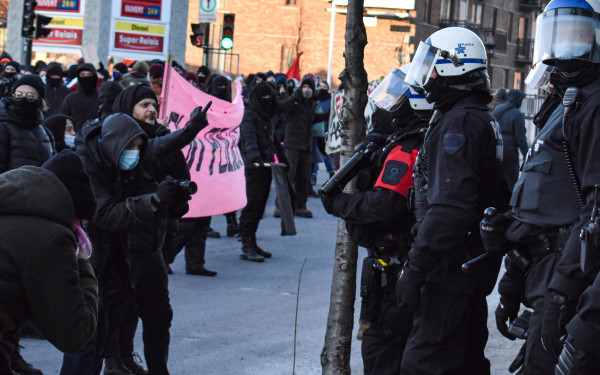
Close to 150 people participated in this year’s march, walking from Cabot Square to Dorchester Square, while chanting “Land Back” and “No more stolen sisters.”
Despite 35 years of MMIWG2S+ advocacy, community members say that the government has made no real progress.
Simone Page, Iskweu’s program coordinator, is one of the many advocates who share this sentiment.
“Even when these cases are investigated and brought to the justice system, it’s very difficult to get any justice,” Page said.
Ellen Gabriel, long-time advocate for Indigenous rights, echoed Page’s criticism of the government.
“We are not minorities. We are nations whose homelands are being occupied, whose homelands are being stolen,” Gabriel said.
Commissions and government inaction
The federal government established the Truth and Reconciliation Commission of Canada in 2015. The commission's goals are to investigate the full extent of the harm caused by residential schools, propose solutions, and prevent future abuse of Indigenous communities.
Of the 94 recommendations the commission put forward since its inception, the government has only implemented 14. Based on the organization's Indigenous Watchdog report, 16 recommendations have not been started, 22 have been stalled, and 42 are in progress.
Similarly, in 2016, the federal government launched the National Inquiry into Missing and Murdered Indigenous Women and Girls, with the inquiry’s final report being released in 2019.
The final report also launched 231 calls for justice. According to the federal government's website, the calls to justice “intended to address the root causes that sustain violence against First Nations, Inuit, and Métis women, girls, two-spirit and gender-diverse people.”
Over six years have passed since the final report, and only two calls have been completed.
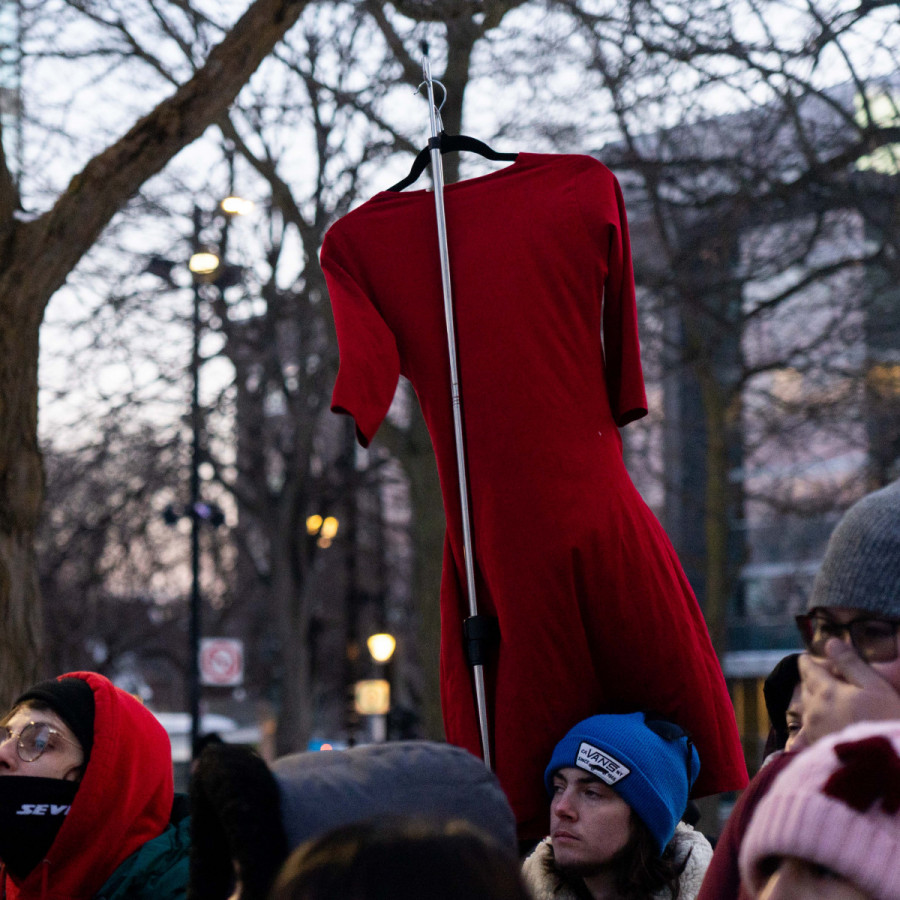
“I think anything other than just starting on those calls is a tactic to stall, unfortunately,” Page said.
The Iskweu Project, the Native Women’s Shelter of Montreal and the University of Quebec in Outaouais have been working on a centralized database to track known MMIWG2S+ cases.
The project started in 2023, and according to Page, the database should be released in the coming months of 2026.
“We are trying to make this project be something that gives information, but that also calls for action on future research,” Page said. “A big part of the website, once it’s published, will be all of the future potential research that should be done that was sparked by the questions in this project.”
Indigenous health and the need for support
Like other community advocates, Doris Peltier, the board chair of the Indigenous Health Centre of Tiohtià:ke (IHCT), expressed her frustration with the government.
“It’s not our job on our own to enact these calls to action. It’s really for them to work with us,” Peltier said.
Peltier says the health centre is growing at an exponential rate and needs more funding to provide adequate care.
“It requires institutional will and political will to truly change the relational nature of the Canadian state to sovereign Indigenous nations.” — Simone Page, Iskweu Project program coordinator
“We need to have our own health centre. We need to have our own building somewhere,” Peltier said, referring to the fact that the IHCT currently operates within the Queen Elizabeth Health Complex in Montreal.
“A lot of community people are fearful of walking into healthcare settings because of healthcare racism,” Peltier added.
In 2020, then-premier François Legault stated that there was no systemic racism in Quebec. Peltier and several other advocates agree that this statement is false.
“When a premier of the province says there is no systemic racism when we know there is, that’s saying one thing and not really addressing what’s happening on the ground,” Peltier said.
Despite several calls for justice for MMIWG2S+ and the Indigenous community, advocates say that the government and people in Canada need to change.
“It requires institutional will and political will to truly change the relational nature of the Canadian state to sovereign Indigenous nations,” Page said.