Which Quebec political party put a price tag on maintaining Montreal public transit?
The STM has faced financial difficulties, and most parties are putting forward different ideas
Quebec political parties have suggested different ideas to improve maintenance and service quality in Montreal’s public transit during this provincial election campaign. Most have not yet specified how much they would spend on the metro.
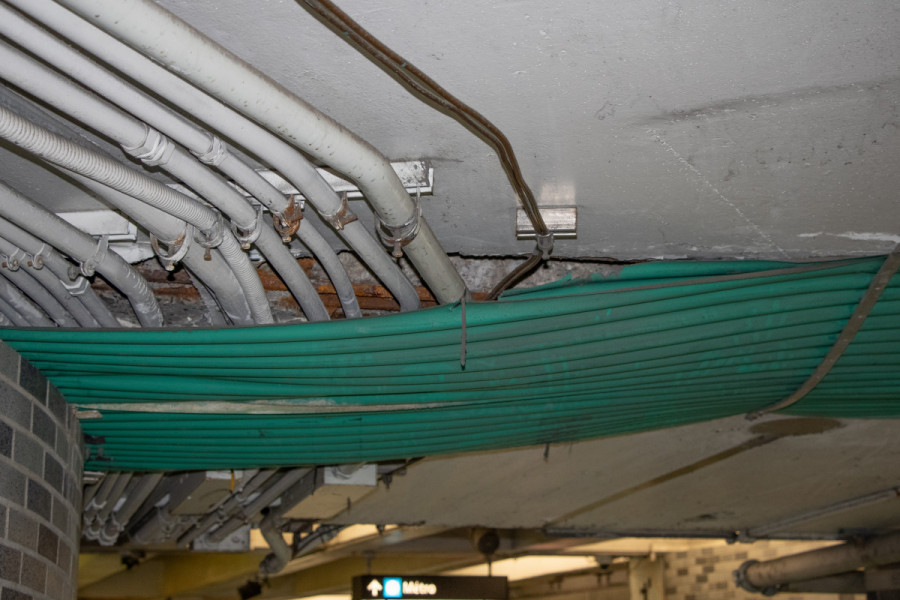
Alexandre Leduc, the Québec solidaire (QS) candidate for Hochelaga-Maisonneuve, raised concerns about current maintenance issues with the Société de transport de Montréal (STM). He said Montreal’s metro system is the backbone of public transit, describing the lack of infrastructure investment as a structural infrastructure deficit.
“Almost half of stations have been used more than their supposed life,” Leduc said. “They are in danger of falling down on people. Obviously, they need urgent repairs.”
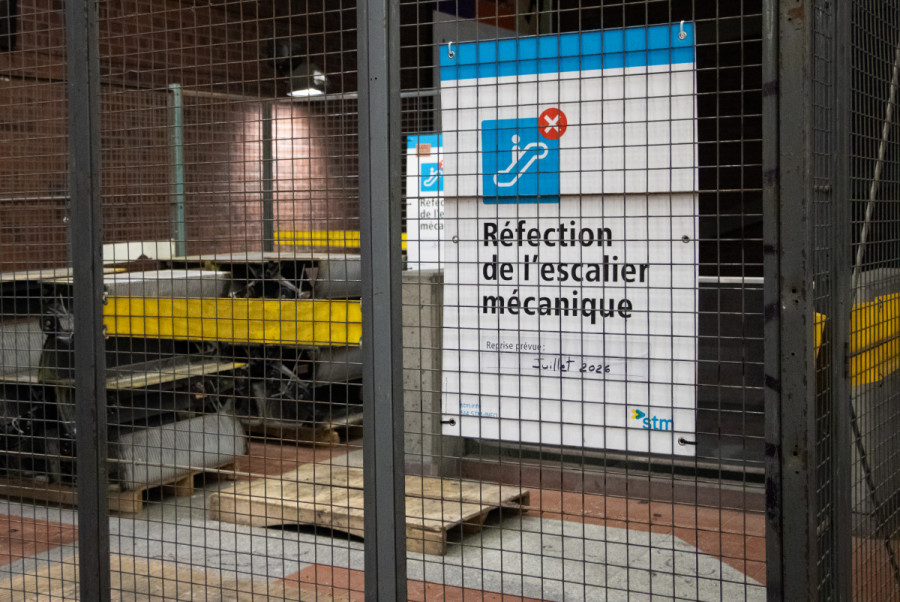
The STM’s 2026-2027 pre-budget report pointed out a $7 billion investment shortfall for maintenance, with 46 per cent of its metro assets in “bad or very bad” condition. It says this situation has led to more breakdowns and emergency closures for repairs.
The same report shows that the Quebec government's overall spending on asset maintenance rose 67 per cent. In comparison, public transit asset maintenance funding has dropped by 21 per cent, or 47 per cent after adjusting for inflation, since 2018.
The STM has seen a decrease in service since 2019 and aims to reach a three-year $100 million recurring expense cut by 2026, according to Radio-Canada.
Leduc said Montreal's public transit needs a larger budget and more employees to improve the quality of its infrastructure and operations.
“I think there has been a difficult situation because the government of Quebec didn't give enough money for public transit,” Leduc said.
Fewer riders, old infrastructure
Jean-Philippe Meloche, a professor at the École d'urbanisme et d'architecture de paysage à l'Université de Montréal, said that maintaining infrastructure and service quality will be difficult if the inflation rate exceeds the investment in public transit.
“It might be possible to cut some small extra services that don't necessarily affect the quality of the transportation services,” Meloche said. “It might be able to make some efficiency gains with these cuts, but most of the time, it doesn't happen.”
Meloche said the STM needs to repair its aging infrastructure, even as the Montreal public transit system faces financial troubles caused by a decrease in demand.
About 294 million metro and bus trips were recorded in 2025, down 6.6 per cent from 2024, which the STM attributed partly to strikes, while nearly 375 million were made in 2019.
The STM has reduced annual spending by $56.5 million largely through a hiring freeze, outsourcing some paratransit services and reducing some maintenance activities, according to CBC News.
“It's really tough right now for the STM to reduce its expenditure if we have some challenges in infrastructure maintenance,” Meloche said.
Will strikes disrupt public transit again?
Leduc said the Coalition Avenir Québec (CAQ) government’s Law 14, introduced as Bill 89, produced a “weird tactic” during last year’s strike of STM maintenance workers.
Law 14 grants the labour minister the authority to direct a labour dispute to an arbitrator, which can be used to end a strike. Labour Minister Jean Boulet tried to implement Law 14 earlier in November 2025 to stop the STM maintenance workers’ strike.
Leduc said that the main reason for the STM strike was subcontracting to the private sector.
“I'm confident that with a new government [it] would be easier to negotiate with the unions so that we could avoid any other strikes in public transit in the future,” Leduc said.
The STM and maintenance workers' union reached an agreement in principle in March this year after two years of negotiations, according to Le Devoir.
“Almost half of stations have been used more than their supposed life. They are in danger of falling down on people. Obviously, they need urgent repairs.” — Alexandre Leduc, Québec solidaire (QS) candidate for Hochelaga-Maisonneuve
Which party has a price tag?
QS urged addressing deferred maintenance and labour issues in Montreal's public transit by increasing resources and proposing a $23 billion public transit investment over 10 years.
“The Parti Québécois government will also increase efforts to properly maintain Montreal's metro infrastructure,” PQ leader Paul St-Pierre Plamondon said on Sept. 21. “It includes launching the major project to replace the aging MR-73 trains, which are nearing the end of their service life.”
In a 2025 presentation to Montreal's executive committee, the STM preliminarily estimated $8 billion to $10 billion for modernizing the metro, including replacing trains and upgrading the train-control system.
The PQ and St-Pierre Plamondon did not respond to The Link's request for comment.
The Parti libéral du Québec (PLQ) promised “sustainable and predictable” public transit funding, suggesting renovation and modernization of the metro system through a partnership with the City of Montreal, without specifying the cost.
The PLQ and its candidate for Notre-Dame-de-Grâce, Desirée McGraw, did not respond to The Link's request for comment.
The CAQ and the Parti conservateur du Québec both proposed a larger share of the Plan québécois des infrastructures for asset maintenance: from 71 per cent to 75 per cent and 80 per cent, respectively. However, neither has suggested anything specific for metro maintenance.
The Quebec election is scheduled for Oct. 5.