
Free public transportation is worth investing in
Fare-free transit for a greener, more affordable and more accessible Montreal
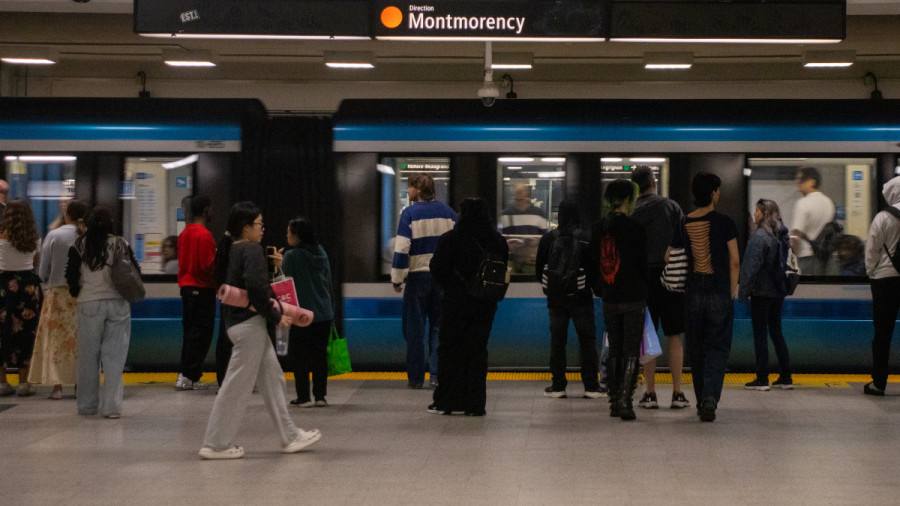
What’s the use of a public transit system if the people can’t even use it?
Over the past year, Montreal has seen its public transit system expand via the Réseau Express Métropolitain (REM), making it easier for students living in the West Island and North Shore to get to and from campus. Personally, it has reduced my commute time by approximately 30 to 40 minutes!
However, I can’t help but wonder how beneficial this expansion truly is if students are struggling to even afford transit fares.
As with every year, the Autorité régionale de transport métropolitain (ARTM) and the Société de transport de Montréal (STM) have introduced another fare increase. Although single-use fares will remain unchanged, the cost of most other types of passes will rise by at least 3 per cent.
This increase is particularly concerning amid Canada’s affordability crisis.
According to the Centraide du Grand Montréal, roughly half of Quebec’s residents are feeling heightened financial anxiety and 86 per cent are experiencing financial strain. Many Canadians are struggling to get by as the cost of rent, food and gas rises. And for students, tuition is getting more expensive. The last thing Montrealers should worry about is the cost of public transportation—a service that's essential to so many of them.
In an ideal world, public transport would be completely free for all. But how feasible would that even be?
Turns out, many cities worldwide have already implemented a fare-free system. Chapel Hill in North Carolina and Châteauroux in France have offered free commute options for over two decades. In recent years, many others, like Belgrade in Serbia and Tallinn in Estonia, have followed suit.
In fact, entire nations now have similar systems. In February 2020, Luxembourg became the first country in history to make public transportation completely free for residents and tourists alike.
Implementing such a system in Montreal would be momentous, making the system more accessible to more people and increasing ridership.
This has certainly been true in Luxembourg. The country saw a massive rise in ridership after adopting fare-free transportation, especially on the tram. The number of riders rose from 6.2 million in 2019 to 31.3 million in 2024. Orangeville, Ontario saw a similar influx of passengers after introducing a fare-free pilot program in 2023. In its first year, ridership doubled.
A decision like this also benefits the environment, as increased ridership would lead to fewer vehicles on the road and, by extension, a reduction in air pollution.
Montreal also already offers free public transportation to certain populations. Children aged 11 and younger are permitted to ride for free, so long as they ride with someone who is at least 14 years old. The STM also recently introduced a free transit program for seniors, helping them maintain a better degree of independence.
Research shows that easy access to transport can positively affect a person’s overall health. When that transport is free, it makes it easier for everybody, but especially vulnerable populations, to maintain social connections and access services that improve wellbeing.
Of course, offering free transit for all is very costly. Hasselt, a city in Belgium, is a prime example. After 16 years of a fare-free system, they unfortunately had to reintroduce fares in 2024 due to rising costs. The Montreal program for seniors alone costs approximately $40 million per year.
Nevertheless, there are cities that manage to pull it off or, better yet, thrive.
Free transit is, without a doubt, worth it in the long run.
And who in Montreal would say no to free transit?
This article originally appeared in Volume 47, Issue 2, published September 22, 2026.