What the heck is professional attire anyway!?
From King Charles to tech bros, looking “professional” has always mattered
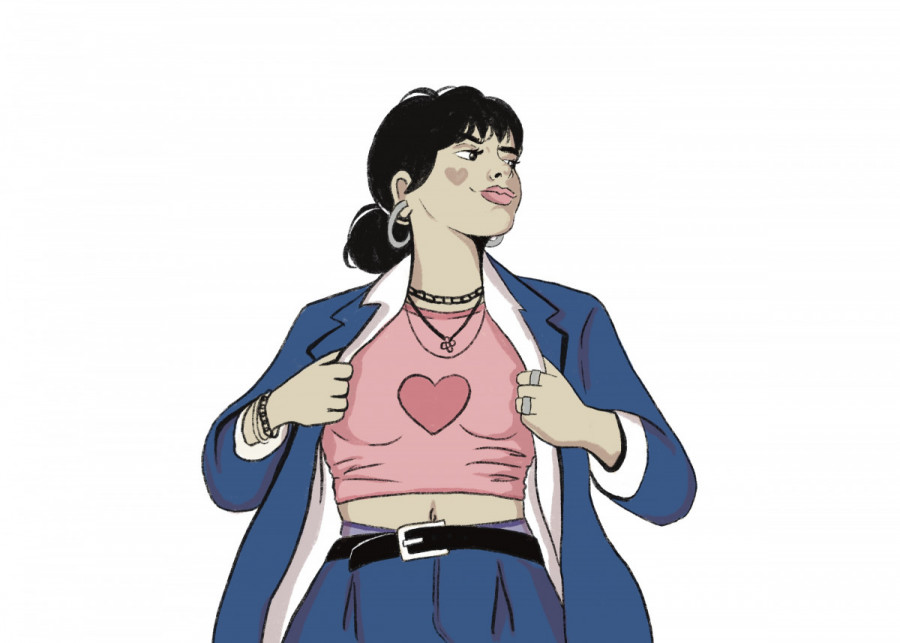
The fashion trends are perpetually cyclical. In a society defined by a highly consumerist culture, clothing items shift from fresh, hot, or cutely vintage to outdated, overdone and a bad look.
In the workplace, these clothing trends play an implicit, yet undeniable role in what is considered professional and unprofessional. People entering the workforce have to find their footing in this business-casual or suit-jacket world.
Whether we like it or not, self-expression gets deprioritized in the name of professionalism. At first glance, this workplace standard seems clear and well-defined. However, it also falls victim to trends and pressures people to maintain a certain "look" at work.
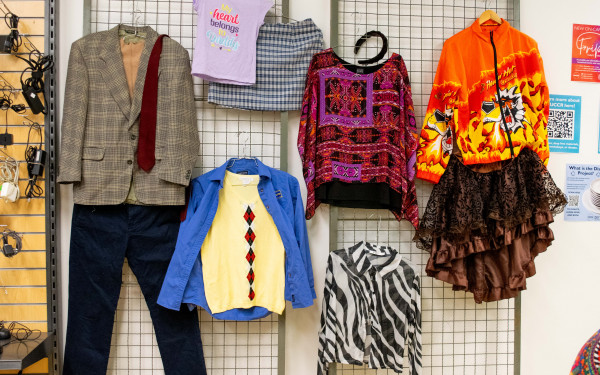
While many workplaces require a certain uniform for safety reasons, this isn't the case for non-practical, or white-collar jobs. Typically, these jobs have a dress code that emphasizes a three-piece suit and tie, blouses, pencil skirts and a “natural” presentation.
Some workplaces have loosened their dress codes over the years, mirroring the changing norms and expectations. However, whether consciously or unconsciously, it remains true that some presentations and ways of dress appear inherently more "professional" than others.
For example, something as simple as a tattoo or a different hair colour can be enough for many employers to deem you unprofessional. Even if these professional norms are nothing more than fashion trends, people often treat them as the only way to conform in a modern workplace. However, much of modern-day office wear is just a result of preexisting trends and styles that have been standardized as "must-wear" to gain recognition and respect.
Most notably, of course: the three-piece suit.
Its origins can be traced back to the 17th century with King Charles II of Britain, and its popularity among regular people increased after the mass industrialization of the 19th century. This was due to its simplicity, which allowed it to be mass-produced for working people.
Even then, this style was not immobile, though its status as the peak of professionalism remained. For example, the three-piece suit evolved to include women's styles during the 20th century.
Now, business casual is taking the professional world by storm, with jeans, blouses and shirts becoming increasingly normalized in the workplace. Much of this can be attributed to big tech CEOs, of all people, who wore relaxed clothing to convey relatability and simplicity to their consumers.
Examples include Steve Jobs and Jack Dorsey, two tech giants who sold the image of the "common man" to their audience by wearing laid-back, relaxed clothing. Ironically, what made their style unconventional for the time has shaped workplace attire norms.
Still, this shift does not address the expectation to conform to whatever is popular. Over and over again, self-expression gets cast aside for the sake of a more "professional" appearance to sell oneself better as a worker. A survey of U.S. women aged 18 to 75 found that 96 per cent believed style was crucial to professionalism.
Even as standards have relaxed over the years, how you present yourself still matters. The problem remains: shouldn’t professionalism be based on attitudes, behaviours and work ethic, rather than something as individual as personal style?
While there should be basic rules and norms, especially when it comes to personal hygiene, there shouldn't be a social penalty for standing out, especially since it's praised when the rich and powerful do it.
I worry that in times of extreme conformity, where standing out can be the basis for judgment, there will be no place to be unique, different or simply yourself, both in and out of the workplace.
Thanks to social media, private and public spheres of life are becoming increasingly intertwined, and with this comes the expectation of inherent professionalism across the board.
People bring their skills, expertise and life experiences to their workplace. No one should be forced to leave parts of themselves behind.
This article originally appeared in Volume 47, Issue 2, published September 22, 2026.



_600_375_90_s_c1.jpg)