Activists urge party leaders to take clear actions
17 women have been killed in femicides this year
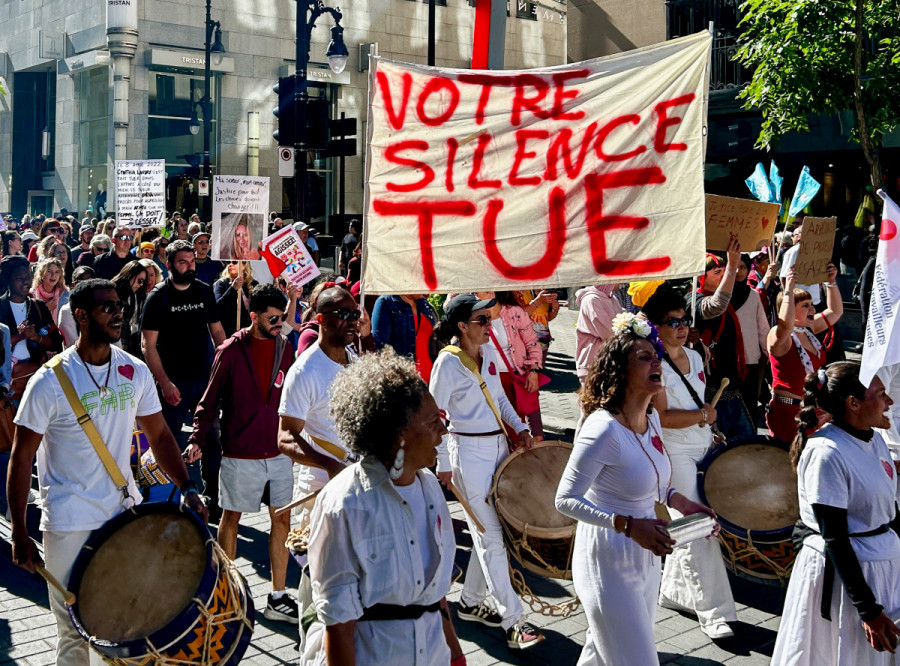
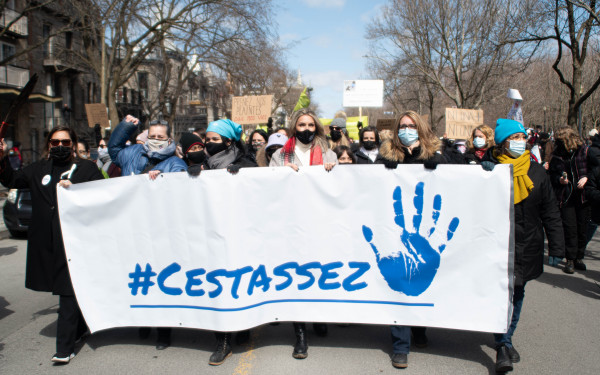
Thousands of people took to the streets of downtown Montreal on Sept. 19 to protest violence against women. They called on competing parties to treat femicide as a national crisis and place it at the center of their political agenda.
“Every two weeks, a different man killed a woman. This isn't just an anecdote; it's a social crisis,” writer and comedian Manal Drissi said in an opening speech at Dorchester Square, where the march began.
She was referring to the 17 alleged femicides in Quebec so far this year—already more than all of 2025.
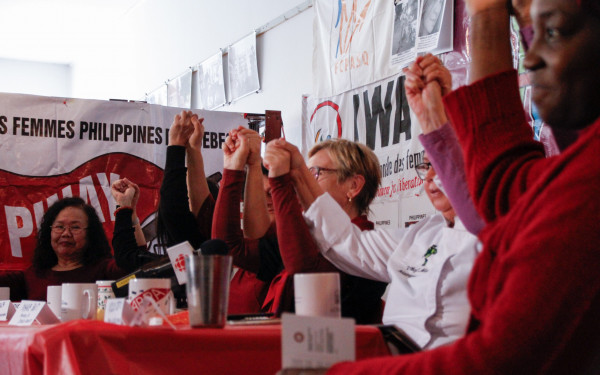
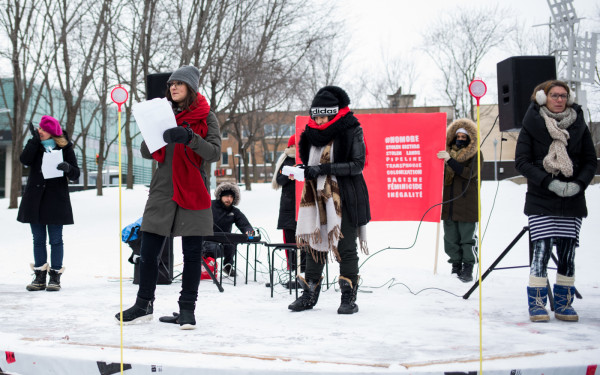
It is in this grim context that five feminist organizations held a protest to denounce domestic and systemic violence against women. Stéphanie Vallée, co-coordinator of L'R des centres de femmes du Québec, was one of the organizers of the march.
Vallée said that with the provincial election underway and the third and final leaders' debate set for Sept. 23, the groups saw the importance, and the right timing, of raising a bright-red flag to bring this issue to the attention of the various parties.
Although Vallée recognizes that the different levels of government have taken some real measures to reduce violence against women, notably courts specializing in cases of sexual and domestic violence and Clare’s Law, all the organizers insist these are clearly not enough, as they say reported violence against women has reached unprecedented levels.
Vallée attributes this increase in misogynistic violence to the rise of right-wing conservatism and masculinist movements, but also to the housing and affordability crisis.
“Some women who are currently in danger living with their [violent] partner would leave if there were openings in shelters or if affordable housing were available,” Vallée said.
According to her, the main gap is funding for social services.
“When there is a lack of funding in one sector, the others suffer the consequences,” Vallée said.
She explained that a strong social safety net depends on sufficient money invested across all community services. More funding also means larger teams, more space and better working conditions, Vallée added, allowing organizations to help more women in need.
At the march, activists urged the government to step up its action with signs reading "Women’s safety is not an expense, it’s a right," "Your silence kills," and "You want our vote? Protect our lives!" They demanded a system that protects women and holds men accountable.
Vallée trusts that the creation of a provincial ministry for women’s rights and gender equality could take responsibility for addressing these issues—a project Québec Solidaire has been promoting.
Protester Diane Zittel feels powerless in the face of the alarming number of femicides.
“You see, in France, in my home country, it’s 40,” she said, noting that it is a worldwide problem.
Zittel wants additional funding for shelters but said fighting misogyny goes beyond that. “We need more prevention, whether through awareness campaigns or through genuine education on the matter," she said.
Coralie, another activist, came all the way from Estrie to make her voice heard, and, above all, speak up for those who can no longer do so. As a social worker herself, she welcomes the recently adopted Gabie Renaud law, but has criticisms.
“It once again places the responsibility squarely on women to protect themselves,” Coralie said.
Similarly to Clare’s Law, the Gabie Renaud Law allows women who fear for their safety to request information about a partner or ex’s history of domestic violence.
“If all the women murdered since the last provincial election had a seat in the National Assembly, they would form a majority government,” Manal Drissi said, denouncing in her opening speech.
Pressing politicians to listen to women’s voices and recognize all forms of systemic violence, she asked the crowd to look around for party leaders.
Only Ruba Ghazal from Québec Solidaire (QS) marched alongside protesters Saturday afternoon.
QS has already pledged to allocate $600 million to create 1,000 spots in women’s shelters during its first term. It has also promised to establish a first-line service for women victims of cyberviolence and propose 10 days of paid leave, at the employer’s expense, for women experiencing domestic violence.