Will the unhoused crisis be properly addressed after the Quebec provincial elections?
Houselessness was the subject of many party leaders’ promises in the midst of the provincial elections
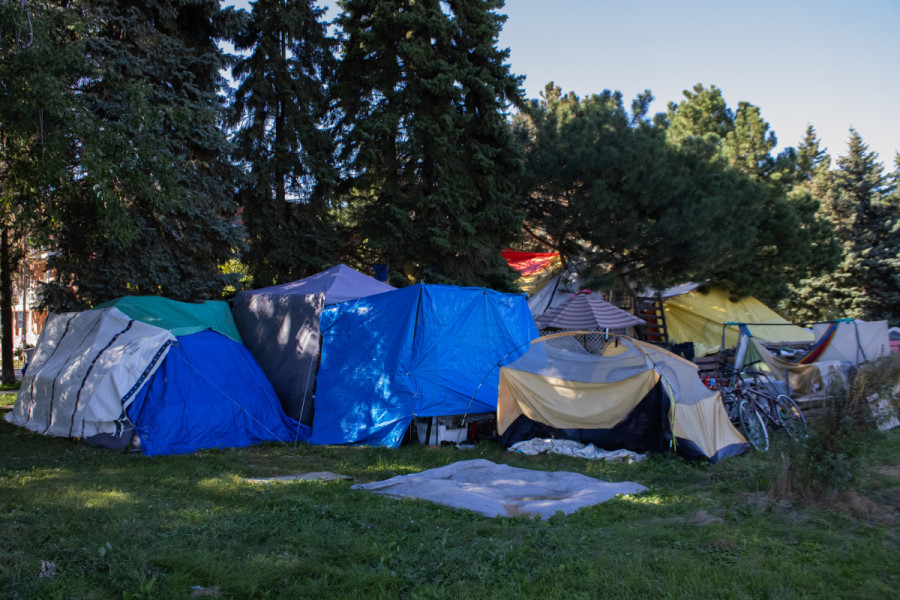
“You don’t even do that to an animal,” Moïse said.
Moïse, who was granted a pseudonym due to fear of repercussions, resides at the Notre-Dame encampment in the Mercier-Hochelaga-Maisonneuve borough, where an infant was found on Sept. 11.
The discovery shocked Quebec amid the provincial elections. As CBC reported, the one-year-old infant was found unharmed and was placed under the care of the Quebec youth services. The child was then placed under the care of a family member, according to the Montreal police.
Such a discovery is uncommon and shocking in Montreal, according to Welcome Hall Mission CEO Sam Watts.
“I've been around North America to a variety of cities, and if you go to a number of cities in the U.S., family homelessness is very common. And you'll see entire families living in cars, living in tents,” Watts said.
According to the On Canada Project, the word “homeless” is outdated and is used to dehumanize people who are unhoused, although mainstream media and politicians use it often. The term houseless is more appropriate to describe the situation of Moïse and others.
According to a report released by the Quebec government, the visible unhoused population in Quebec as of 2025 was at 12,077, which represented a rise of 20 per cent compared to 2022. In Montreal, the number stood at 5,036, which represented around 42 per cent of the province’s visible unhoused population.
Following the discovery of the child, Montreal Mayor Soraya Martinez-Ferrada threatened Quebec with legal action, stating that she lacked provincial funding regarding houselessness.
While campaigning, Coalition Avenir Québec (CAQ) Leader Christine Fréchette rerouted her tour to meet with Martinez-Ferrada to discuss houselessness and mental health on Sept. 18 at Montreal City Hall.
Before the meeting, Fréchette announced that a $250 million emergency fund to help municipalities fight the unhoused crisis would be added to the existing $100 million investment to prevent houselessness.
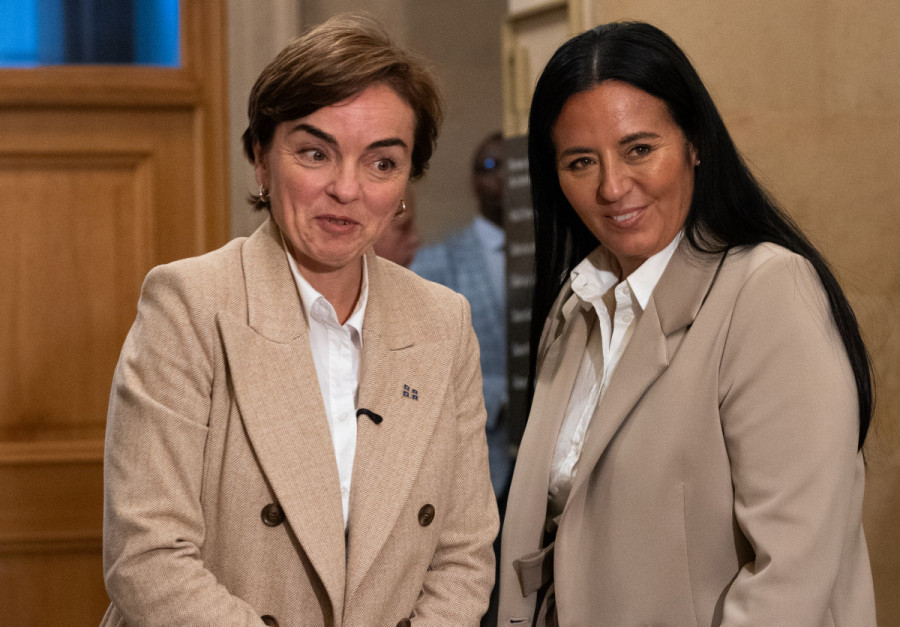
“I’d say it is one of the top three priorities of this election, from my perspective,” Fréchette said after the meeting on Sept. 18.
According to a recent Léger/Le Journal/TVA poll, the CAQ is now in fourth place and has 16 per cent of voting intentions.
On the same day, Parti Québecois (PQ) Leader Paul St-Pierre Plamondon announced a $1 billion plan to attempt to reduce houselessness by 50 per cent in 2030. The PQ is leading with 30 per cent of voting intent, with the Quebec Liberal Party just behind at 26 per cent.
The Quebec Liberal Party promised to invest $1.5 billion in the form of 40,000 social housing units and $60 million per year towards ending houselessness. Meanwhile, the Conservative Party of Quebec promised to get 100 doctors in the community sector to work with the unhoused.
Québec solidaire promised to name a superminister of houselessness, and to invest $1.5 billion to build 6,000 transitional housing units, plus $135 million per year directed towards psychosocial accompaniment in those units.
The Conservative Party of Quebec has 18 per cent of voting intentions versus 9 per cent for Québec solidaire.
“I’ve had people ask me, ‘So what’s it going to take, Sam?’ And I always say it starts with political courage. And we have not had sufficient political courage to get the job done.” — Sam Watts, Welcome Hall Mission CEO
The main five party leaders said they would participate in a houselessness forum in 2027. Watts said most party leaders recognize houselessness as a key issue, but a missing element is needed to move forward.
“I've had people ask me, ‘So what's it going to take, Sam?’ And I always say it starts with political courage. And we have not had sufficient political courage to get the job done,” Watts said.
Watts said there needs to be more prevention to keep people from falling into houselessness, more efficient accompaniment back into housing and more access to different housing options.
“Right now, what we're dealing with is more entries into the ecosystem of care than there are exits. I don't care what system you have,” Watts said. “If you've got more entries into it than you have exits, you're going to have a problem in the middle. That's what we see on the ground right now.”
He added that greater collaboration is needed to tackle the issue of houselessness after the Quebec provincial elections on Oct. 5.
“It's not just the provincial government, or the federal government, or the municipal government or the healthcare system. It’s going to take all of us together, with the organizations on the ground, to move the needle,” Watts said.




_600_375_90_s_c1.jpg)