Necessary but never allowed to stay
On teaching under limited-term appointments at Concordia University
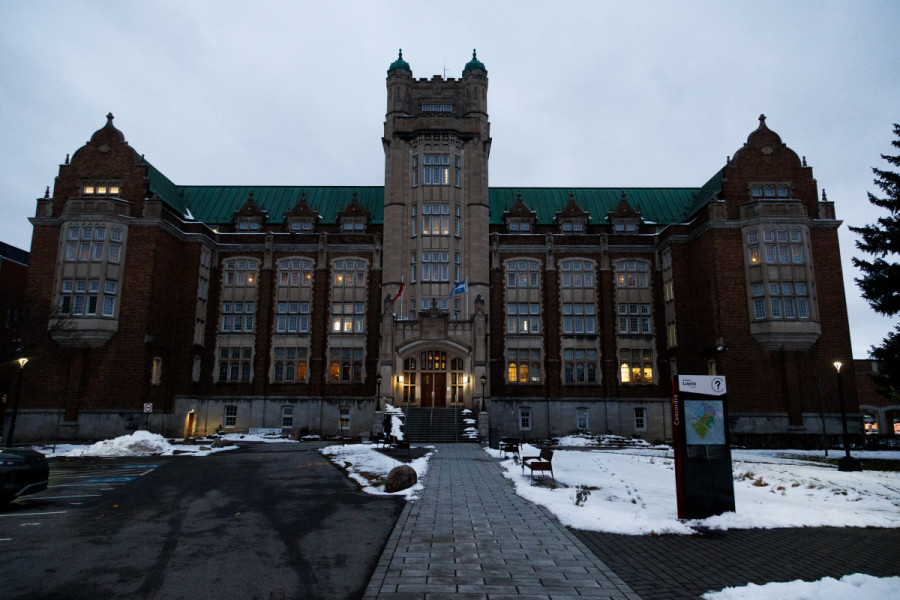
A large portion of the teaching at Concordia University is done by part-time instructors and by faculty appointed on short-term contracts, positions that are provisional, contingent and subject to periodic approval.
I am one of those faculty members. My position is called a limited-term appointment (LTA), which means that my contract lasts only a year.
Each spring, I must reapply for the job I am already doing: a new application letter, a new teaching dossier, new uncertainty. In the last two years, I was interviewed for the job afresh and asked to provide new reference letters, as though my ongoing work here could not, in itself, speak to what I offer. This year, I was asked to provide a teaching demo too, as though four years of teaching in these classrooms were not already part of the record the university keeps. Each renewal allows me to continue my work here, but also reminds me that I may not be allowed to remain. It is a painfully uncertain place to be.
On Oct. 30, that uncertainty ended. The university announced that it would not be issuing renewal calls for LTA positions. The announcement was brief, framed as an administrative adjustment in response to budgetary constraints. But the effect was immediate: our jobs will no longer exist next year, and with them goes not only a category of employment but also a lived continuity of teaching, mentorship and care.
What makes the decision particularly dispiriting is that it forecloses the only pathway we had toward anything less precarious. After years of the university’s reliance on annual contracts for meeting essential teaching needs, the new collective agreement finally introduced a route toward some form of stability: LTA positions allocated to the same teaching need for four consecutive years would be eligible for conversion to extended-term appointments (ETA), as long as the department deemed the position necessary. That conversion is now impossible (even though my position in nineteenth-century British literature has met that same need consistently, for the past nineteen years). By terminating these positions now, the university eliminates our jobs but also resets the clock to zero. Whoever fills these posts next will have to begin the entire count anew.
Many of you may not know that the people teaching your courses are not all employed under the same conditions, that some of us do the same work as colleagues in ongoing positions: preparing lectures, meeting you during office hours, marking your essays, writing letters to support your applications, revising course materials, all the while continuing with our research, publishing articles and working on books that develop slowly over time. We do all of this under contracts that expire annually, under conditions that fragment our focus and drain energy from the very work we are meant to do.
At Concordia, those of us in these roles teach seven courses per year (tenured and tenure-track faculty teach four or fewer), and we do so with minimal teaching assistance, little research funds, and salaries that reflect our contingency more than our contribution.
That is, however, not unusual these days: across Canada, universities increasingly rely on short-term instructors whose positions cost less to maintain than permanent faculty lines to keep their programs running.
But the human cost of this model is real: it prevents people from building stable lives. When your employment is renewed one year at a time, you cannot make long-term plans; you cannot put down roots; you cannot build a life beyond the next contract. You have to live with the knowledge that one day you may simply not be renewed, with no explanation or recourse.
The irony is that these jobs have been largely offered to those the university claims to want most to include: women, Indigenous scholars, racialized faculty—people whose presence can be held up as evidence of progress. Yet we are hired into conditions that make growth impossible. Precarity leaves no ground on which to build a career, no security from which to speak, no promise that the work we do will ever count toward a future. We are welcomed as proof of change, but never allowed to belong to the institution that displays us.
This is, in many ways, a role defined by contradiction: one in which we are relied upon for the continuity and daily life of teaching while being structurally prevented from having a say in the university’s present or a place in its future; one in which we are expected to meet full professional standards as teachers, scholars and mentors, but are evaluated repeatedly as though our competence itself remains in question; one in which we are responsible for guiding students through degrees in which we ourselves are not permitted to have a stable place. We carry out a significant part of the everyday work on which the university depends, yet the terms of that work ensure that we remain permanently temporary—necessary but never allowed to stay.
Beyond these institutional exclusions lies another contradiction, one that cuts to the heart of academic life: these roles make it nearly impossible to do the research on which our future in the academy depends. The instability built into these positions, not to mention their heavy workload, erodes the very conditions that make scholarly and creative work possible: the ability to think with depth, to write with patience, to develop research that unfolds over years rather than weeks.
Research, the work that generates new ideas and keeps teaching alive, requires time, continuity and a sense of the future, and precarity removes all three. Universities ask us to publish, to innovate, to bring intellectual energy into the classroom, while structuring our employment in ways that obstruct these pursuits.
This is not, in the end, only about our contracts; it is about the conditions under which learning takes place, because what happens to contingent faculty will shape the kind of university you, the students, inherit, because the values that govern one side of the classroom ultimately find their way to the other too, because when the people who teach you are treated as provisional, the education you receive is treated as provisional.
What this means, on the ground, is that the continuity of your education is interrupted. The teachers who learn your work, who follow your development across courses and years, who become the people you turn to for guidance or support, may simply no longer be here. Degrees are not just collections of classes; they depend on relationships built over time. When the university makes those relationships impossible to keep, something essential in the learning environment is lost, not only for us, but for you.
A university is not only an institution; it is a place where lives take shape over time, yours and ours, and the decisions being made now will determine what kind of place this will be.
A university can choose to treat teaching as temporary work, to cycle through those who do it, to make knowledge something delivered in passing. Or it can choose to understand teaching as a form of commitment, continuity and care, something that takes root and grows through sustained presence.
I would like to believe the latter is still possible here. I would like to believe that the university remembers that its strength lies not only in the programs it offers, but in the people who carry those programs forward, year after year, in conversation with students whose names we remember and whose paths we follow.
Whether I am here next year or not, that is the university I have tried to help build.
This article originally appeared in Volume 46, Issue 6, published November 18, 2025.