
Social (Cult)ure: Twitch’s parasocial cesspool
Your favourite streamer doesn’t owe you anything
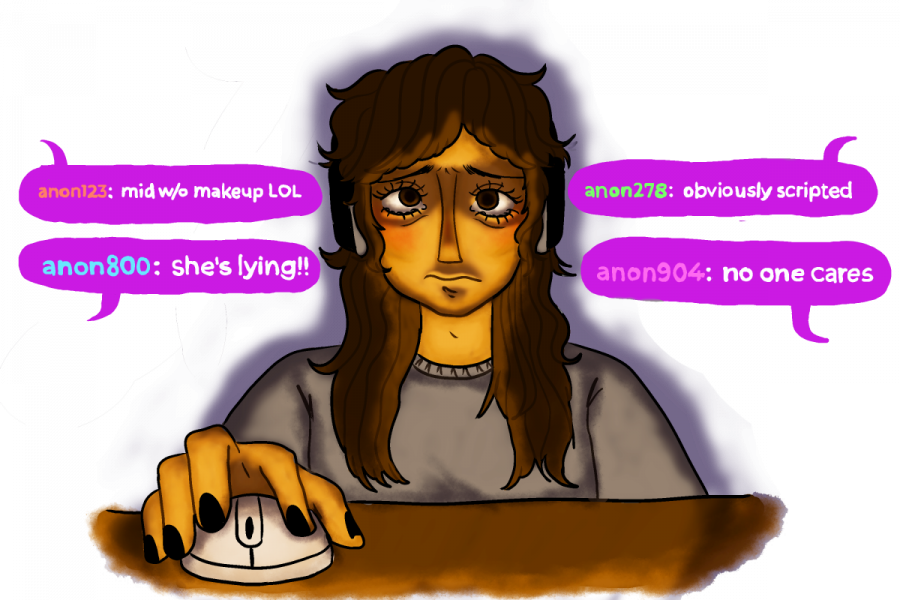
The streaming community is a hellhole for dangerous parasocial behaviour—but it doesn’t have to stay that way.
Anyone who uses the popular live-streaming platform Twitch has likely encountered comments in live chats that just feel wrong. From infantilizing their favourite streamers to lashing out over trivial things, some Twitch fans act as if they’re entitled to every corner of these influencers’ lives.
And of course, misogyny, racism and harassment remain fixtures on Twitch, with the platform showing little urgency to address any of it. Despite making changes to their sexual harassment policy in 2024, many Twitch users continue to be hateful and sometimes just downright weird.
The atmosphere on Twitch has gotten so toxic that even Pokimane—the platform’s most popular female streamer—has pulled back, turning to other social media platforms like TikTok to interact with her audience.
Although she credits Twitch for her success, she also described some of her hardest experiences stemming from the pressures of streaming and online harassment.
Out of concern for their safety and to avoid harassment, she and other top female streamers also chose not to attend this year’s TwitchCon.
Their fears proved justified when cosplayer and streamer Emiru was sexually assaulted by a fan during the event.
Social media blew up—especially the comment sections. “She asked for it.” “She deserved it.” “He was just excited.” “He didn’t hurt her or anything.” The excuses piled up, as if reality itself could be twisted to justify harassment.
After the incident, Twitch’s CEO apologized to Emiru, acknowledging the platform’s failures in both protection and response. That’s accountability. But it still doesn’t answer the main question: how did a fan even get that close at TwitchCon?
And even more importantly, why did the fan believe he had the right to do that to her?
Twitch fans don’t just watch—they claim ownership. Research shows parasocial relationships, where viewers feel they “know” streamers, are fuelled by live chat, donations and constant interaction. When boundaries are crossed, or even ignored, fans lash out, harass and blame, proving that entitlement isn’t a glitch in the system. It’s built in.
Two weeks later, Emiru went live to speak out, alleging sexual assault and emotional abuse by her ex-boyfriend, fellow streamer Mizkif. The comment sections erupted: “She’s lying.” “She’s reading from a script.” “She looks bad without makeup.”
Now it all makes sense. How can we expect civility when some male streamers exemplify negative behaviour toward women?
Mizkif has long been controversial, facing allegations in 2022 that he helped cover up a sexual assault committed by his roommate. There are also clips of him mistreating his ex-girlfriend, Maya Higa, during Twitch streams.
Yet he is still allowed to stream on Twitch. Why?
Twitch isn’t just failing to punish abusers but also teaching fans what behaviour is acceptable. When male streamers model entitlement and harassment, and the platform stays silent, viewers learn that owning, policing and even attacking female creators is normal.
Emiru’s assault didn’t happen in isolation. It’s the inevitable consequence of a culture built on intimacy as currency and fans who feel entitled to it.
Female streamers navigate this world knowing that every interaction could be scrutinized, weaponized or turned into harassment, while male creators rarely face the same stakes. Until Twitch enforces meaningful change, parasocial obsession, entitlement and abuse will continue unchecked.
Twitch doesn’t need another apology. It needs structural change. The platform has spent years building a system that profits from the intimacy that fuels this cycle. But the rot runs deeper than Twitch itself. Blurred boundaries keep the platform afloat, and the community reinforces them. Until Twitch enforces real protections, and until viewers stop treating access like ownership, female streamers will keep paying the price for an economy built on their vulnerability.





_600_375_90_s_c1.jpg)