Art Matters festival closes out their workshop series with a bang
The festival worked with Concordia University’s electroacoustic association to bring students into the world of electronic music
As part of its programming for its 26th edition, Concordia University's Art Matters Festival hosted a workshop on Nov. 28 that tackled an art form that can be quite technical and intimidating: electronic music.
Art can be a way for any individual to express themselves in abstraction when normalcy just won’t convey what they need to say. Yet, many feel that there are seemingly never-ending barriers to making art. Tools, equipment and understanding: all of these can be hard to access and often come with a price tag.
Art Matters was trying to change that this year.
The workshop, “Intro to Electronic Music,” covered history, theory and practice.
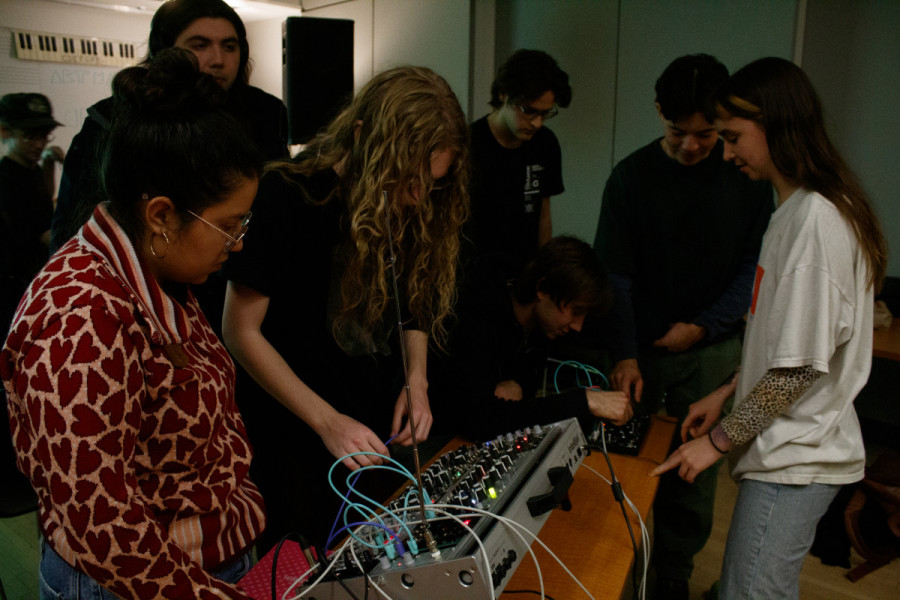
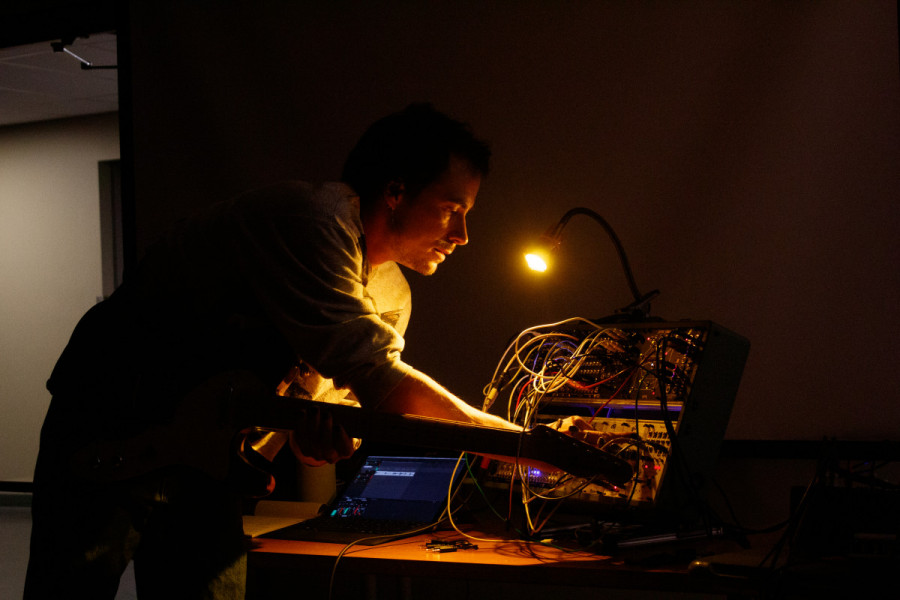
The night began with a presentation from the Concordia Electroacoustic Studies Student Association (CESSA), which outlined the progression of the art form and explained some of its foundational concepts. This was followed by several demonstrations, and the event ended with a hands-on practice session with the studio’s modular synthesizers, some of the most well-known electronic instruments.
Milica Kraincanic, a CESSA member and one of the workshop’s facilitators, spoke about the event’s structure.
“We were very careful about what information we decided to teach, because it’s only two hours,” Kraincanic said. “Electroacoustics can be pretty inaccessible. It kind of requires some hand-holding, so we wanted to make sure we kept it engaging.”
It seems they succeeded. The audience was laser-focused during the presentations. Once they opened the floor for attendees to use the equipment, everyone rushed to speak to the facilitators and receive personal lessons on sound-making.
“Coming into my role this year, I was really excited about finding ways to reach a broader range of students and to bring them together.” — Brigid McPhee
For the last hour of the workshop, the room’s surround-sound speakers filled the space with the sound of learning in the form of theremins and synths. Both of these electronic instruments are expensive and hard to find, making this a rare opportunity for those outside the program.
Kraincanic spoke about how hands-on learning was a major focus in organizing the workshop.
“These big computer-instruments can feel really intimidating, so I want to set people up so they feel like they can play, have fun, and maybe go out and learn more,” she said.
That goal worked in tandem with Art Matters’ goals in creating this workshop series: to make art more accessible, both for artists wanting to explore new mediums and for those just dipping their toes into art.
This series comes at a moment of uncertainty. Earlier this semester, the CSU council blocked Art Matters’ fee levy increase from reaching the ballot, citing concerns over the group’s support for the Boycott, Divestment and Sanctions (BDS) movement. The decision denied students the chance to vote on the festival’s fee levy question, adding new pressure to a festival already working to lower financial barriers in the arts.
Brigid McPhee, the festival’s general coordinator, discussed why she thought the workshop series was so important.
“I felt there hadn’t been enough focus on bridging the gap between disciplines. [Art Matters] was very focused on traditional arts,” McPhee said. “Coming into my role this year, I was really excited about finding ways to reach a broader range of students and to bring them together.”
McPhee emphasized that, beyond just displaying more varied art forms, the group wanted to welcome people to be more experimental and keep trying new things.
“That’s what art’s about at the end of the day,” McPhee added.
This idea of experimentation with a focus on interdisciplinary collaboration was what led to the curation of the fall workshop series. This direction clearly resonated with audiences, as every workshop drew a crowd.
Attendee Nazar Aktas described the appeal.
“I was pleasantly surprised by the variety and diversity of what they had,” Atkas said. “I didn’t know anything about electronic music coming in, other than I liked it.”
Atkas was one of the last to leave the workshop, fiddling around with the various pieces of equipment, talking to facilitators and trying to find out where they could go for more events like this.
“I felt like I really learned something,” Atkas said.