Not all medical superheroes wear scrubs; some are journalists
Journalists play an essential role in public safety when health recommendations are made by governments
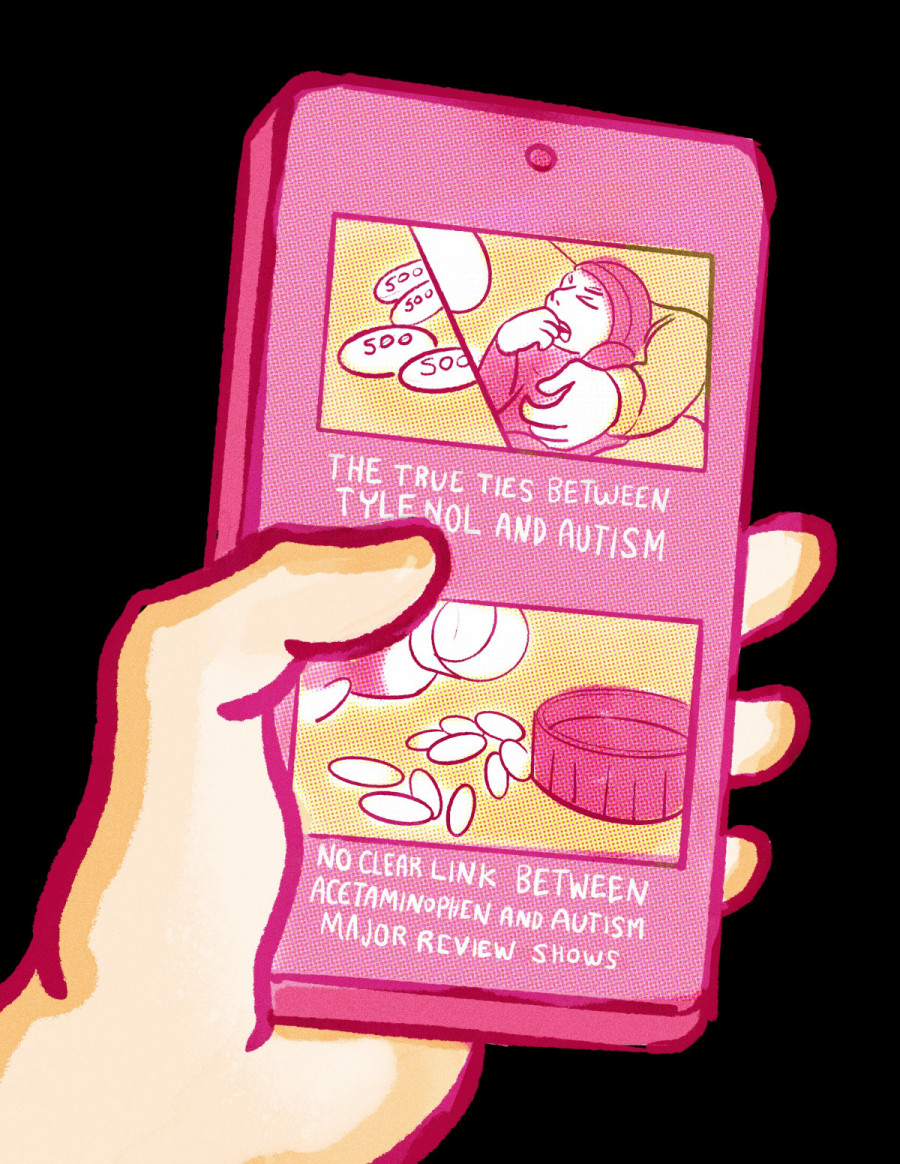
“If you have headaches, Tylenol is safe to take, but not Ibuprofen,” I told a pregnant patient in September during her first appointment at the obstetrical clinic where I work as a nurse.
The patient and her partner both laughed.
Although it all felt rather benign, this unusual reaction to receiving medical advice stemmed from an announcement that U.S. President Donald Trump made that same month.
In a press conference at the White House, Trump told pregnant women not to take Tylenol because of an “association” between autism and acetaminophen, the active ingredient of the pain and fever-relieving drug.
“Fight like hell not to take it,” were the words the president used.
This announcement by the president and his staff was a perfect test for anyone who dabbles in journalism, be it trained journalists from mainstream media outlets or individuals making videos in their homes: Will you be a mouthpiece for the government, or will you seek out scientifically sound views on the president’s shaky claim?
In anticipation of this announcement, the Society of Obstetricians and Gynaecologists of Canada (SOGC) reaffirmed its position that acetaminophen should still be used as the “first-line therapeutic option for fever and pain in pregnancy when medically indicated at recommended doses for the shortest duration required.”
The SOGC also said that “the evidence for this claim of causality [between acetaminophen and autism] is weak and has many fundamental flaws.”
Despite this, Trump and Health Secretary Robert F. Kennedy Jr. went ahead and made the announcement.
Since journalists can’t be experts in every field, they have a responsibility to seek reputable specialists to address and debunk false claims as soon as they emerge, while public attention is still focused on them.
During the Tylenol coverage, many media outlets like NBC, CBC and BBC published or aired media focusing on experts discussing why Trump’s announcement was weak at best.
For example, NBC reporter Hallie Jackson had Dr. Kavita Patel, an internal medicine physician, on her show to debunk Trump’s Tylenol announcement. Dr. Patel explained the issues with one of the studies that the administration cited.
Patel emphasized that the study only showed an “association” between acetaminophen and autism, but not “causality,” meaning researchers did not control for other factors, such as whether women had received consistent prenatal care, that could account for higher autism risks.
Journalists have been mouthpieces for governments before.
During the bovine spongiform encephalopathy epidemic in the United Kingdom, the U.K. government insisted that British beef remained safe to eat, when there were, in fact, risks of transmissibility to humans. As a result, people died of variant Creutzfeldt–Jakob disease, the human version of the disease, which is transferred to humans through the eating of contaminated meat.
Without journalism bridging the gap between experts’ knowledge and the general public, I might be having more difficult conversations in my nursing office than just some laughter.
Pregnant women could be putting their unborn children at risk since untreated fever and pain in pregnancy can lead to real consequences, such as miscarriages, preterm labour and depression.
In this respect, journalists have a responsibility to the public to question announcements such as Trump’s and to seek out expert advice when reporting. They should not be mouthpieces for the government, but act as watchdogs to safeguard the health of the people.
Journalists reporting on science should receive scientific training or have a scientific background so that they know who to seek for reputable interviews, what questions to ask, how to cross-check facts and how to communicate in a language accessible to their target audience.
Experts also have a role to play in this. Journalists and experts need to collaborate to make scientific research and the facts, as we know them now, more accessible to the public. Consumers of the news can then take these facts and decide what to believe on their own, but at least journalists will have committed to telling the facts as they are based on scientific rigour.
Of course, science changes and evolves all the time. I saw this while working as a nurse at a hospital during the COVID-19 pandemic. I remember being told that we did not need to wear masks, then to wear a mask only when interacting with patients, then all the time, and finally to wear an N95 respirator while on the unit. This change occurred because scientists’ understanding of the disease was evolving and improving.
Discoveries are consistently being made, and it is journalists’ responsibility to the public to keep up with the changes, particularly when it comes to health recommendations.
If we fail to do this, patients laughing in my office will be the best-case scenario.