Editorial: You only know half the story

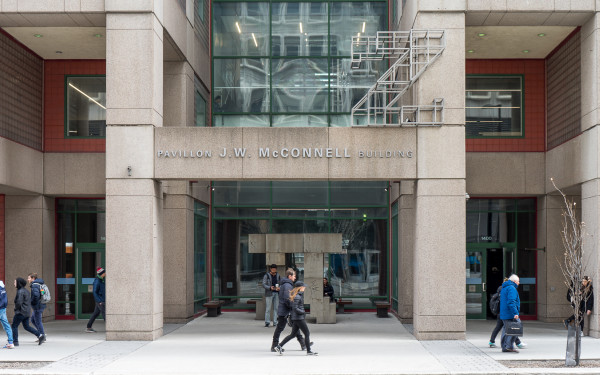
If you’re a student at Concordia University, you’ve probably seen a series of posters and promotional material the university sent out over the summer months.
From pamphlets boasting the university’s global high rankings to campus tours, emails, and Concordia’s carefully curated website, the university often presents a glowing image of itself.
However, we at The Link believe it's important to remember that promotional material is just that, promotion, and serves as only one side of life at Concordia. As students begin to attend orientation seminars and introductory lectures, we believe it’s important to show you the other side of the story so that you can truly know your university, and not just what it wants you to see.
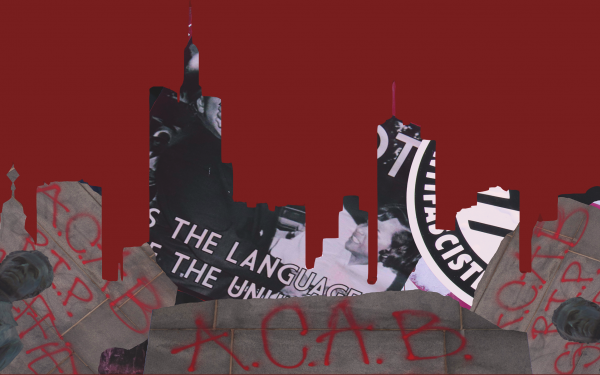
From this desire, the Reorientation Issue was born. Inside, you’ll find articles on student activism at Concordia, the millions it collects in late fees and a practical guide to surviving your degree.
The Concordia website touts inclusive spaces and groups, and says it “works hard to foster a safe, accessible and inclusive campus.” While this may be true for some, other students have also reported feeling surveilled on campus in the past year due to police presence during political demonstrations at the university.
Last September, three students were arrested at the Guy-Concordia Metro station following a walkout for Palestine. A month later, two students were arrested on campus at a Cops Off Campus demonstration. In both instances, the university claimed that arrests only happened following the alleged assault of Campus Safety and Prevention Services (CSPS) officers by protesters.
This all culminated in the Concordia Student Union (CSU) holding a press conference in November, where it accused the university of police brutality and racial discrimination.
The Link also reported that Concordia repeatedly hired security officers from a firm founded by a former Israel Defense Forces soldier, and even provided the agents with velcro patches with the CSPS logo.
The university has a long history of pro-Palestinian student activism. In 2002, Concordia students staged a demonstration, now known as the Netanyahu Riot, to protest the invitation of Israeli Prime Minister Benjamin Netanyahu to speak on campus. This movement has only grown in scope over the past years.
In January 2025, over 800 students gathered in the Hall building atrium and voted in favour of the CSU adopting two Boycott, Divestment and Sanctions (BDS) motions. These motions called upon the university to divest from companies complicit in genocide, to defend student activists from sanctions and to declare its support for a full arms embargo.
Following the vote, Concordia president Graham Carr released a statement reiterating Concordia’s position on “such boycott campaigns.” Carr stated that they “are contrary to the value of academic freedom upon which all universities are founded.” The statement drew criticism from some activists and student organizations, who said he was seeking to silence pro-Palestine students.
Despite this, for two days in November, over 11,000 Concordia students went on strike in support of an international university strike movement for Palestine. Mobilization included picketing classrooms and a rally at the Hall building, where students called for divestment and solidarity with Palestine.
To its credit, the university did disclose its $454 million investment portfolio in April after pressure from activists. Included in its portfolio are companies that have been accused of complicity in the Palestinian genocide, like BlackRock and Boeing.
The Quebec government’s tuition hikes for out-of-province and international students, announced in 2023, have also remained a major point of contention at the university. Over 21 student organizations at Concordia went on strike in March of 2024 to show their opposition to the hikes.
The hikes forced Concordia to cut its budget and services, reduce the shuttle bus schedule, freeze hiring, and cut course sections or entire courses altogether. Nonetheless, Carr received a raise of over $30,000 in 2023-24, bringing his total salary to over half a million dollars. The university now faces a starting deficit of $84 million for the 2025-26 academic year, to boot.
Last year, political action at Concordia went beyond just students. Two workers’ unions at the university, the Concordia University Professional Employees Union and the Concordia Research and Education Workers Union, went on strike to push for better working conditions. Both eventually reached an agreement with the university.
Student unions at the university also faced criticism over the past year, with students raising questions regarding the level of the CSU’s transparency. The student union has also been accused of neglecting trans students.
Through this issue, this editorial and our ongoing coverage of the university from which we operate, we invite you to remain critical and resist taking everything at face value. Ensure that you are well-equipped to understand the decisions your university and city make.
The Link has a duty to hold institutions accountable. We hope we have lived up to that responsibility, and that you will continue to hold us to the same standard. We hope this issue enhances your understanding of your university, your city and your place within them.
A previous version of this article stated that Concordia issued Perceptage International security agents Concordia Safety and Prevention Services (CSPS) uniforms. This is incorrect, the university provided them with velcro patches with the CSPS logo. The Link regrets this error.
This article originally appeared in Volume 46, Issue 1, published September 2, 2025.




_600_375_s_c1.png)